
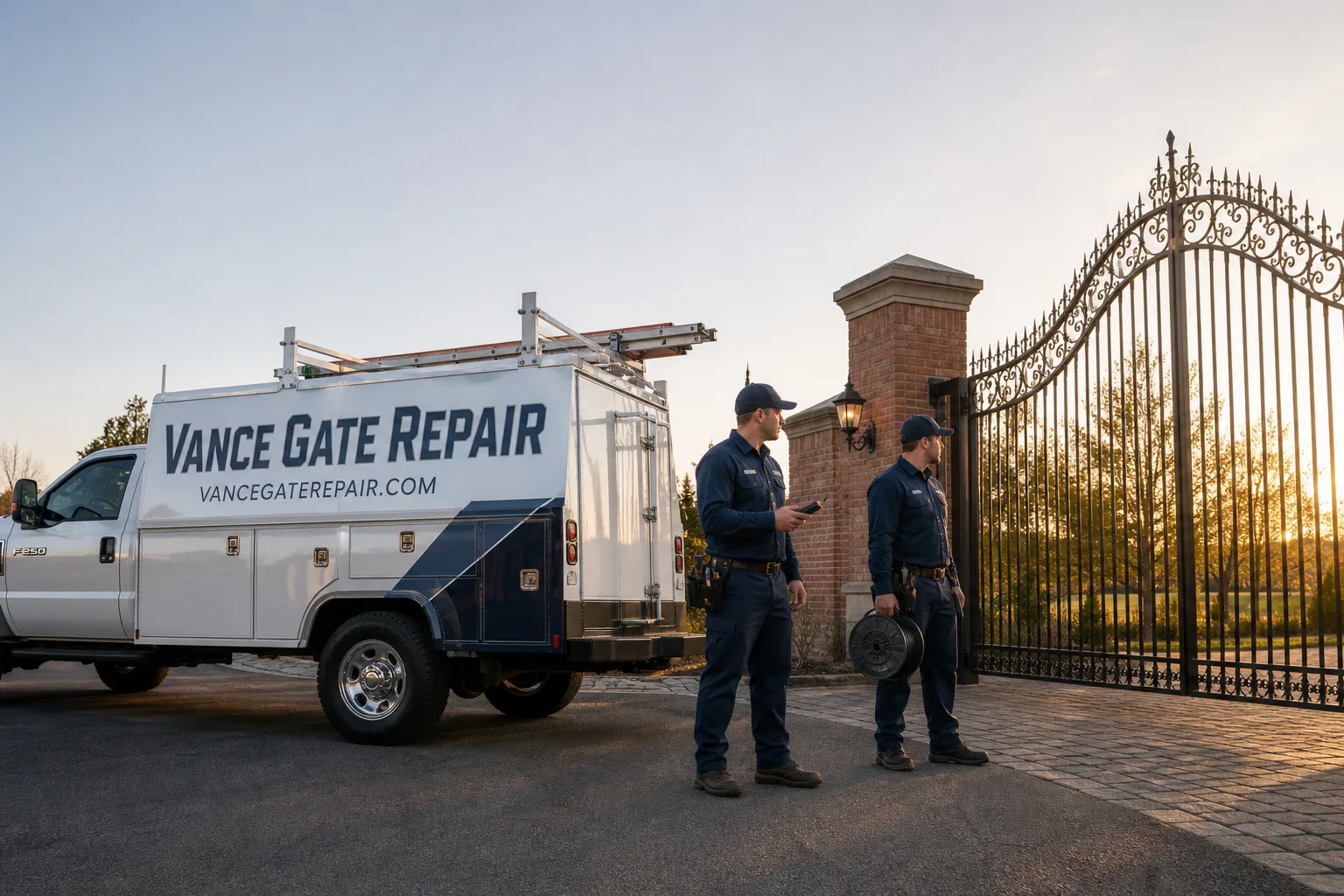
Free on-site gate assessment - hinges, posts, and your LiftMaster or Nice gate operator checked before anything is quoted
The assessment is free and the quote is the invoice.

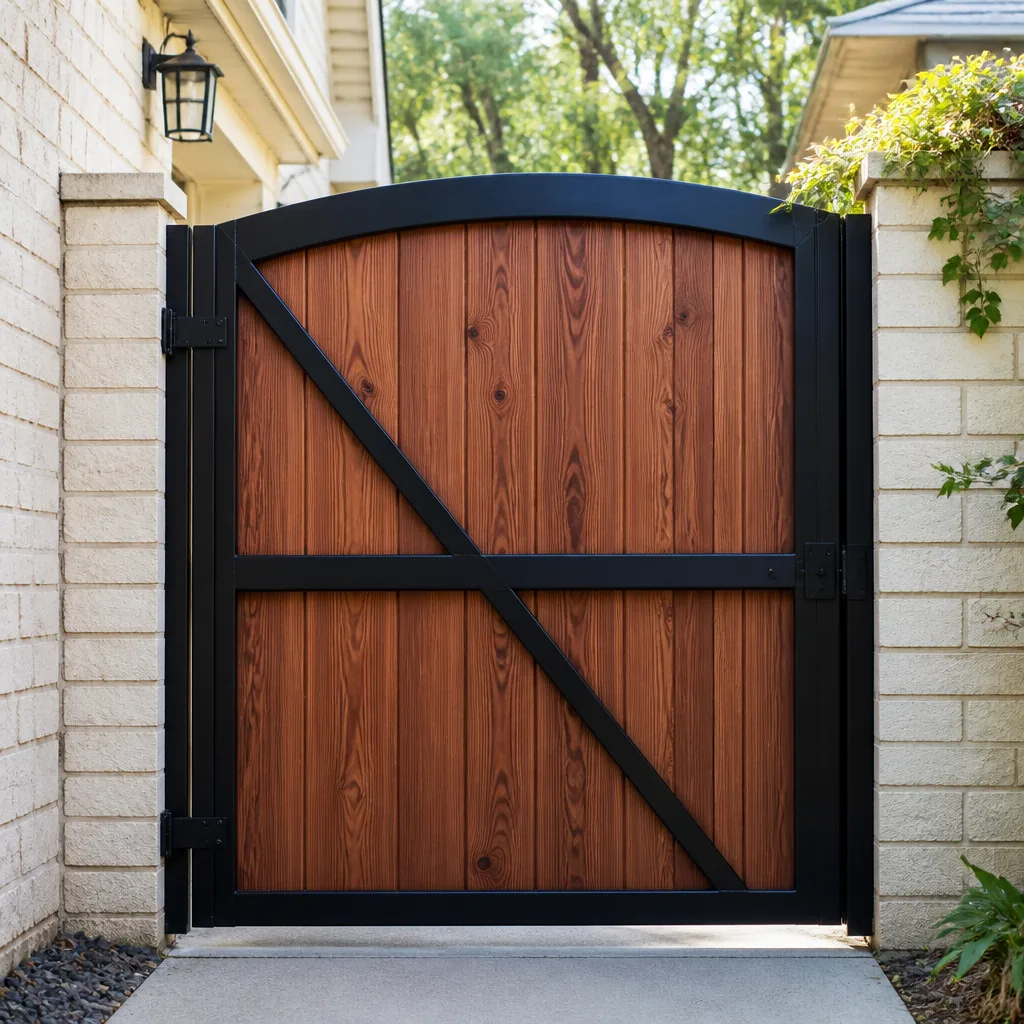
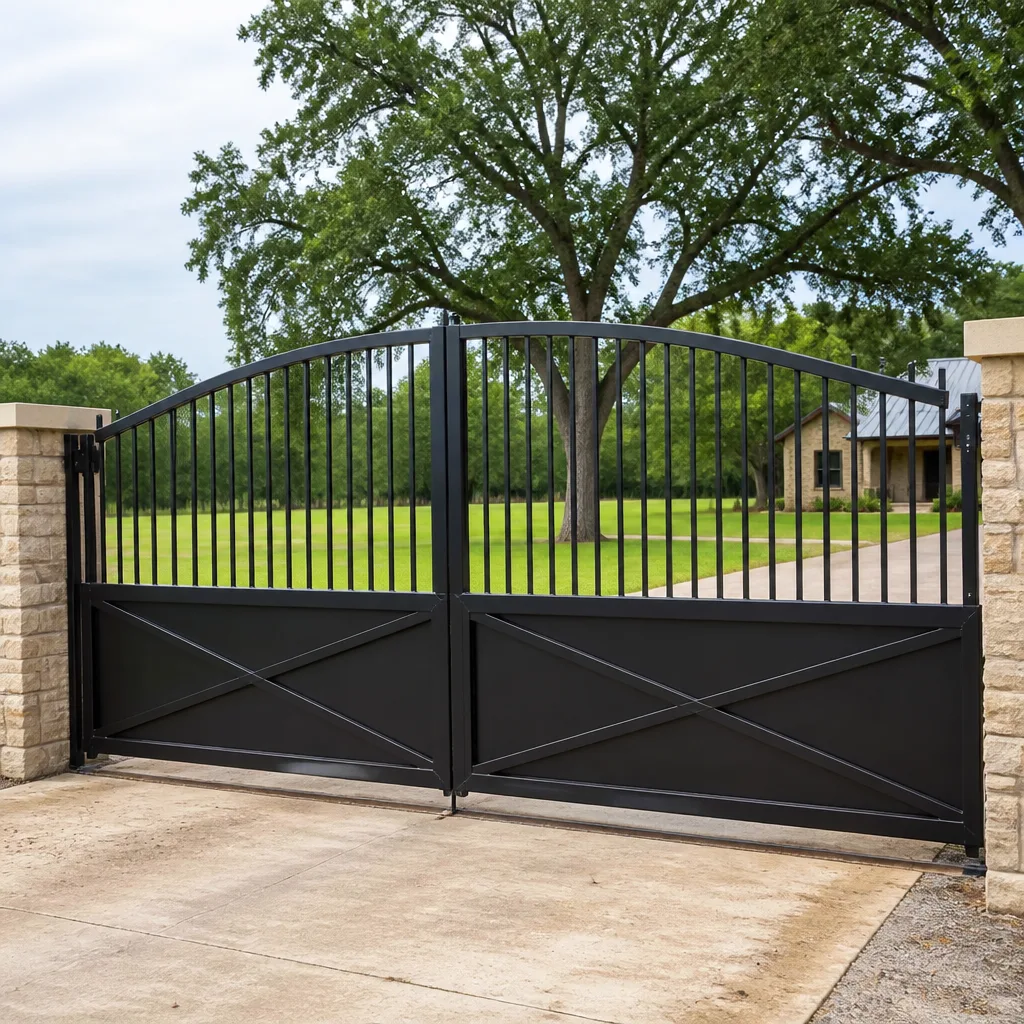
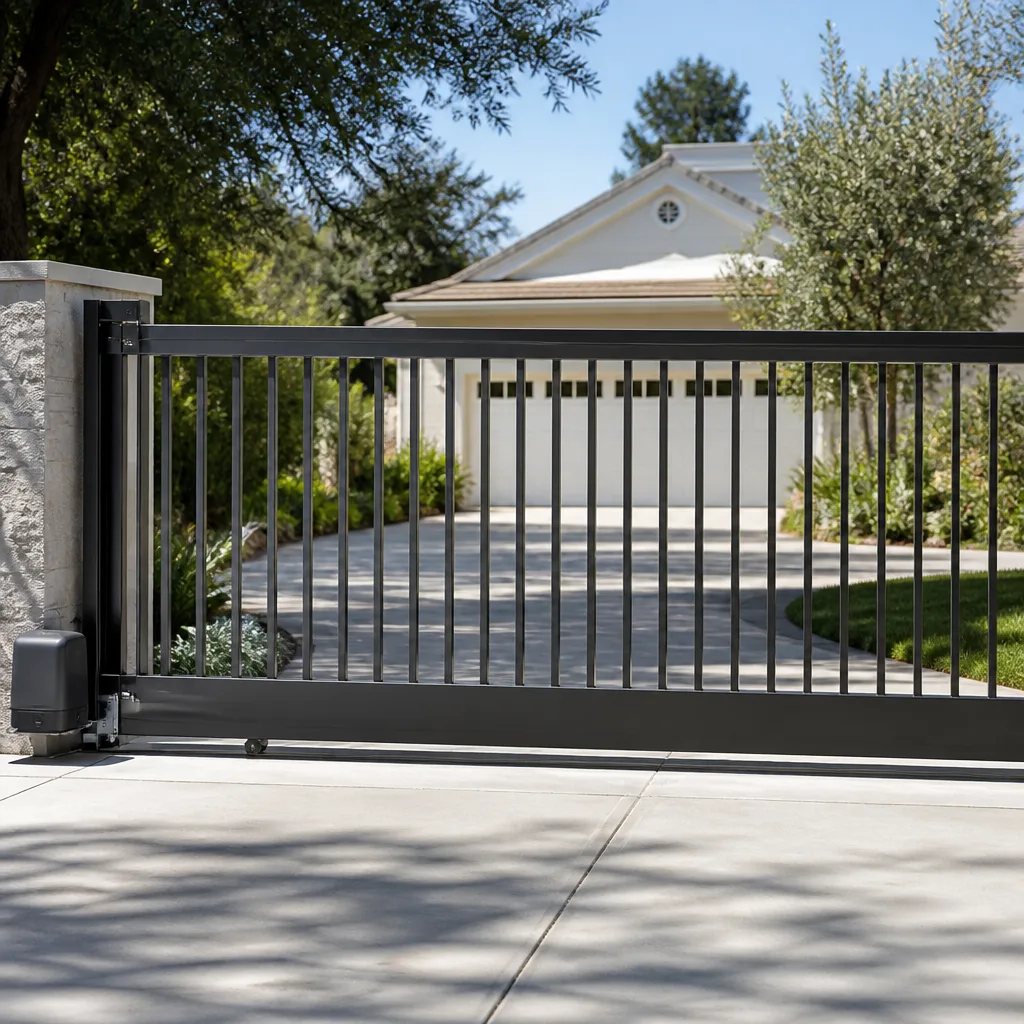
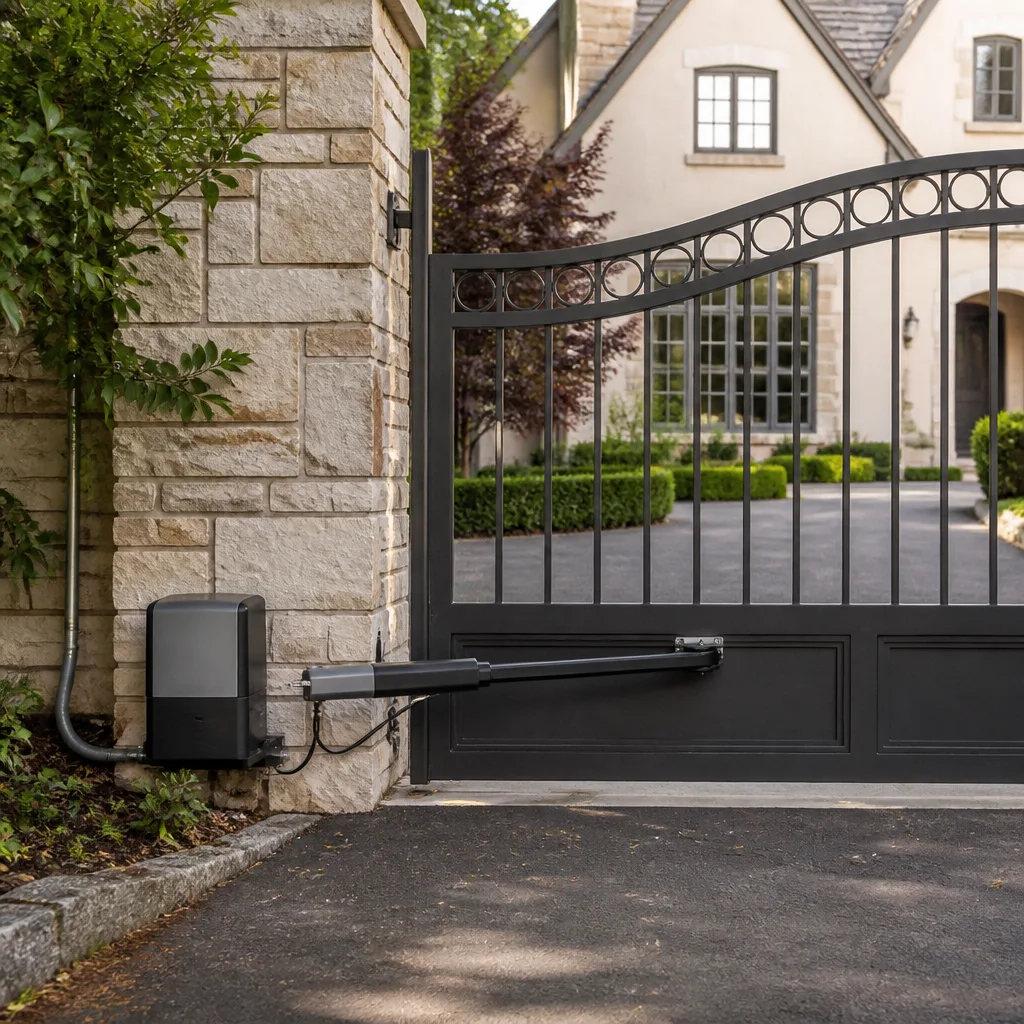
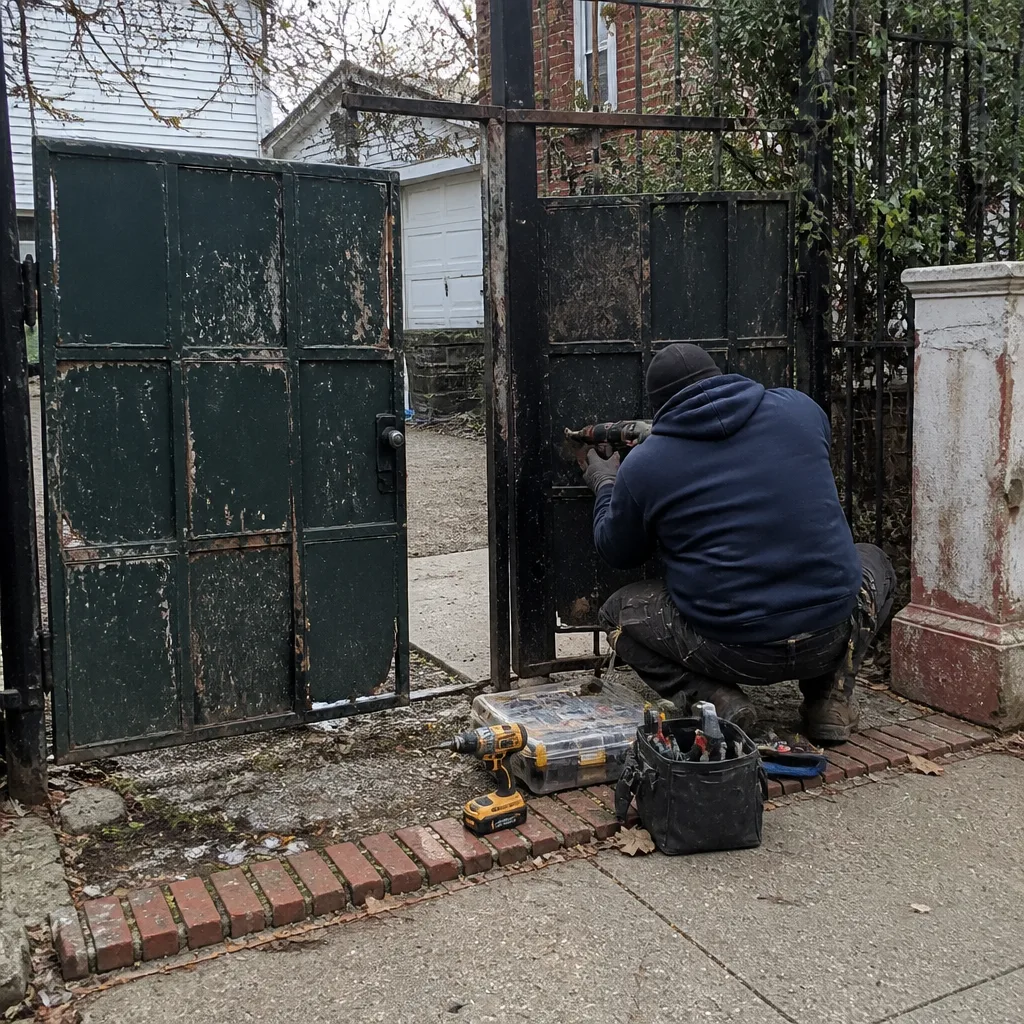 Before
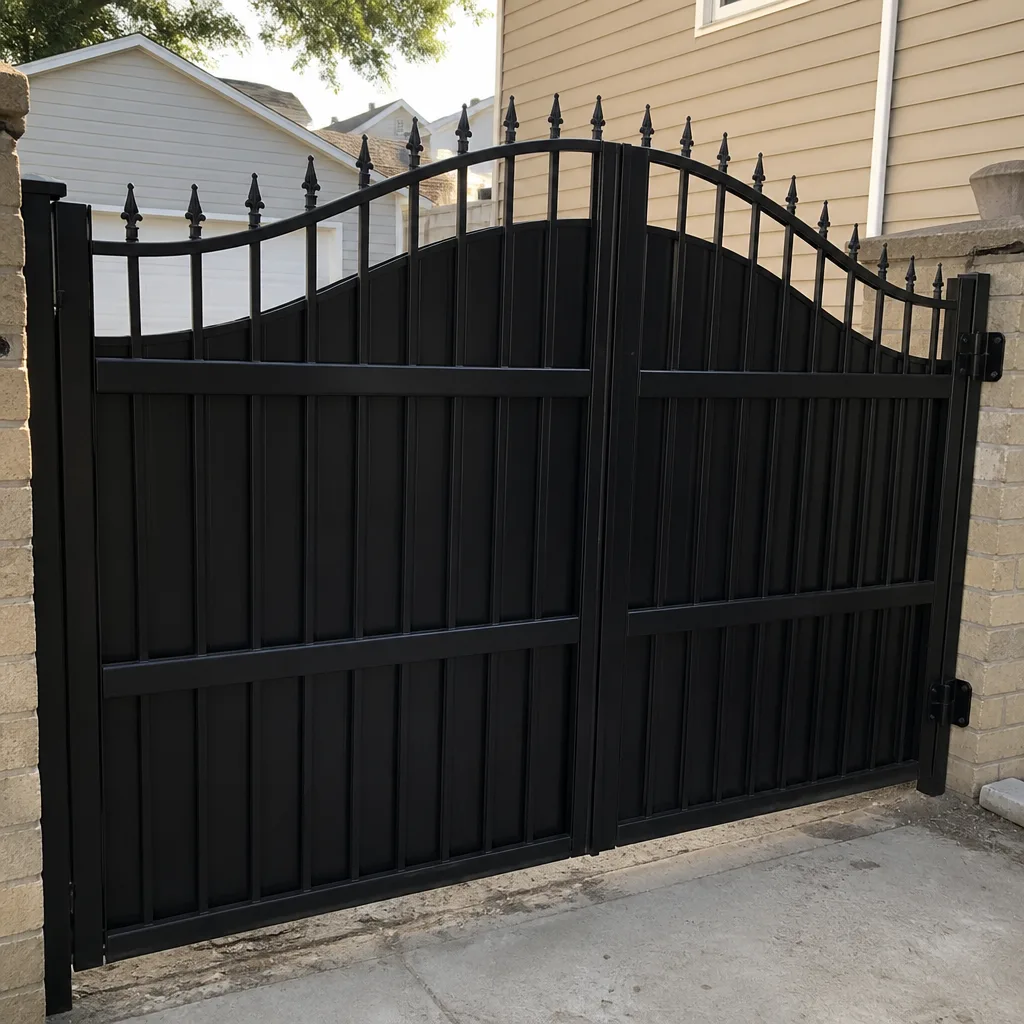 After
After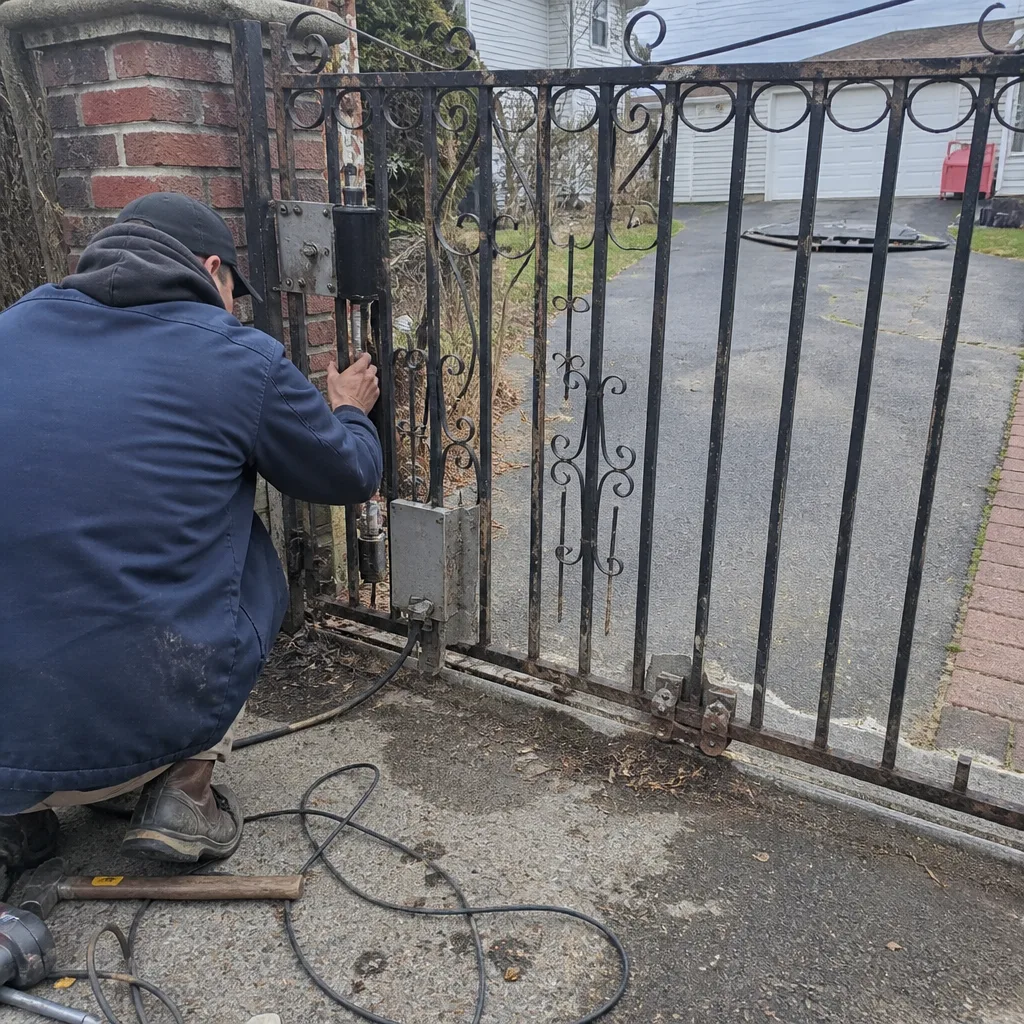 Before
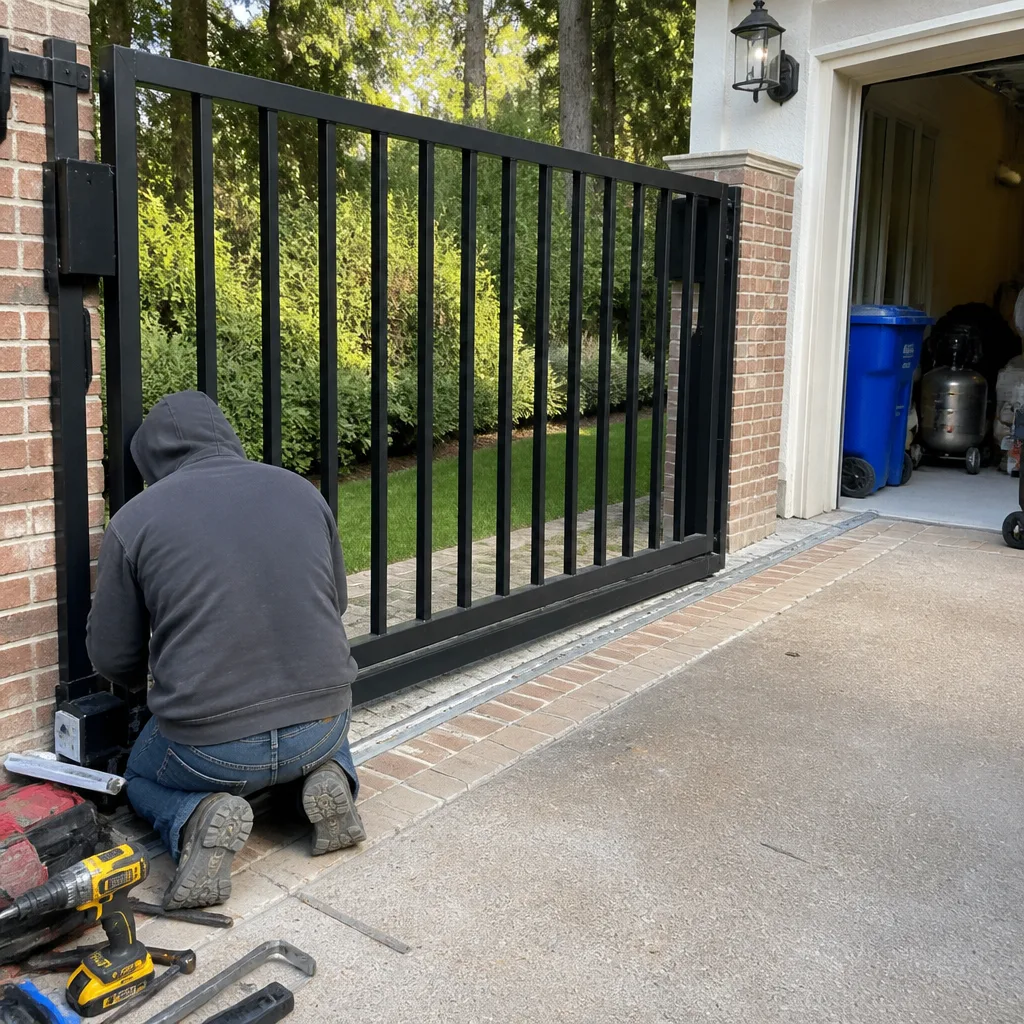 After
After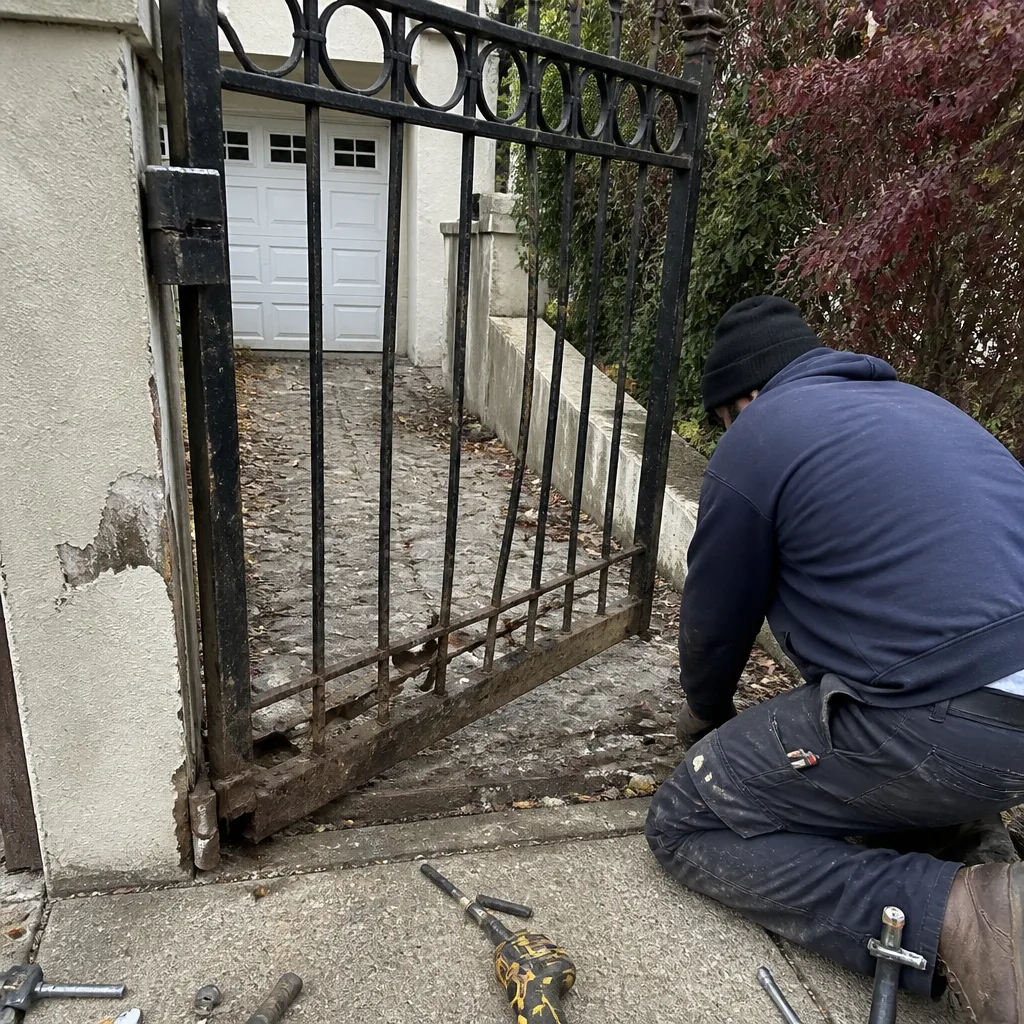 Before
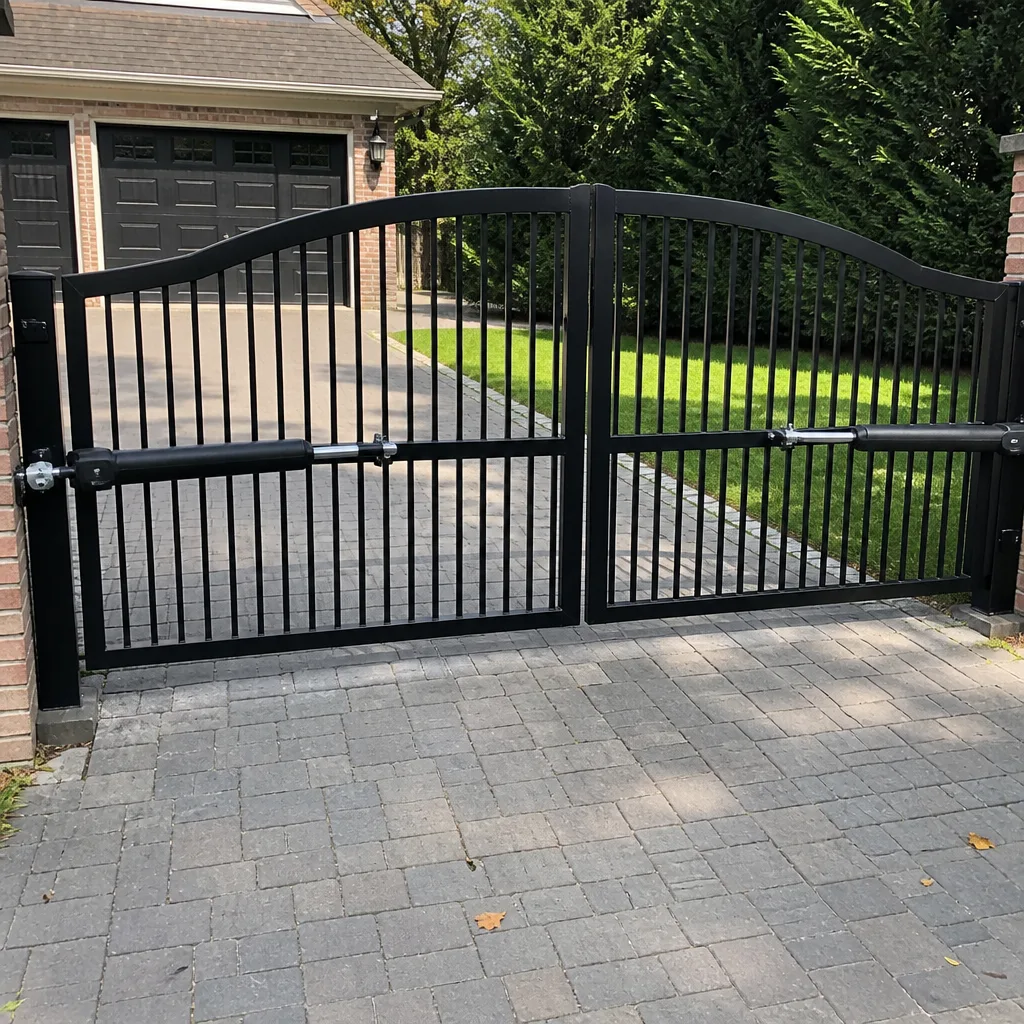 After
AfterGate Stopped Working After a Power Outage
When a gate stops working after a power outage, the cause is almost always one of four things: a tripped circuit breaker, a dead or discharged backup battery, a control board that locked up under the surge, or a surge-damaged control board that needs to be replaced. Most of these are same-day fixes. One of them is not.
Power outages do more than cut electricity. When the grid comes back, the returning surge can be worse than the outage itself. Gate operators sit outside in all weather, often wired into circuits that share space with irrigation timers or landscape lighting, and when voltage spikes on restoration, the control board takes the hit. That board is the gate’s brain – it reads your remote, decides when to stop the gate, and monitors the safety sensors. When it locks up or burns out, nothing downstream works, even if the motor itself is fine.
Why It Happens
1. The Control Board Locked Up or Burned Out
This is the most common reason a gate stays dead after power comes back. Control boards – particularly on LiftMaster, FAAC, and Viking operators – have onboard processors that can freeze when voltage returns unevenly. A locked-up board often looks identical to a dead board: no lights, no response to the remote, nothing. The difference matters because a frozen board sometimes resets with a proper power cycle, while a burned board needs to be replaced. A technician can read the fault codes or test output voltage to tell the difference in a few minutes.
2. A Tripped or Damaged Circuit Breaker
Gate operators are almost always wired to a dedicated breaker or fused disconnect. A hard surge can trip that breaker or blow the fuse without affecting the rest of your panel. If you walk to your electrical panel and find a breaker that’s sitting between ON and OFF – not fully either way – that’s your first clue. Reset it once. If it trips again immediately, stop: there’s a short somewhere downstream and resetting it repeatedly can cause real damage. That’s the point where you call, not the point where you keep trying.
3. A Dead or Discharged Backup Battery
Most residential gate operators have a sealed lead-acid backup battery that keeps the gate functional during outages. After a long outage, that battery may have discharged completely. When power returns, a deeply discharged battery sometimes won’t accept a charge, and the operator won’t run without it because the board reads low voltage and goes into protection mode. You’ll typically see a low-battery indicator light on the operator panel, or the gate will partially open and then stop. This is one of the cleaner repairs – a bad battery is a known part with a known replacement.
4. Surge Damage to the Motor or Wiring
Less common, but worth naming: the motor itself or the low-voltage wiring between components can sustain damage during a surge. FAAC and BFT units, for example, run brushless motors that are durable but not immune to a direct voltage spike. If you hear the operator humming but the gate doesn’t move, or if you smell something faintly burned near the operator housing, stop using the gate. A humming motor under a mechanical load it can’t move is working toward a second failure.
What to Do Right Now
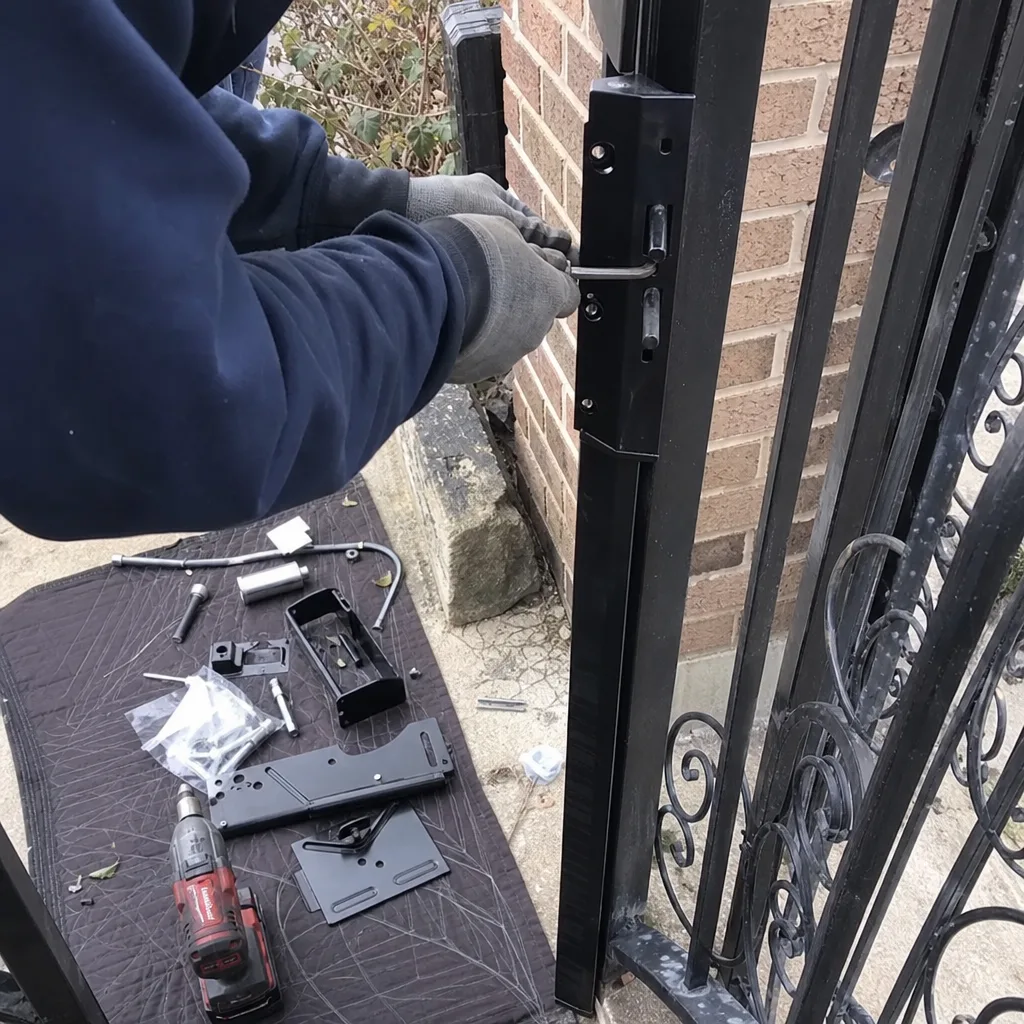
- Check your electrical panel first. Look for a tripped breaker or a blown fuse linked to the gate circuit. If it’s tripped, reset it once. If it trips again, leave it off and call – there’s a short that needs to be found before power goes back to the operator.
- Do not force the gate manually if you can avoid it. Most operators have a manual release so you can push the gate by hand during an outage. Use it if you need to get in or out, but do so slowly and carefully. A gate on a slope can move faster than expected once the brake releases. After you’ve passed through, secure it – an unsecured gate on a busy driveway is a hazard.
- Look at the operator panel for indicator lights. A flashing light, a solid amber light, or no lights at all each tell a different story. Take a photo of what you see – your technician will want to know the exact state of the display before they arrive.
- Photograph the area around the operator housing. If there’s any visible scorching, melted wiring insulation, or a burned smell, photograph it and stop touching anything connected to the power circuit. This is important information for the repair, and it’s part of the documented record your Vance technician will add to.
- Do not attempt to open the operator housing yourself. Gate operator housings carry line voltage – typically 120V AC – and the capacitors inside can hold a charge even after the breaker is off. Diagnosing what’s inside is work for a trained technician with the right testing equipment. The safe thing to do at this point is to secure the gate in whatever position it’s in and make the call.
BeforeAfterHow We Fix It
When your local Vance Gate Repair team arrives, the first thing a technician does is a documented diagnostic: photos of the operator, a voltage reading at the power supply, and a fault-code pull if the board is still communicating. That process tells us within a few minutes whether we’re dealing with a recoverable freeze, a dead battery, a tripped circuit, or a board that needs to come off the wall.
From there, the technician writes the price – specific to what your gate actually needs – and hands it to you before touching anything. That’s Haven Standard Clause 1, and it applies to every job, no exceptions. You see the number, you agree to it, then work starts.
Most power-outage related gate failures resolve under Gate Repair or Gate Motor and Opener service. A control board swap on a standard residential operator typically takes under two hours. A battery replacement is faster. If the wiring between components was damaged, that adds time but not mystery – you’ll know the scope and the price before we start. Every visit ends with a photographed record of what we found, what we replaced, and how the gate was left. That record stays with you and is filed in the job history, so if anyone ever needs to work on this gate again, they’re not starting blind.
All completed work is covered by the 365-Day Done Right Promise. If the repair isn’t right, we make it right – no argument, no additional charge, within that window.
Frequently Asked Questions
It depends on where the gate stopped and what’s around it. A gate that stopped in the fully closed position and won’t move is generally safe to leave while you wait for a technician, as long as it’s latched or held in place. A gate that stopped mid-travel is a different situation – it can be a vehicle hazard and may be under enough mechanical stress from the operator that it shouldn’t be pushed or leaned on. If the gate is half-open on a property where children or vehicles are moving, call (928) 260-0864 now rather than waiting – a live person answers at any hour.
If your gate is stuck open, or if it’s stuck in a position that’s blocking access or creating a security gap, it shouldn’t wait. A gate that won’t close is an open property. If it’s stuck closed and you have another way in and out, the timeline is more flexible, but you still want a technician looking at the board before it sits any longer – a partially damaged board can continue degrading. Call (928) 260-0864 and describe what you’re seeing; the person who answers can help you sort out the urgency.
It’s possible but unlikely if the failure happened directly after a power outage. Remotes and keypads don’t draw from the grid, so a power event doesn’t typically affect them. If you walk up to the operator and find that the wall button on the operator itself also does nothing, the remote isn’t the issue – the problem is at the operator or further upstream. That said, a technician will check every component in sequence rather than assuming, which is why the diagnostic comes before the written price.
There’s no honest way to put a single number on this page, because the cost depends on which component failed – a battery is a very different repair from a control board, which is different again from damaged wiring. What we can tell you is that every Vance technician provides a written price specific to your gate, in hand, before any work starts. No range that turns into a higher number on the invoice. To get the exact figure for your situation, call (928) 260-0864 – the diagnostic tells us what’s needed, and the written estimate tells you what it costs.
Get It Fixed
Call (928) 260-0864 – a live person answers around the clock, every day of the year. Your local Vance Gate Repair team will diagnose what the outage did, hand you a written price before any work starts, and get the gate moving again under the 365-Day Done Right Promise.
Written by Adrian Vance, Owner at Vance Gate Repair, serving communities nationwide since 2014.
What Our Customers Say
"Quoted in writing, installed on the day promised, and the price did not move. The crew was licensed and the number was on the paperwork."
- Wes A."Gate had been dragging for a year. They photographed the bent hinge post, explained why the operator kept faulting, and gave me a fixed price to correct both."
- Terrence B."They installed the opener and left me a diagram of the wiring and the limit settings. When I needed a second remote programmed I could do it myself."
- Nadine C.