
Free on-site gate assessment - hinges, posts, and your LiftMaster or Nice gate operator checked before anything is quoted
The assessment is free and the quote is the invoice.
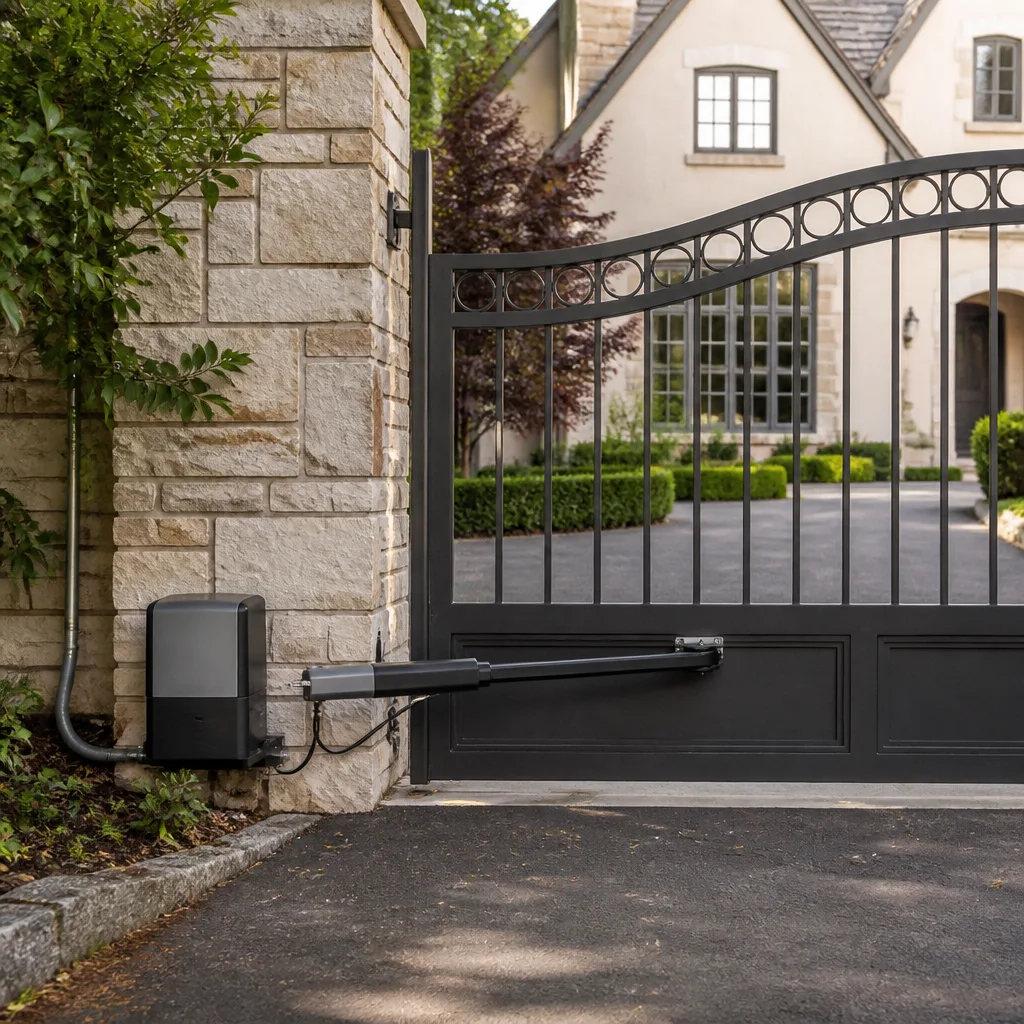
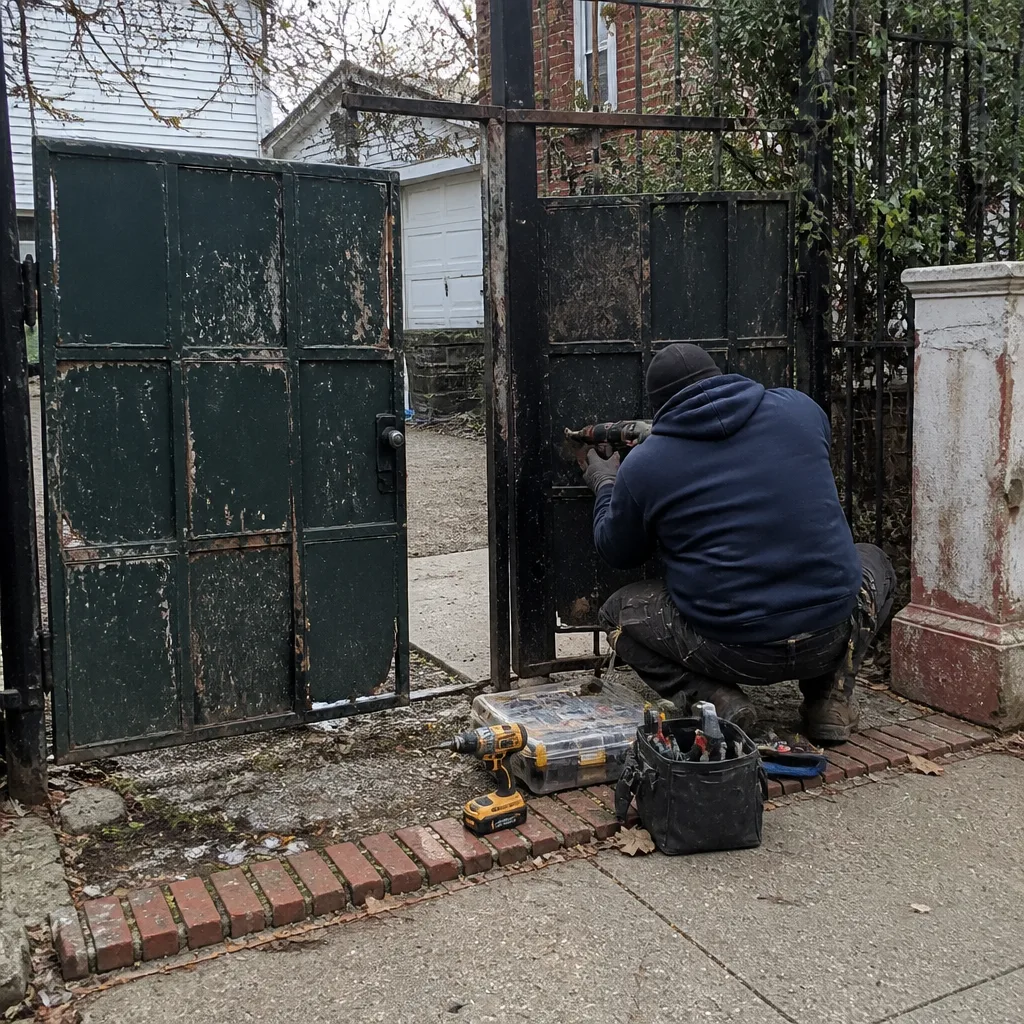 Before
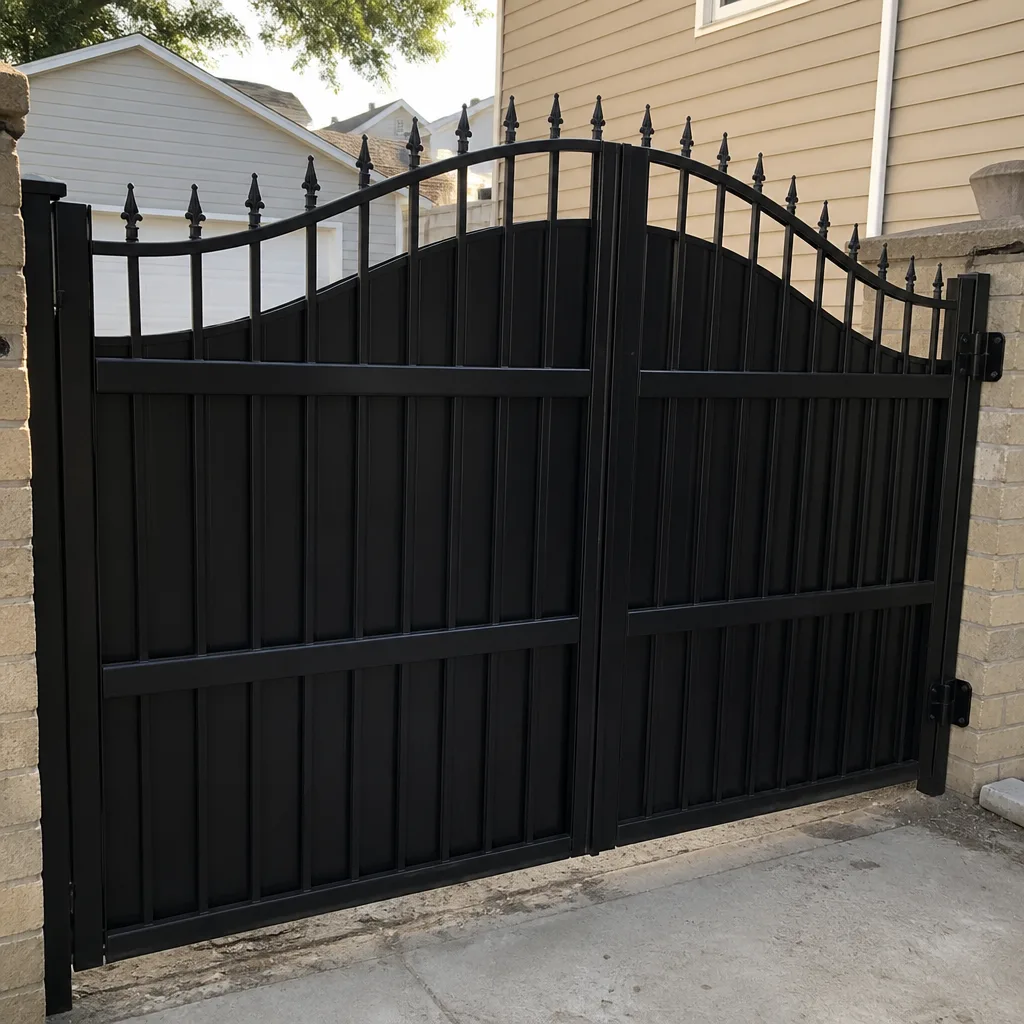 After
After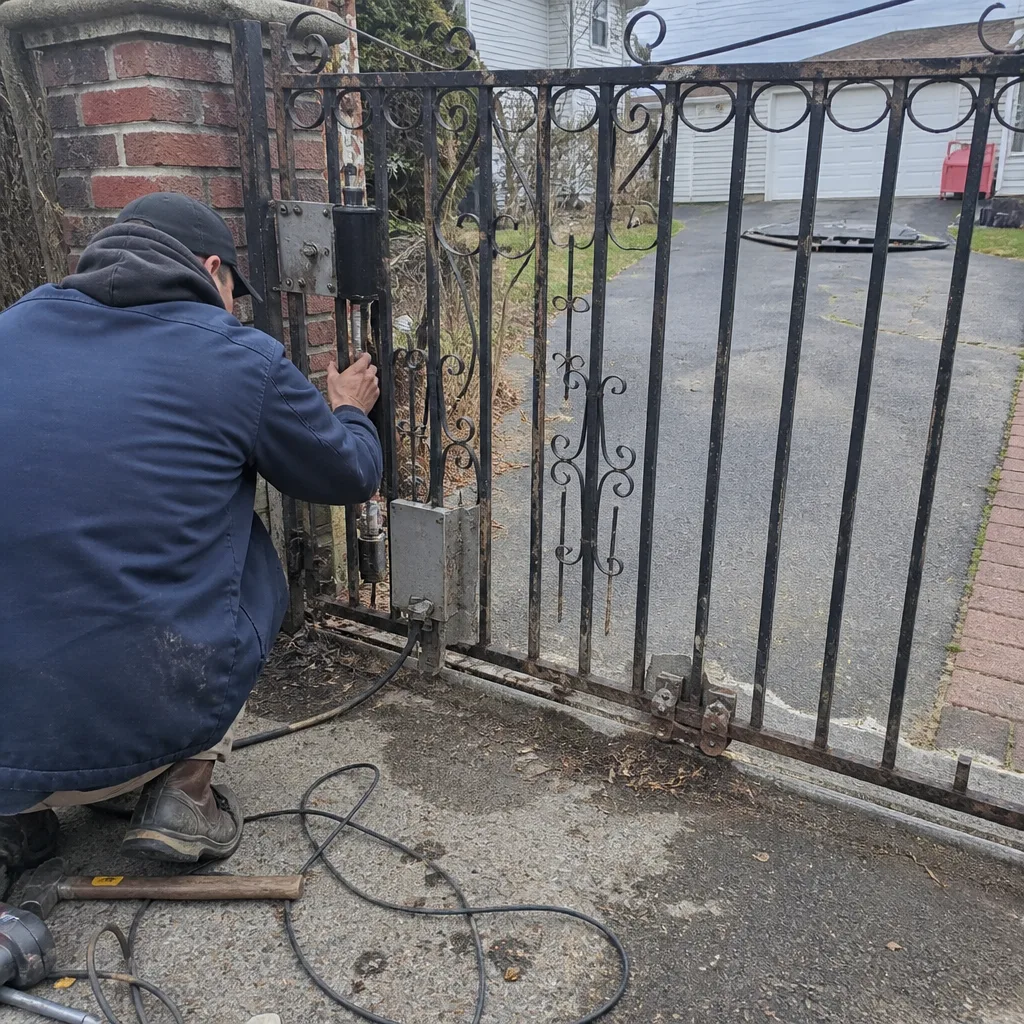 Before
 After
After Before
 After
AfterFAAC Gate Motor Replacement: The New York City Owner’s Guide
FAAC gate motor replacement in New York City typically runs between $850 and $1,650 installed, depending on the model series and whether the mounting bracket and limit-switch assembly survive the swap. We stock FAAC-compatible motors and control boards on our trucks for same-week replacement across the five boroughs, and we hand you a written price before any work starts. Most homeowners discover the motor is done when the gate stops mid-travel, groans under load, or trips the breaker repeatedly, and by then the capacitor or the gearbox has usually already been working harder than it should for months.
What you’re dealing with is not a generic opener. FAAC builds hydraulic and electromechanical operators that get specified on thousands of New York City driveway gates, co-op entry gates, and commercial parking barriers. They’re solid units, but when a FAAC motor fails, it fails in ways that a LiftMaster or Mighty Mule motor does not, and matching the wrong replacement to the wrong series creates a gate that eats limit switches and burns boards. That’s the problem this page solves.
Which FAAC Models This Applies To
The FAAC lineup splits into two families you’ll need to identify before any replacement makes sense: the 400-series hydraulic operators (the 400, 402, 412, 415, and 422) and the swing-and-slide electromechanical series (the S418, S450H, C720, C721, 770, and 844). The 400-series runs on hydraulic fluid and a piston; the electromechanical units run on a gearbox and a DC or AC motor. They don’t interchange, and a motor sold as “FAAC-compatible” without a series match is a guess wearing a part number.
Find your model plate. It’s on the side of the operator housing, usually a stamped aluminum tag with the model and serial. Photograph it before you call anyone. The model tells us the voltage (most residential New York City units are 115V, but commercial barriers often run 208/240V), the capacitor spec, and the correct replacement motor assembly. On the OEM-versus-aftermarket question: for FAAC specifically, we strongly favor original FAAC motor assemblies on the 400-series and S418, because the hydraulic pressure settings and stroke length are factory-calibrated to the motor output. Quality aftermarket equivalent motors exist for the C720 and 770 slide-gate heads, where the fit is simpler, but we’ll show you both prices and let you decide before anything gets ordered.
Signs Your FAAC Gate Motor Is Failing
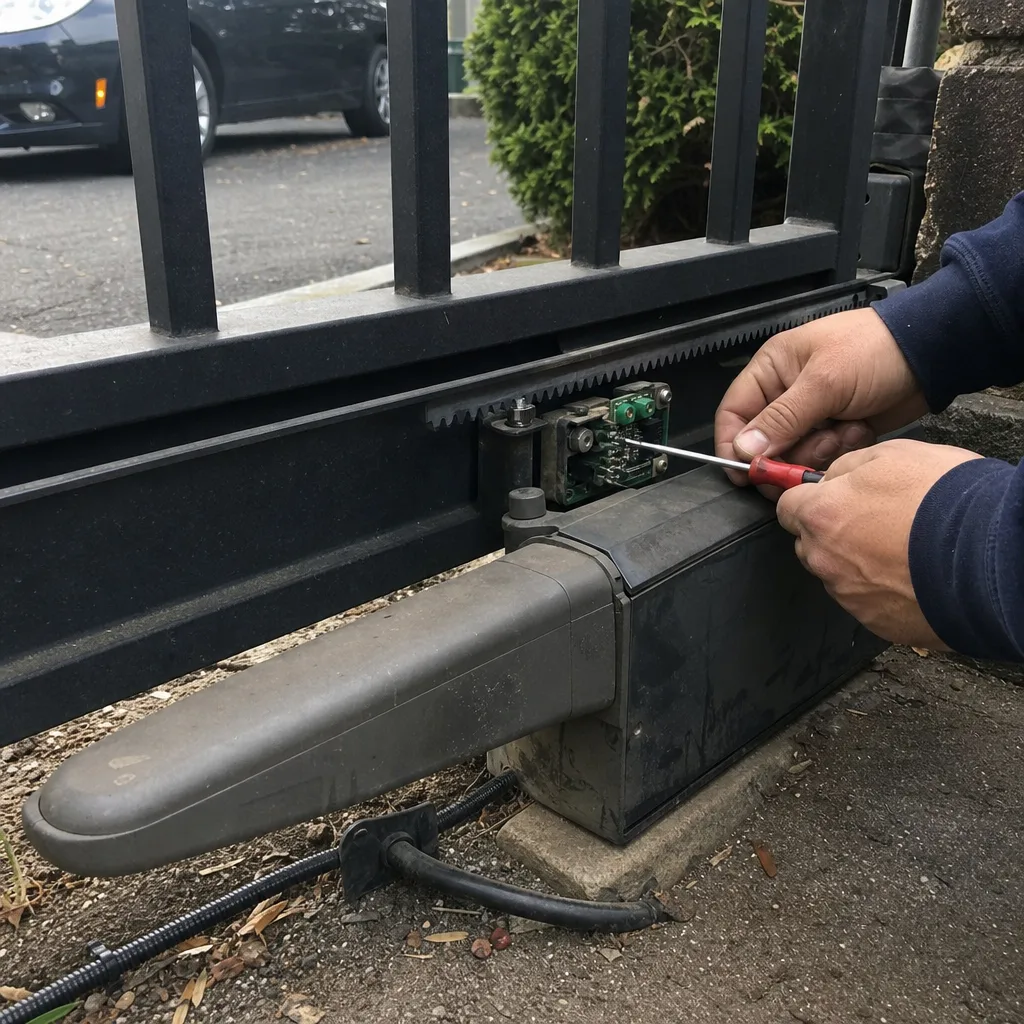
- The gate stalls halfway and reverses. In most cases this is the motor pulling excessive amperage because the gearbox oil has thickened or leaked away. The board reads the spike as an obstruction and reverses. The motor is cooking itself against its own resistance.
- A loud hum without movement. The capacitor charges, the motor tries to turn, and the gearbox output shaft stays still. On a 400-series, this is often a drained or contaminated hydraulic circuit; on an electromechanical unit, it’s stripped gears in the reduction train.
- The gate moves more slowly every week. FAAC motors are speed-stable, so slow travel is never normal behavior. We see this on C720 slide gates where salt and grit from New York City winters have worked into the motor bearing, dragging the rotor until the unit overheats and the thermal protector opens.
- The breaker trips repeatedly. A motor that spikes the breaker is drawing more current than the board was designed to deliver. That can be a seized pump (400-series) or shorted windings (S-series and C-series). It will not fix itself, and resetting the breaker repeatedly is how you lose the control board too.
- Burn smell or visible oil leaking from the bottom. On hydraulic FAAC units, oil at the base is the pump seal failing, and the motor runs dry against the pump body. On electromechanical units, a burnt smell is the insulation breaking down on the windings. Both are terminal for the motor, not the whole operator.
BeforeAfterReplacement Cost & What’s Included
Installed FAAC gate motor replacement in New York City runs $850 to $1,650, with the spread driven by series, voltage, and what condition the mounting hardware is in after years of coastal air and winter salt. A C720 or 770 slide-gate motor lands at the lower end; a 400-series hydraulic motor with a new pump seal and fresh oil lands at the upper end. The price includes the motor assembly, removal of the failed unit, installation, limit switch re-set, force adjustment, and a photo log of every adjustment made.
We quote the entire job in writing before the first tool comes off the truck. You’ll know the line-item cost of the motor, the labor, and any mounting hardware that needs replacing because the old bracket corroded. The replacement is covered by our 365-Day Done Right Promise, and every part number installed goes into a written record you keep.
| Scope | Typical Installed Price |
|---|---|
| FAAC C720 / 770 slide-gate motor replacement | $850 - $1,150 |
| FAAC S418 / S450H swing-gate motor replacement | $950 - $1,350 |
| FAAC 400-series hydraulic motor + pump seal + oil | $1,250 - $1,650 |
| Control board replacement (if the failed motor took it out) | Add $350 - $550 |
That table is honest pricing for New York City, not a teaser. If your FAAC motor is still under manufacturer warranty, we’ll document the failure with photos and readings so you can file the claim yourself, and we’ll install the warranty replacement at a reduced labor rate.
DIY or Call Us?
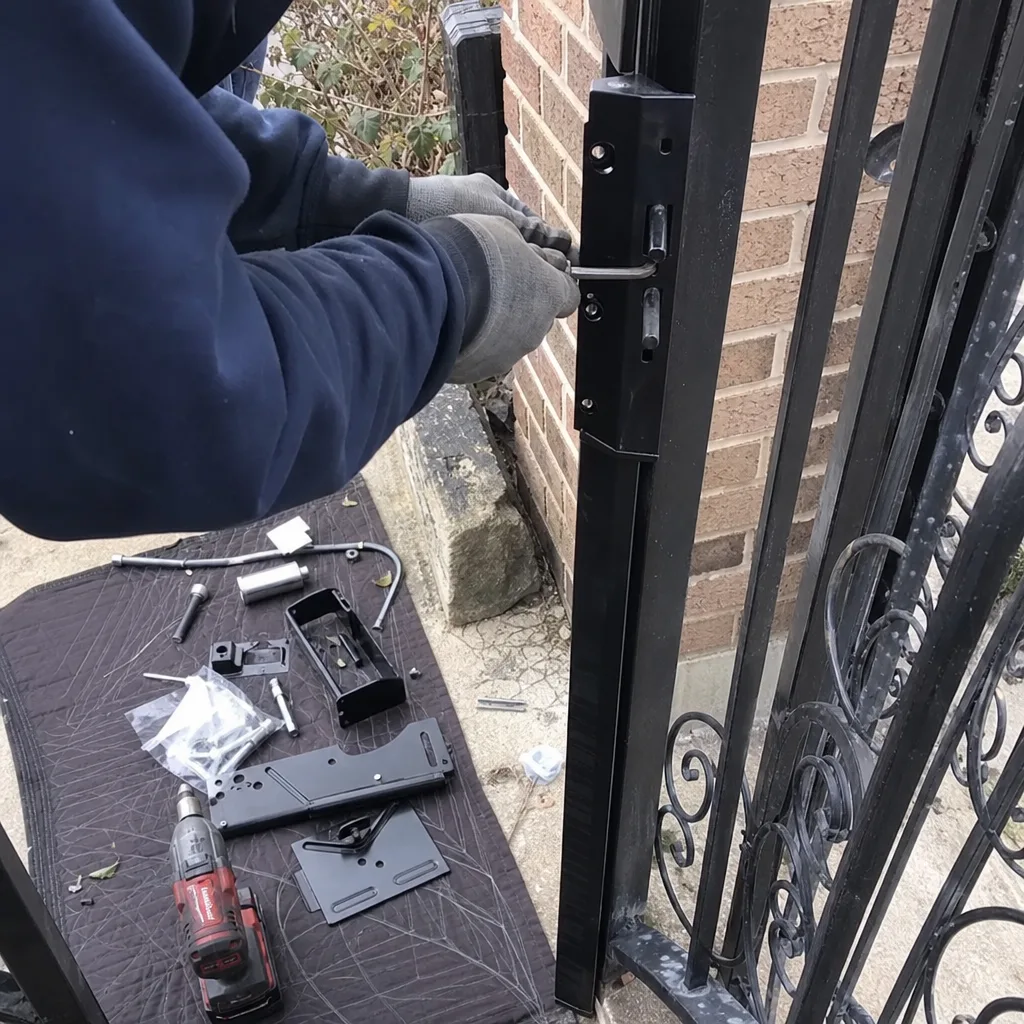
Here’s the honest split. What you can safely do: photograph the model plate, watch the gate operate while someone else controls it, and listen for the difference between a hum (electrical) and a grind (mechanical). These observations are free and genuinely useful when we diagnose by phone or on arrival. What you should not do: open a 400-series hydraulic unit. It holds pressurized fluid, and the release procedure matters. Same caution applies to any FAAC motor swap that involves removing the operator from a loaded hinge or the slide-gate rack: the gate itself weighs more than the motor, and it can move during removal.
We’re not trying to scare you off. We’re telling you what we tell people in Queens, Brooklyn, and every other borough: this is not a plug-and-play repair like swapping a headlight, and the electrical work involves AC line voltage. The safe, honest route is to call (928) 260-0864 and let us match your FAAC model to the right replacement motor, quote it in writing, and install it while you watch. That’s the whole job, done once.
FAQs
In New York City, a properly maintained FAAC gate motor lasts 8 to 12 years on residential gates, and 5 to 8 years on commercial driveway gates or parking barriers that cycle hundreds of times a day. Salt air near the water, winter ice on the track, and constant humidity shorten that, which is why we photograph seal condition and electrical connection corrosion on every visit. A motor that’s lasted less than 6 years almost always had a misaligned limit switch or a failing capacitor pushing it past its duty cycle. Call (928) 260-0864 and we’ll tell you what your specific model should be giving you.
Sometimes yes: a failed capacitor, a worn start relay, or a misaligned limit switch on a FAAC motor can be repaired in place for a fraction of replacement cost. What cannot be repaired is a motor with shorted windings, a seized pump, or stripped gears; those need the motor assembly replaced. We’ll test your existing motor before recommending anything, and you’ll get a written repair-versus-replace cost comparison. Call (928) 260-0864 and we’ll bench-test the motor if needed before we spend your money.
A single FAAC gate motor replacement on a standard single swing or slide gate takes 2 to 4 hours from start to finish, including limit switch setting, force adjustment, and a photo log of the completed work. Bolt-on swing-gate motors like the S418 are quickest; a 400-series hydraulic unit with a pump seal change adds time because the system gets drained, refilled to the correct level, and bled. Duplex gates take longer, and we’ll tell you that upfront. Call (928) 260-0864 for a time estimate based on your exact model, not a range.
We stock FAAC-compatible motors, capacitors, and control boards for the most common New York City models, the 400, 402, 412, 415, 422, S418, S450H, C720, C721, 770, and 844, on our service vehicles. If we need to order a less common voltage or torque rating from our FAAC supplier, most arrive within 2 to 3 business days, and we won’t begin any work until the part is physically in hand and priced in writing. We also stock parts for LiftMaster, Mighty Mule, and Ghost Controls, so we can tell you honestly whether your motor needs fixing or replacing, not just what we happen to carry. Call (928) 260-0864 and we’ll confirm stock before you waste a trip.
That depends on the condition of the gate itself: if the hinges, wheel trucks, or rack are still solid, a new FAAC motor is absolutely worth installing, because the operator typically fails before the gate structure does on well-built New York City gates. If the gate is rusting through or the hinge posts are shifting, we’ll tell you that plainly before you spend $1,200 on a motor for a gate that needs $3,000 in structural work. Name what you found. Name what it costs. Name what you left behind. That’s how we work, on every call. Call (928) 260-0864 and we’ll give you the honest answer, in writing.
Written by Adrian Vance, Owner, Vance Gate Repair at Vance Gate Repair, serving New York City and nearby areas.