

Free on-site gate assessment - hinges, posts, and your LiftMaster or Nice gate operator checked before anything is quoted
The assessment is free and the quote is the invoice.
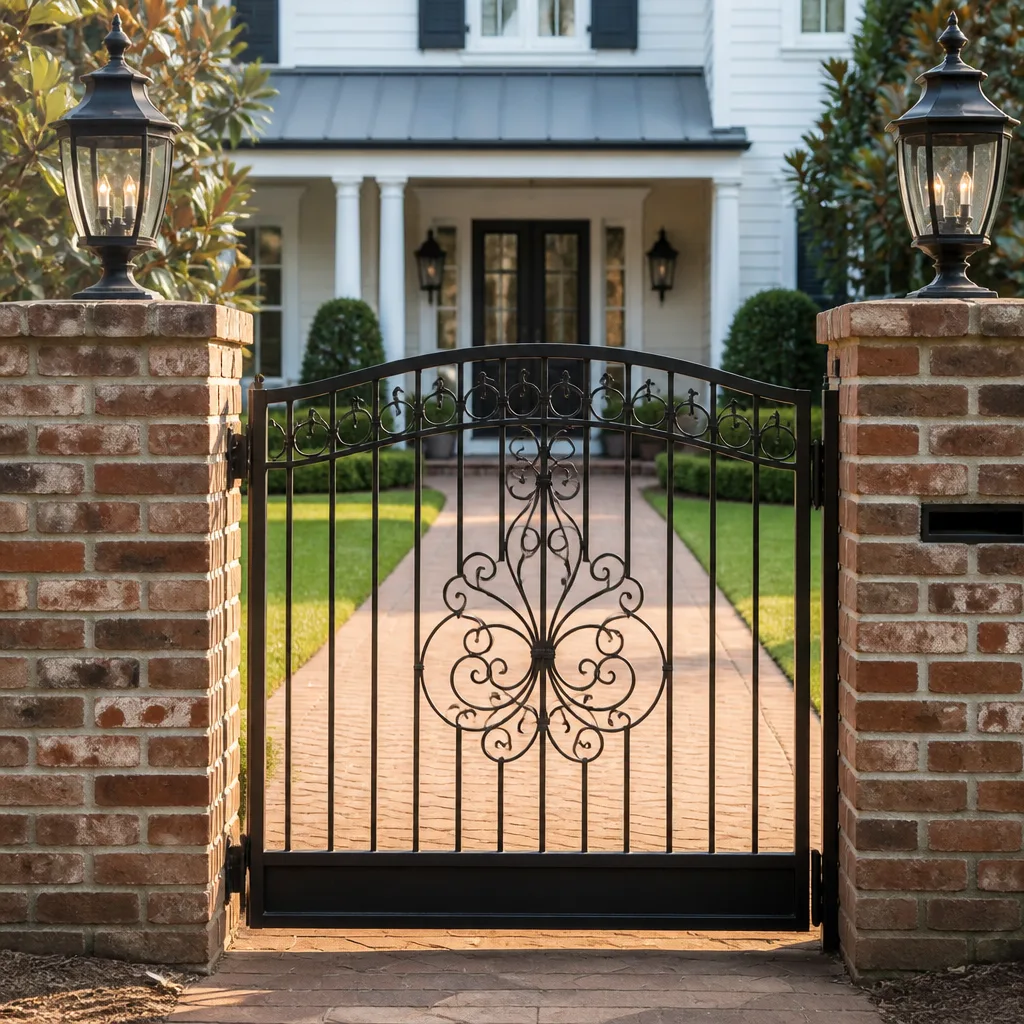
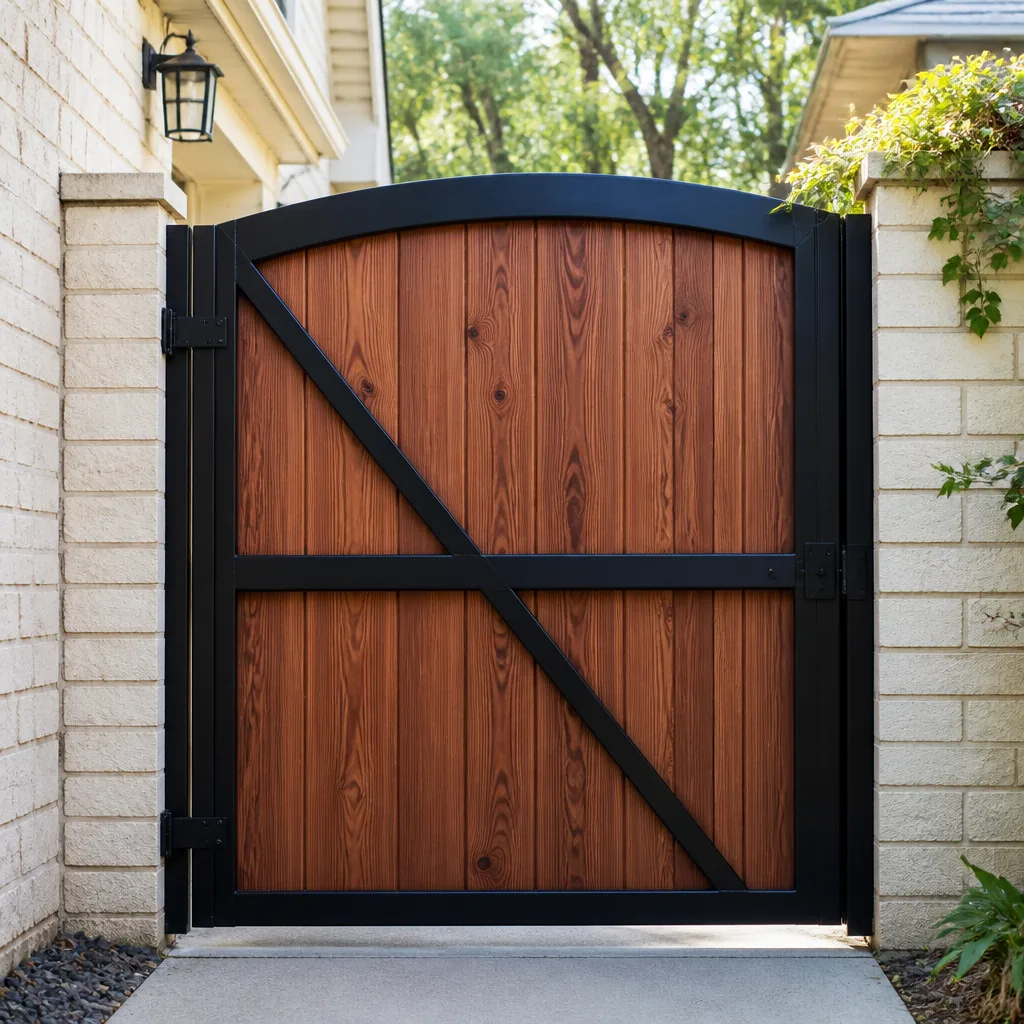
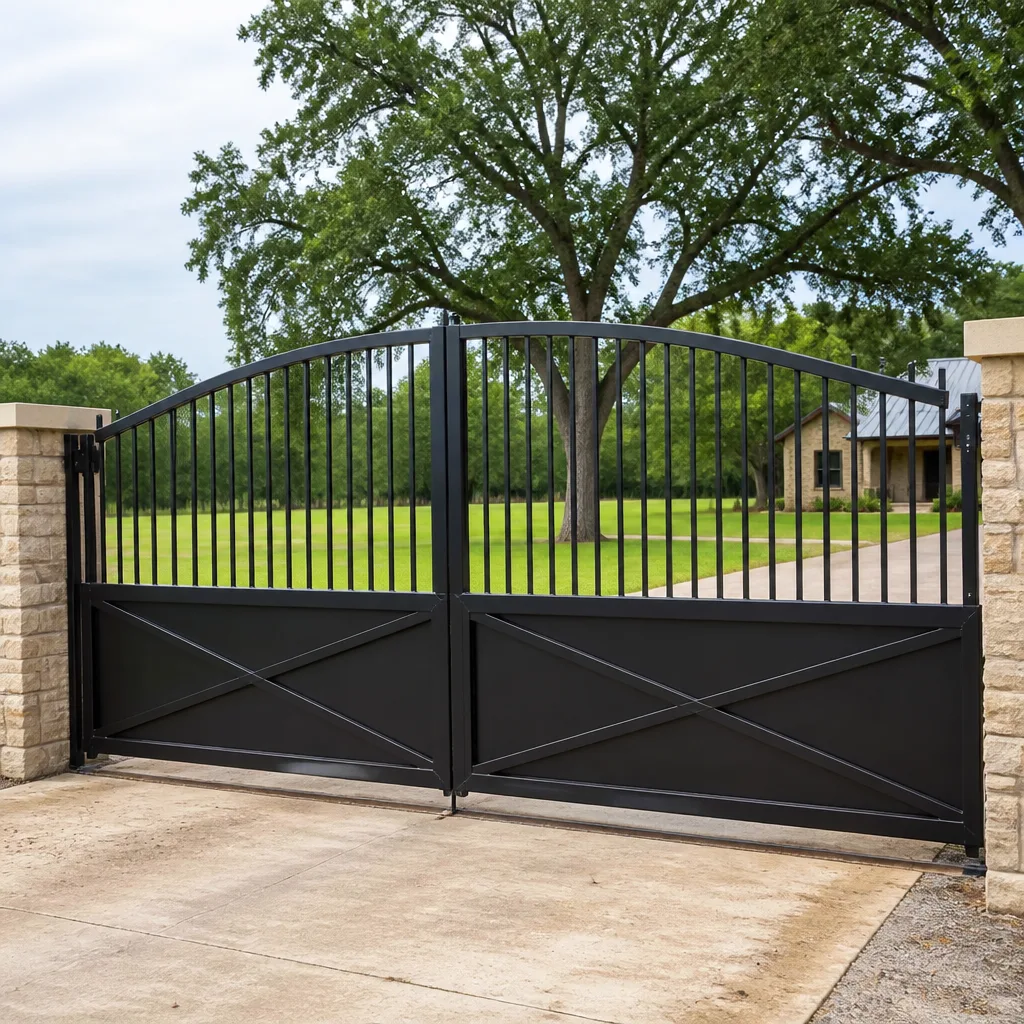
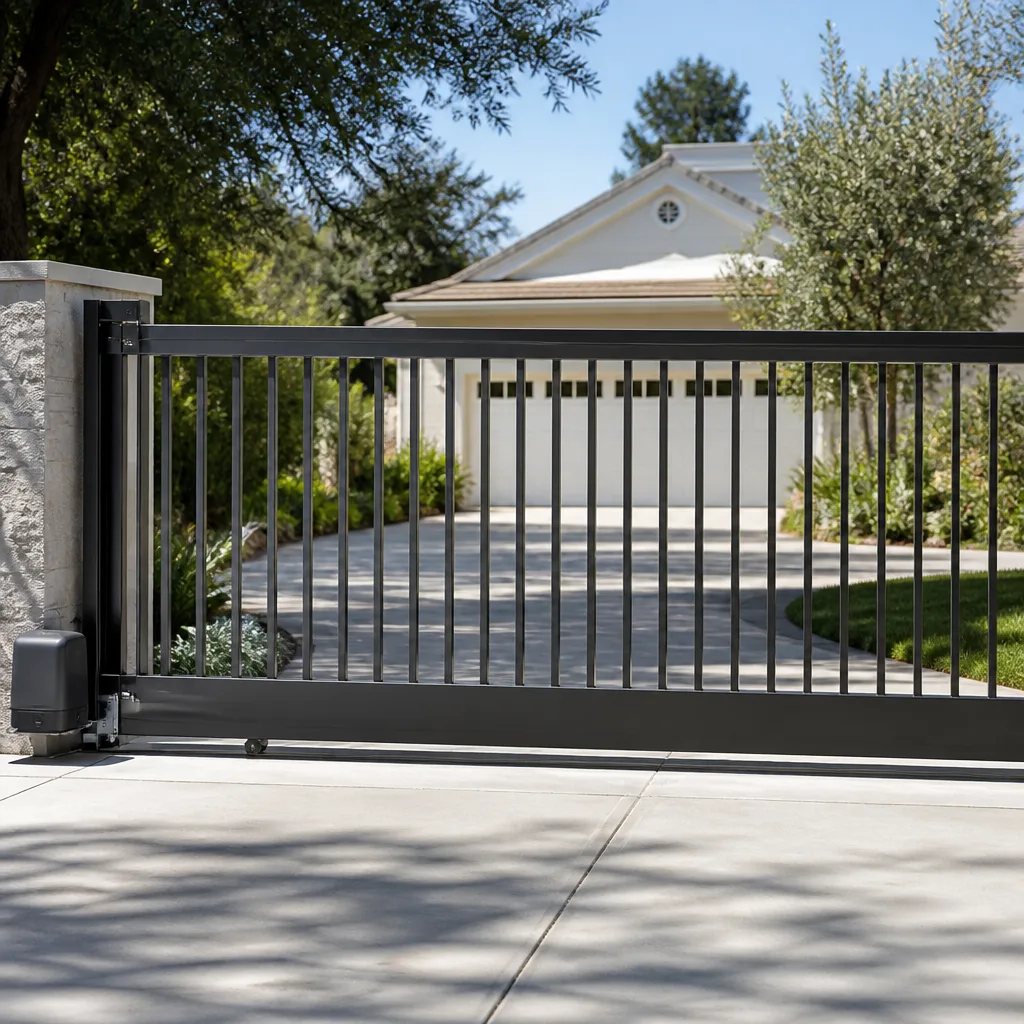
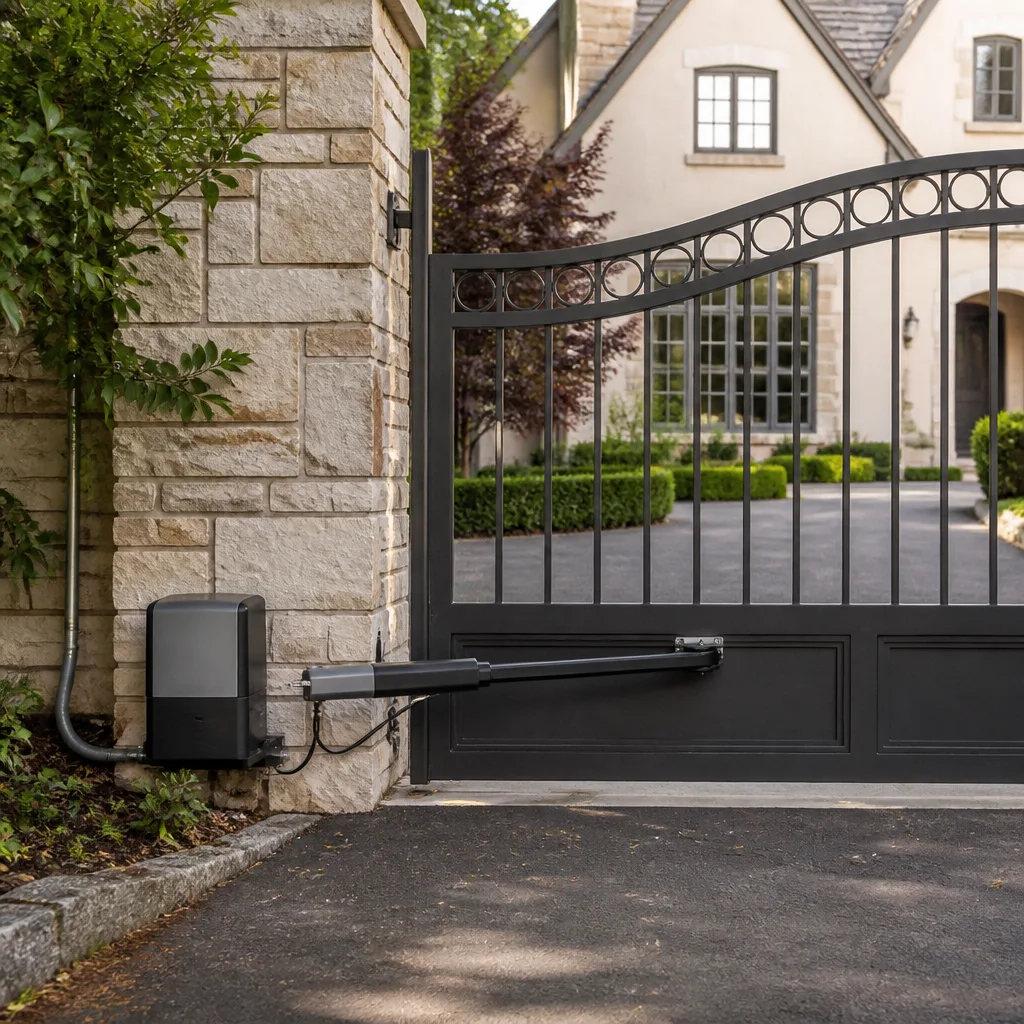
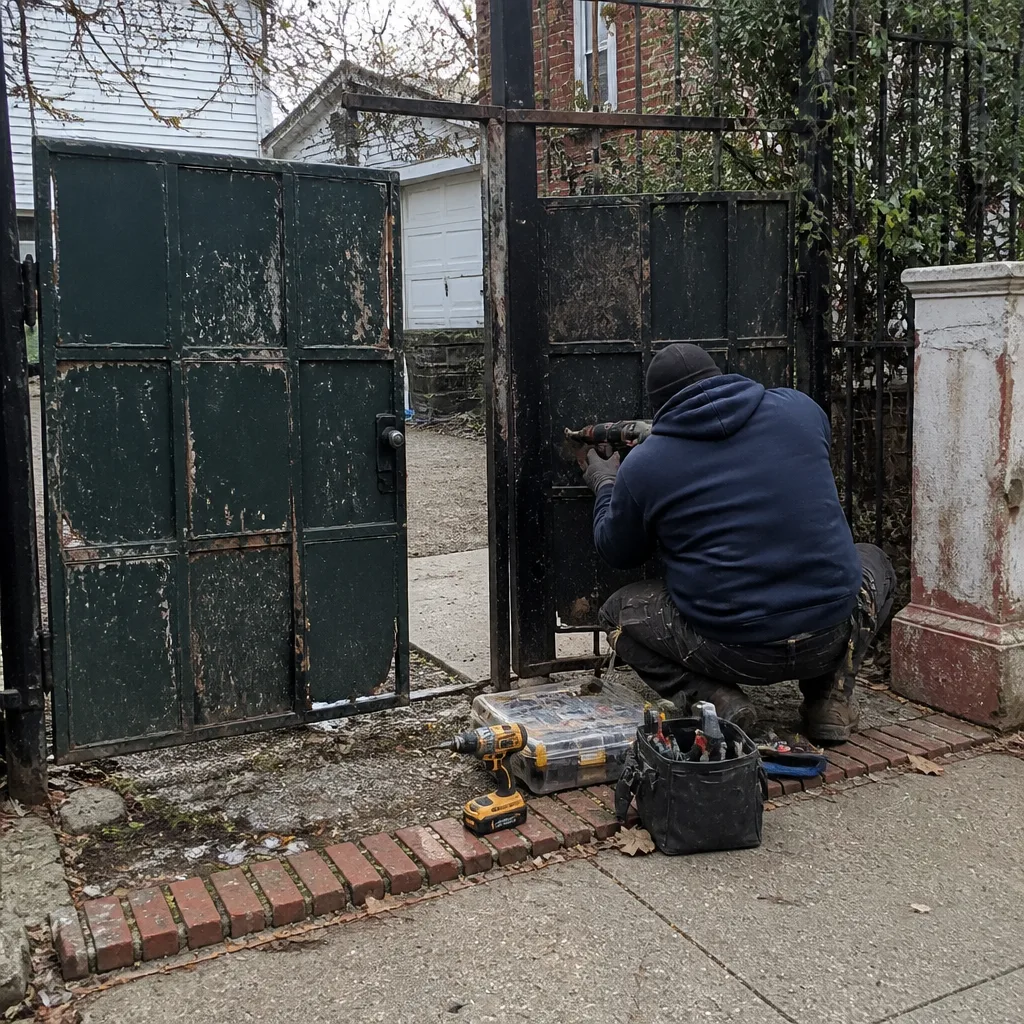 Before
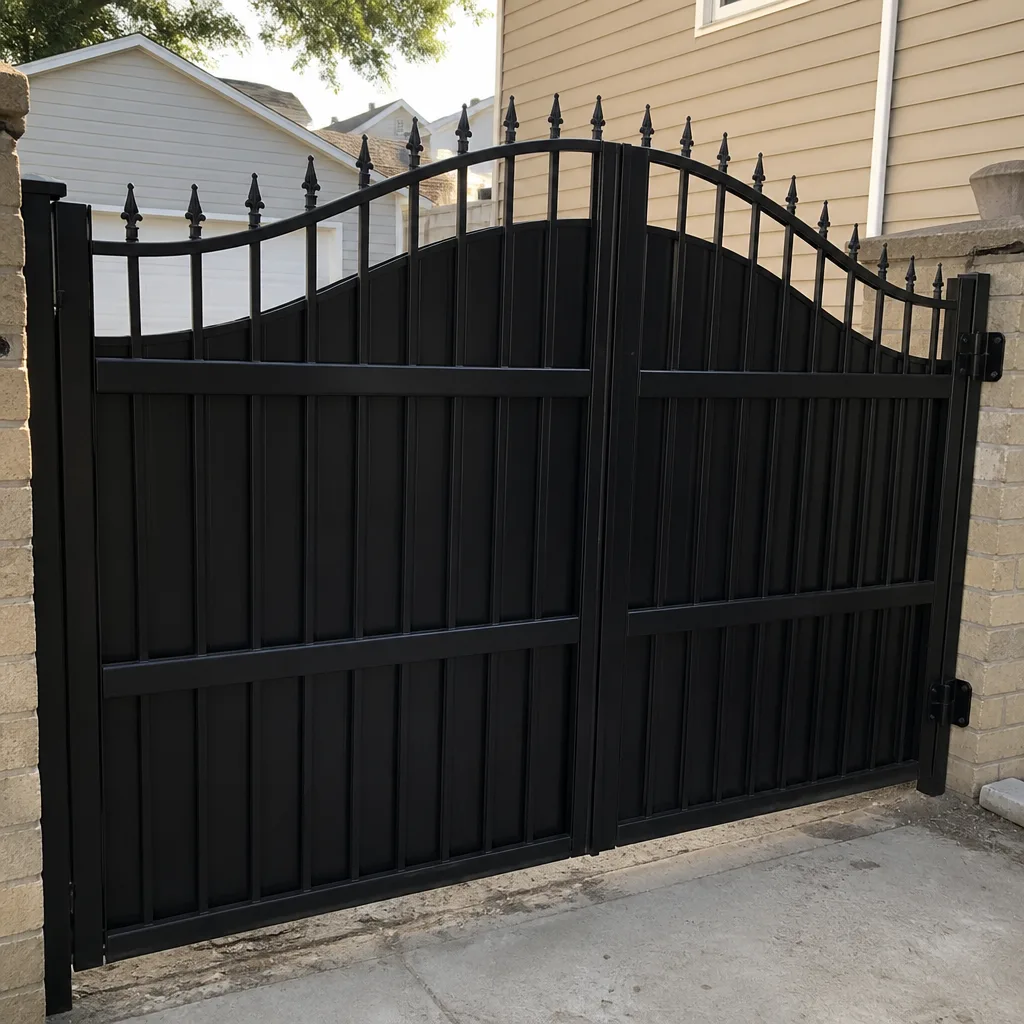 After
After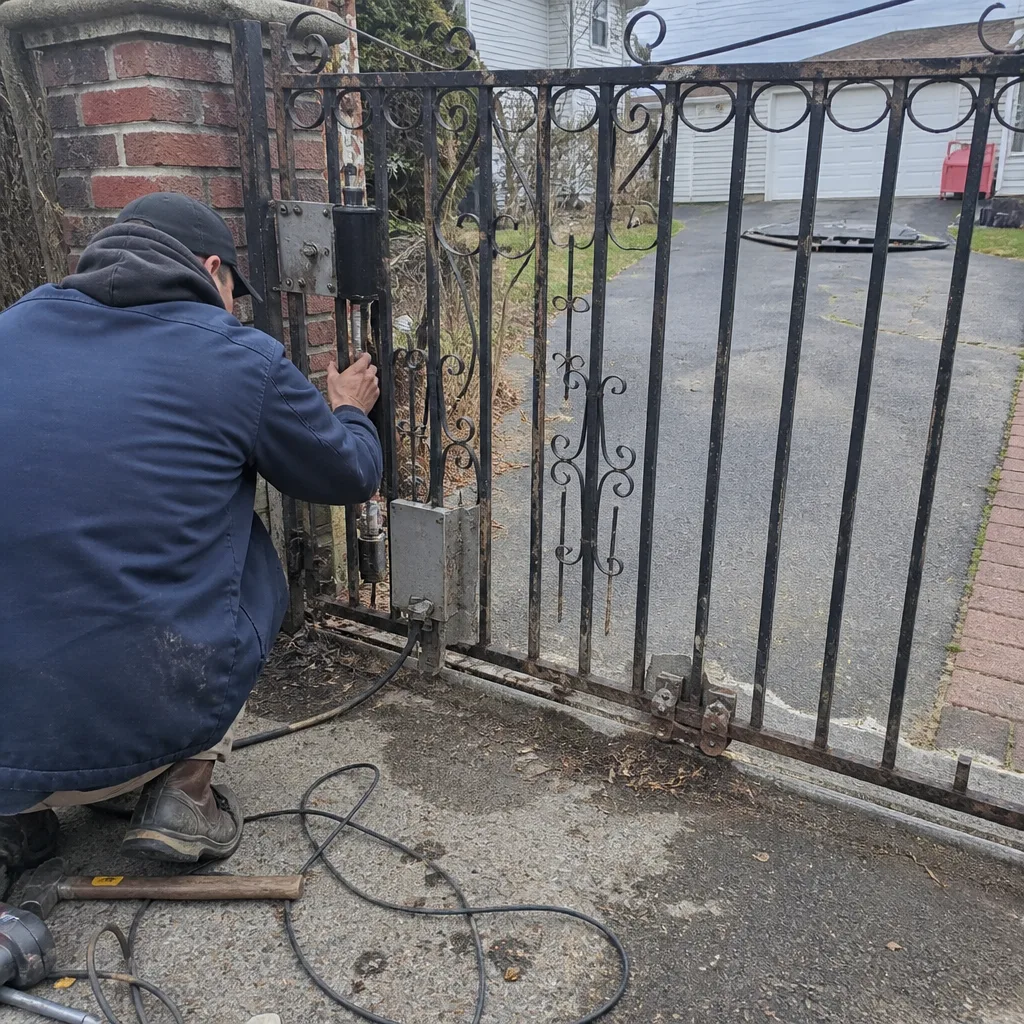 Before
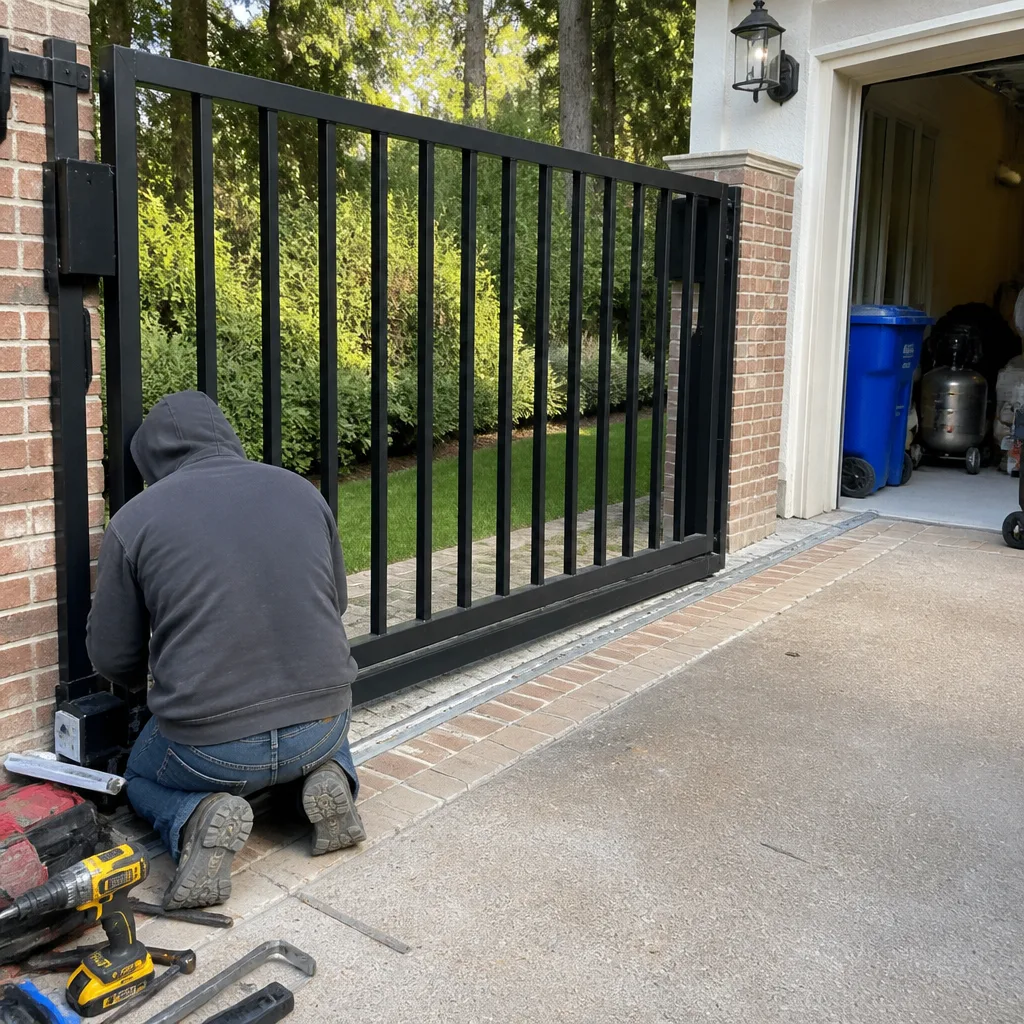 After
After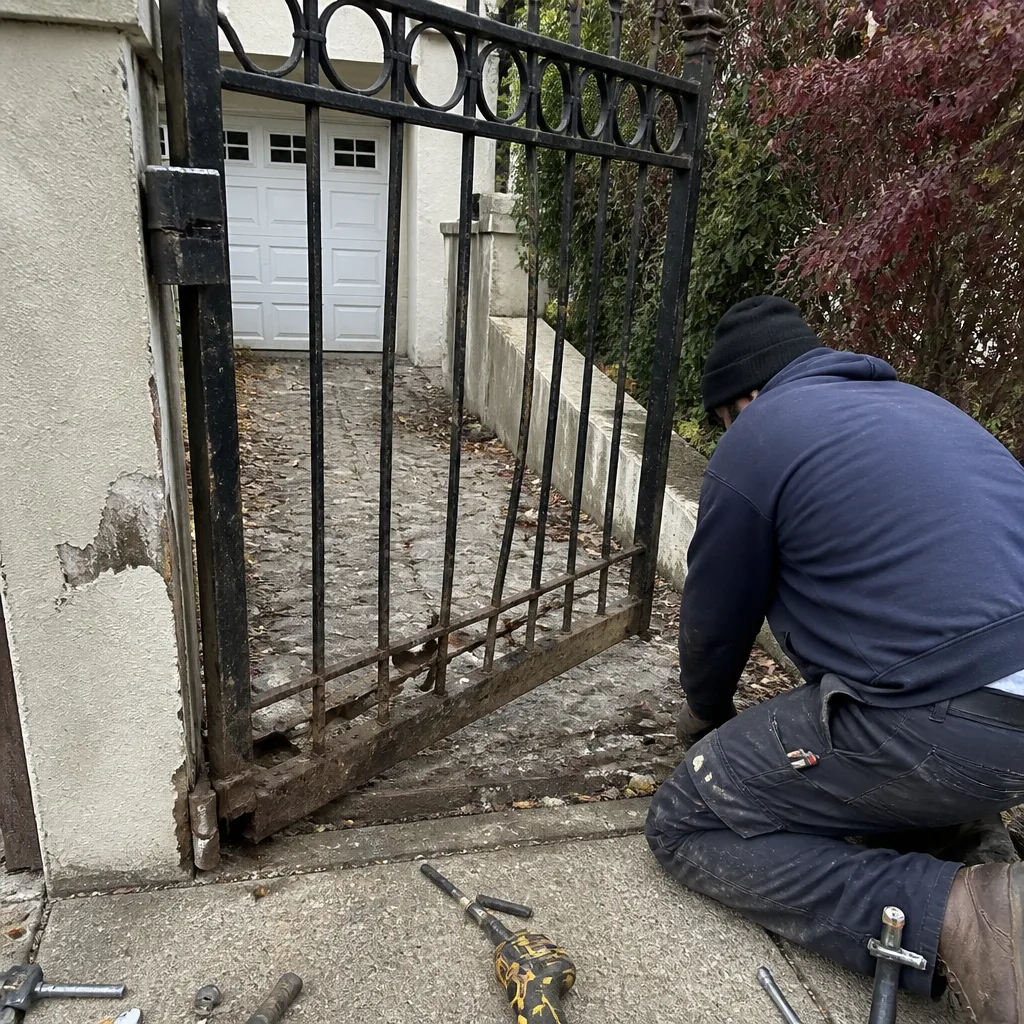 Before
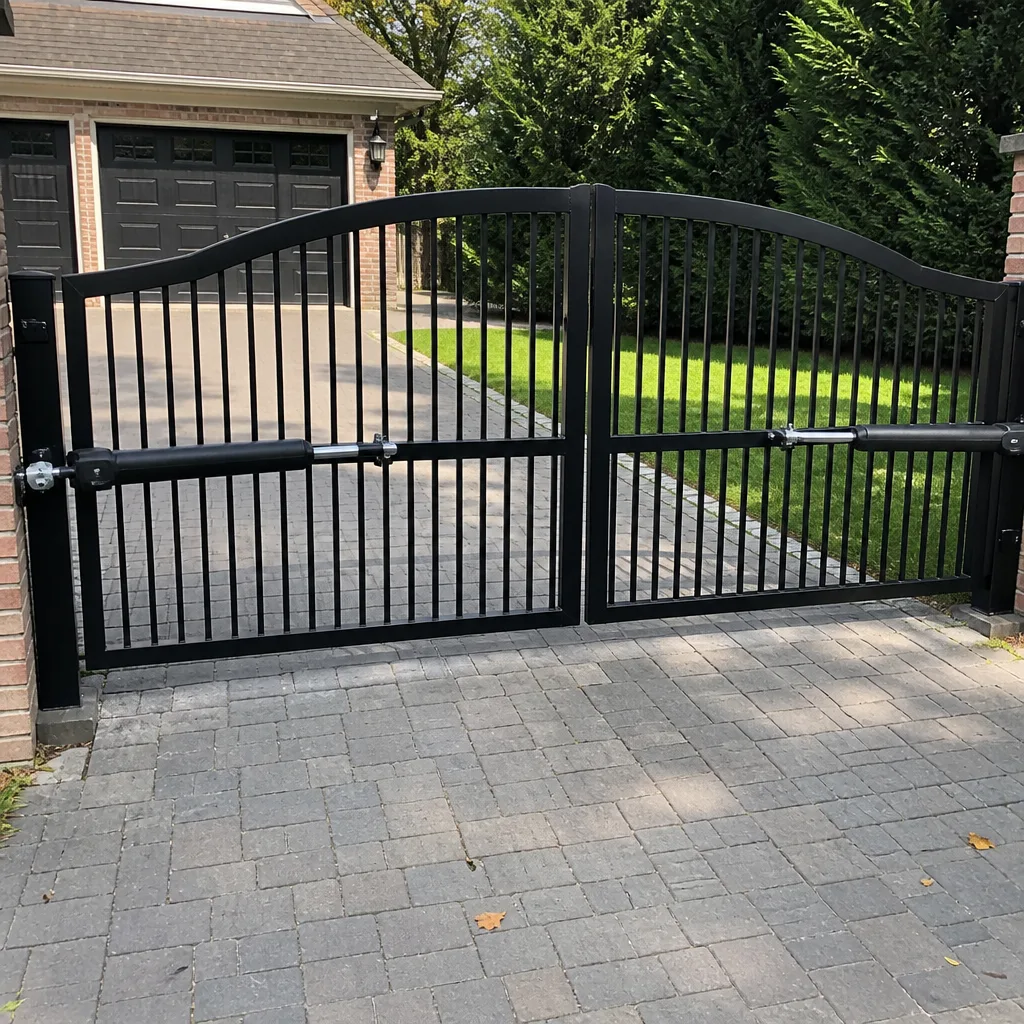 After
AfterGhost Controls Gate Repair in Washington, D.C., NY | Vance Gate Repair
We repair Ghost Controls gate openers across Washington, D.C., handling swing, slide, and dual gate systems on row house stoops, rear service alleys, and embassy perimeter gates. If your opener is beyond repair, we also offer Gate Installation - Washington, D.C. services. Most failures we see are repairable at the board or limit-switch level, not full replacements. Call (928) 260-0864 for a written price before any work starts.
Ghost Controls builds a solid opener, but Washington, D.C. does things to gate automation that no other market does. That is why our Gate Repair in Washington, D.C. focuses on local conditions, not generic fixes. Our techs, led by Adrian Vance, have pulled Ghost Controls arms off frost-heaved Capitol Hill posts, rebuilt control boards corroded by mid-Atlantic humidity inside non-vented pillars on Embassy Row, and fabricated recessed mounts so an opener disappears behind a pre-war cast iron gate the Historic Preservation Review Board has to sign off on. That last one, hiding a linear arm and conduit behind period ironwork without altering the face of a contributing structure, is not a skill set most installers from Maryland or Virginia bring into the District.
We’re an independent service provider. Ghost Controls does not train, certify, or endorse us. What we bring is hands-on time with the TSS1, DTP1, LSM1, and AXDP lines across every housing type this city throws at them. For full Ghost Controls sales & service details, we carry OEM control boards, arms, and limit switches, and we stock aftermarket batteries, remotes, and edge sensors when they meet or beat factory spec. The point is a gate that runs, documented by photo and written record before we leave.
Why Washington, D.C. Residents Choose Us for Ghost Controls Service
Adrian Vance started in commercial access control back in 2014, before he ever touched a residential driveway gate. The habit he brought with him is documentation: every job gets a photographed record of what was found, what was set, and what part went in. That matters on a Ghost Controls unit in Washington, D.C., because so many of them sit on properties where a future technician should not have to guess what the last one did. A homeowner should not pay twice to rediscover a limit-switch fault that was already fixed once.
Washington, D.C. is a dense, old, and oddly specific market. Our techs work Georgetown Federal-era iron, Capitol Hill rear-alley tubular gates, and the occasional private gate on a diplomatic compound where the aesthetic requirement is set by somebody an ocean away. We have seen Ghost Controls arms bind because a brick pilaster absorbed a winter’s worth of freeze-thaw and moved three degrees out of square. We’ve seen remote range collapse in rowhouse blocks where every house runs a crowded 2.4 GHz band. These are not vague “environmental factors.” They are this city’s signature failure modes, and they are the reason we price repairs in writing before picking up a tool.
Common Ghost Controls Gate Repair Problems We Solve in Washington, D.C.
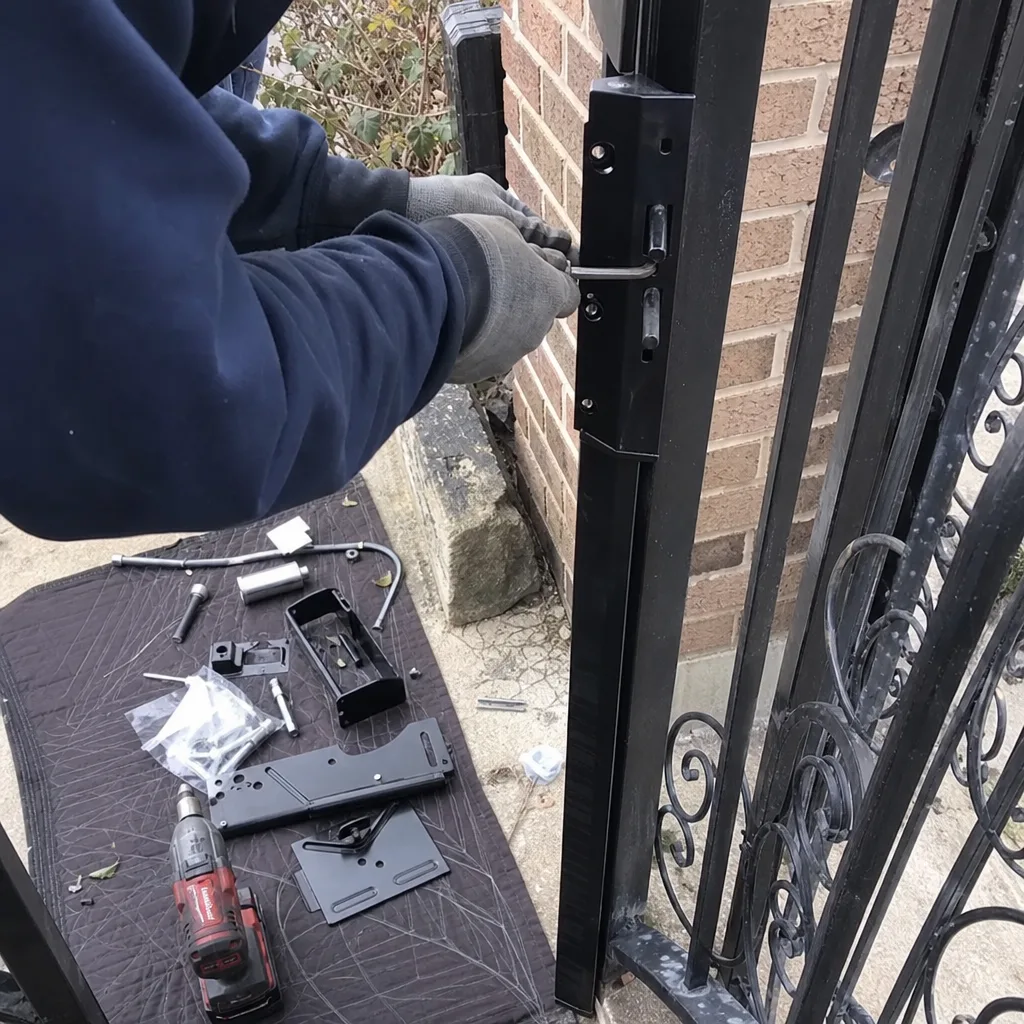
- Board corrosion from trapped humidity. D.C. summers hold above 70% relative humidity for months, which is hard on a Ghost Controls board mounted inside a sealed or poorly vented gate pillar. We open the housing, photograph the corrosion, clean or replace the board, and drill a concealed vent if the pillar design allows it, something we’ve had to do more times on Embassy Row and Kalorama than anywhere else.
- Freeze-thaw post movement causing arm bind and limit errors. Clay soil under Capitol Hill and Bloomingdale expands every winter and contracts every spring. Your Ghost Controls arm has no tolerance for a post that moved a half inch. The opener starts faulting, the limit cams shear, and the gearbox loads up. We re-bed or shim the post, true the leaves, and reset the travel before replacing anything expensive.
- Remote range loss in dense rowhouse blocks. Petworth, Shaw, and Capitol Hill are brick and close. 318 MHz Ghost Controls remotes lose range when every neighbor runs overlapping Wi-Fi and masonry eats signal. We test with a spectrum meter, reposition the receiver antenna, and in stubborn cases add a higher-gain antenna rather than telling you the board is bad.
- Battery backup failure after D.C.’s frequent short outages. The older grid in this city flickers, and Ghost Controls battery-backup units cycle more than they should. A backup battery that’s never tested reads fine until the power actually fails, then the gate dies open at midnight. We load-test the battery as part of service, not just check its terminal voltage.
- Worn drive gears and stripped arms on rear-alley gates. D.C.’s interior service alleys mean gates run more cycles per day than a suburban driveway gate, often twice a day for trash pickup plus every resident. Ghost Controls linear arms wear out faster on alley duty. We keep arm assemblies and gear kits stocked locally so a rear-alley repair doesn’t leave the property unsecured waiting on a part from a national warehouse.
BeforeAfterGhost Controls Service in Washington, D.C.: What Local Conditions Mean for Your Equipment
Washington, D.C. is the only market where a gate opener install can stall for months because the Historic Preservation Review Board wants the mechanics invisible behind original spear-topped pickets on a pre-1945 contributing structure. Contractors coming in from Arlington or Silver Spring learn this the hard way. HPRB staff can tell flat-bar modern mild steel from period-correct solid square or round wrought profiles on sight, so a replacement gate or visible arm mount gets rejected. What does that mean for your Ghost Controls opener? It means a linear arm sometimes has to disappear into a recessed, fabricated channel behind the gate leaf, with conduit buried under a brick sidewalk and all wiring routed so no equipment faces the street. That is not a standard mounting method you will find in a Ghost Controls install manual. We have built those mounts on Capitol Hill and Georgetown, for DTP1 arms and TSS1 pistons alike, and once the masonry is closed back up, the only evidence of the opener is the gate moving.
Ghost Controls Models & Products We Service in Washington, D.C.
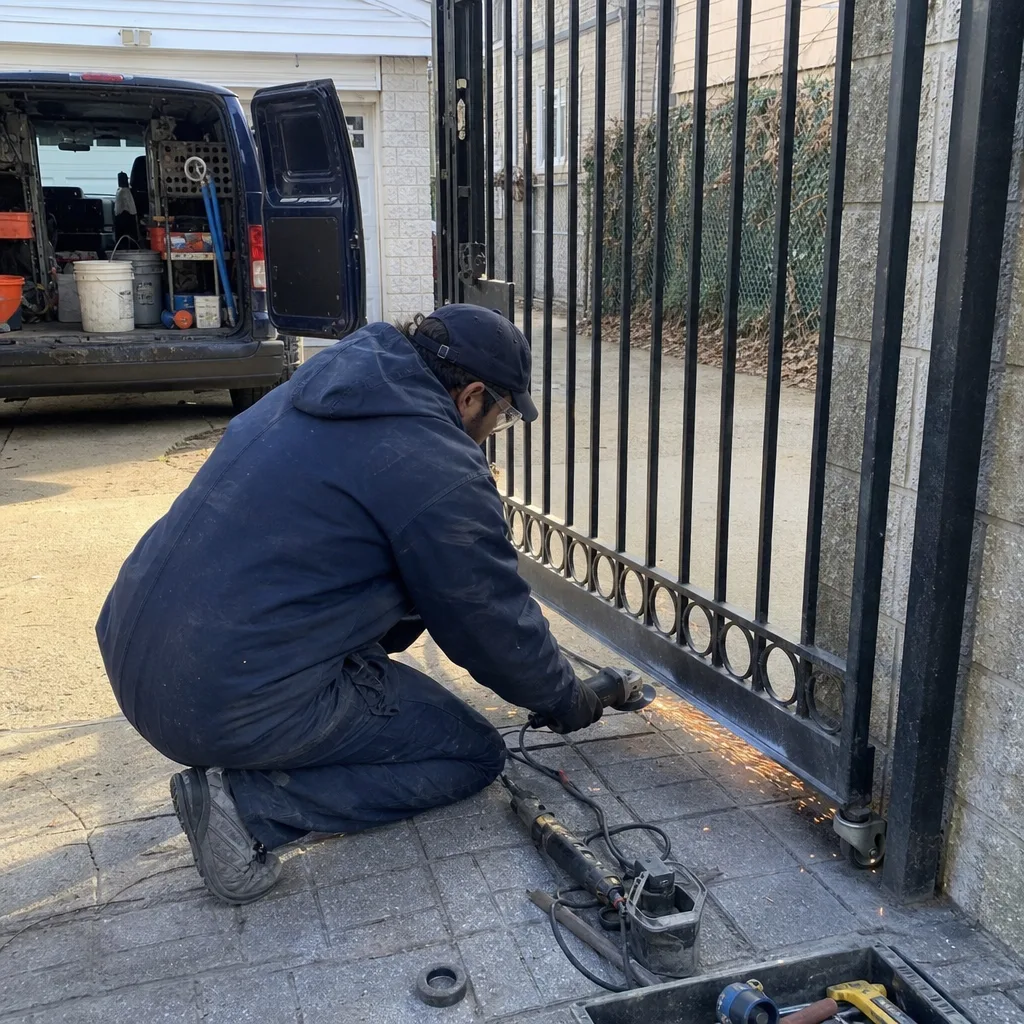
We service the full residential Ghost Controls lineup: the TSS1 universal automatic gate opener, the DTP1 dual swing arm, the LSM1 heavy-duty slide operator, and the AXDP dual gate opener with battery backup. On OEM versus aftermarket parts, our rule is simple. Control boards, arms, and limit switches get OEM when warranty or exact voltage matching is on the line. Batteries, remotes, and edge sensors we spec aftermarket when the component meets or exceeds factory specs and ships faster. We keep common D.C. failure parts in stock locally, which means a Capitol Hill rear-alley gate or a Petworth front iron gate is not down for a week while a distributor in Ohio decides when to ship. We only recommend full opener replacement when the gearbox is chewed, motor windings are shorted, or the control board has multiple dead channels. Most Ghost Controls failures are component-level fixes, and we’d rather repair a board at $150 than replace a whole $900 unit when the original is perfectly serviceable.
Ghost Controls Service Pricing in Washington, D.C.
Most Ghost Controls repair visits in Washington, D.C. fall in the $180 to $340 range, including the diagnostic, the written report, and the photo log. Simple limit-switch resets and force adjustments run at the lower end. Board replacements on a TSS1 or DTP1 typically land between $280 and $480, depending on whether the board is OEM and whether the pillar needs venting. Arm and gearbox replacements start around $350 and go up from there, with aftermarket remotes and battery items in the $40 to $110 range. Every job gets a written price up front, before any tool touches your gate, under our Haven Standard. Call (928) 260-0864 for a free estimate, and we will put the number in writing, not in a verbal ballpark.
Serving Washington, D.C., DC - Our Local Coverage Area
We’re based in the Washington, D.C. area and know this community well. Use the map below to see our service coverage - if you’re nearby, we can almost certainly help.
FAQs - Ghost Controls Gate Repair in Washington, D.C.
Does Ghost Controls pay for warranty parts if Vance Gate Repair installs them on an embassy row private gate? Ghost Controls does not reimburse us for warranty labor, and we are not an authorized service channel. If your opener is still under factory warranty, Ghost Controls ships parts, and we install and document the work, then you pursue the labor claim yourself. On embassy-row perimeter gates, the additional security documentation requirements are your responsibility. Call (928) 260-0864 and we will walk through what your model’s warranty actually covers.
Can you install a Ghost Controls opener on a cast-iron gate in Georgetown without HPRB seeing anything? We do not hide work from HPRB. We install compliantly: arm mounted behind the gate leaf, conduit buried, no visible alteration to the street-facing iron. If the gate is on a contributing structure in a Georgetown historic district and the work is considered a substantial alteration, the homeowner handles the HPRB filing. We provide the mounting drawings and material specs to support the application. That keeps the install legal, and it keeps the board from flagging the gate as modernized.
Why does my Ghost Controls gate opener work fine all fall and winter, then start giving a ‘force limit’ error every spring in Washington, D.C.? Freeze-thaw heaves the post. Winters in D.C. push clay soil under the post footings up, and it does not always go back where it came from. By spring, the post is slightly out of plumb, the gate leaf drags, and the Ghost Controls opener reads the drag as over-force and faults. The fix is not a new opener. The fix is re-bedding or shimming the post, then clearing the fault and resetting travel. We do this dozens of times every spring in Capitol Hill and Bloomingdale.
What makes a periodic visit to a rear-alley gate in D.C. different from a front driveway gate for Ghost Controls service? Rear-alley gates run far more cycles, they take dumpster strikes and delivery cart bumps, and they often sit on older, thinner posts. On a Ghost Controls opener, that means limit cams wear, arm brackets fatigue, and the fail-safe edge sensors get knocked out of alignment more often. We treat alley gates as high-cycle equipment and recommend more frequent limit and gear checks, usually twice a year. The service is the same. The intervals are not.
Is an old Ghost Controls opener on a pre-1945 cast-iron gate something you would patch with modern wire and motors, or will that trigger a landmark issue? If the gate stays, the opener mechanics can be modern as long as they are hidden and the gate’s historic fabric is not drilled or welded. We patch and re-weld salvaged iron sections, route all new wiring inside existing channels, and keep the original profile intact. The landmark issue you are thinking of, an irreversible change that triggers a violation, usually comes from cutting a new mounting hole in a historic rail, not from servicing the opener. We will tell you if your planned repair crosses that line before we touch it. Call (928) 260-0864 for the exact current scope your HPRB district expects.
Service Areas Near Washington, D.C.
For property owners with second homes or managed buildings beyond the District, we provide Ghost Controls service through Washington, D.C. service area coverage and extend to Ghost Controls service in New York City, where our original Flushing roots run deep. We also maintain a crew active in Ghost Controls service in Los Angeles for West Coast managed properties and estates.
Written by Adrian Vance, Owner at Vance Gate Repair, serving Washington, D.C. since 2014.