
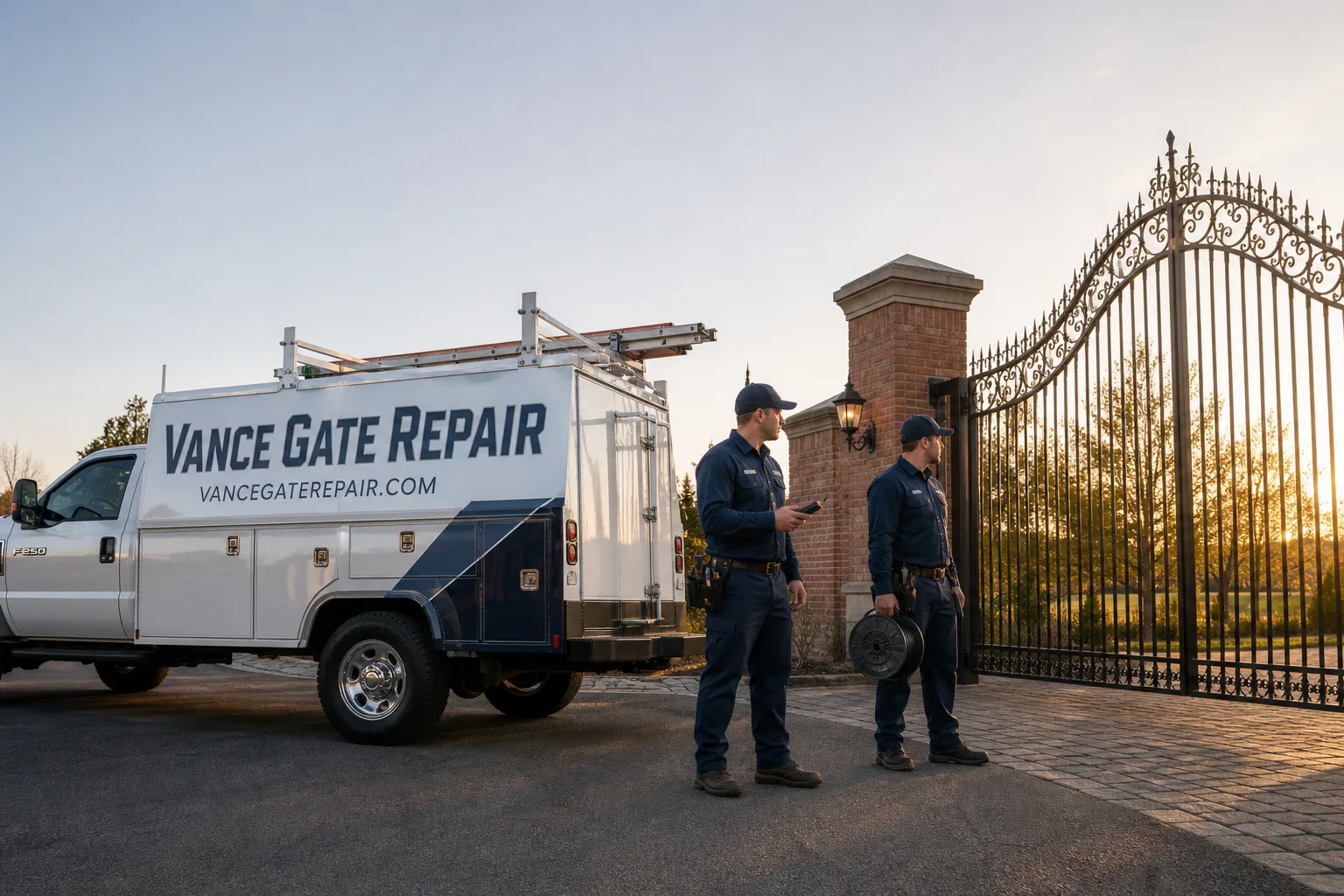
Free on-site gate assessment - hinges, posts, and your LiftMaster or Nice gate operator checked before anything is quoted
The assessment is free and the quote is the invoice.

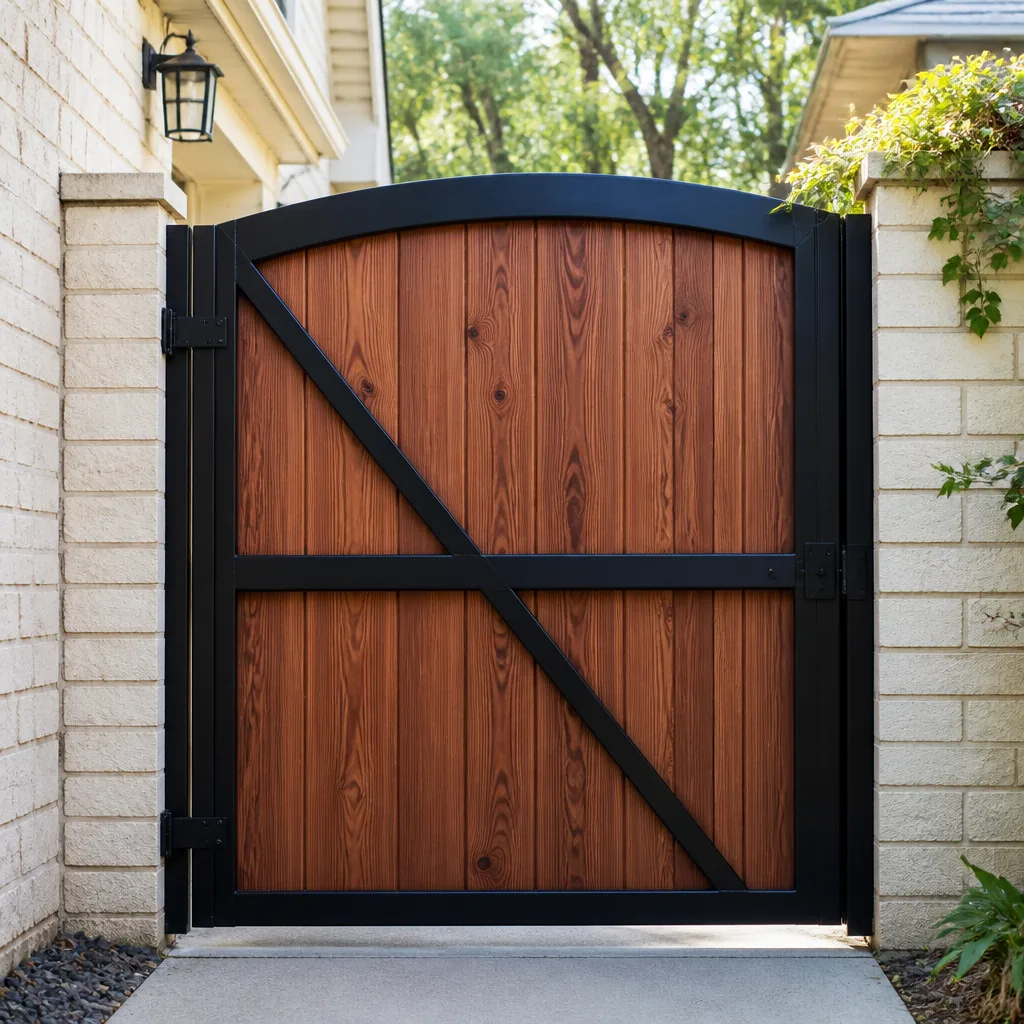
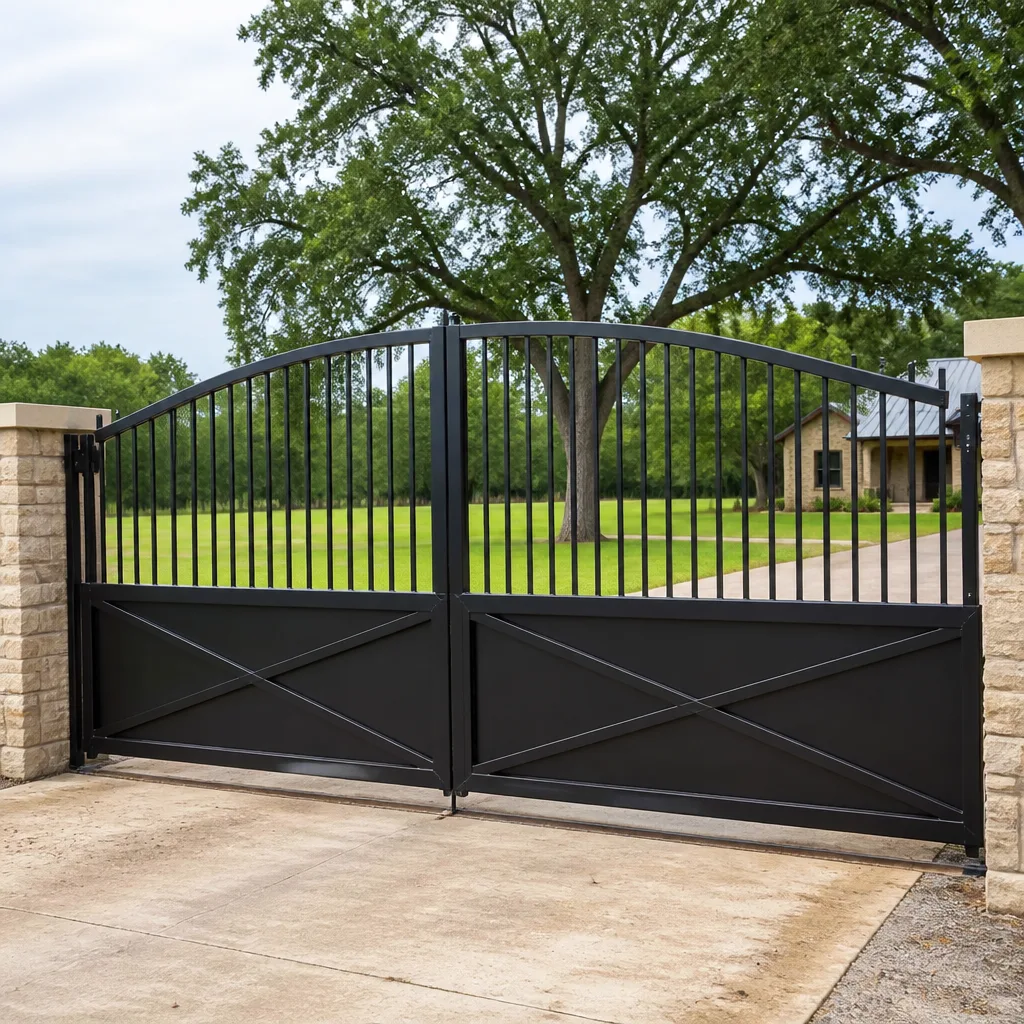
 Before
 After
After Before
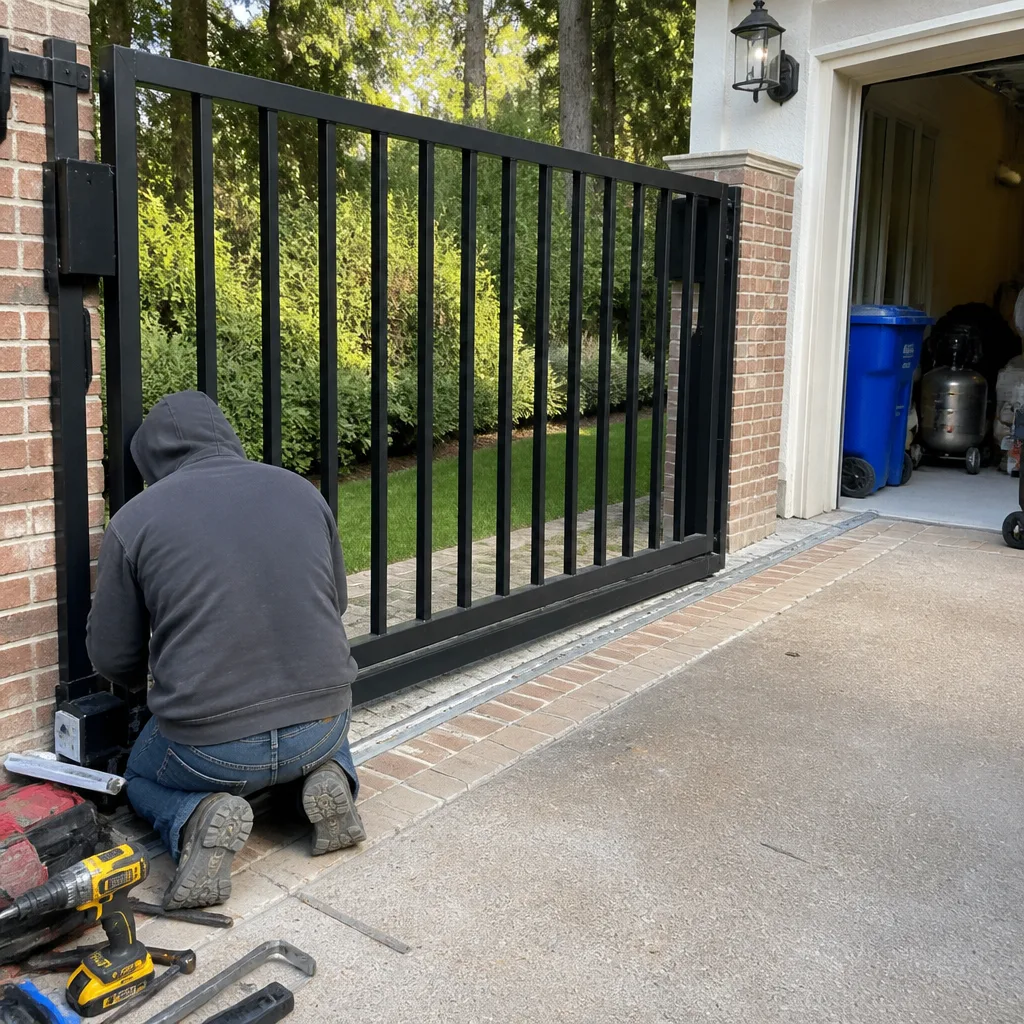 After
After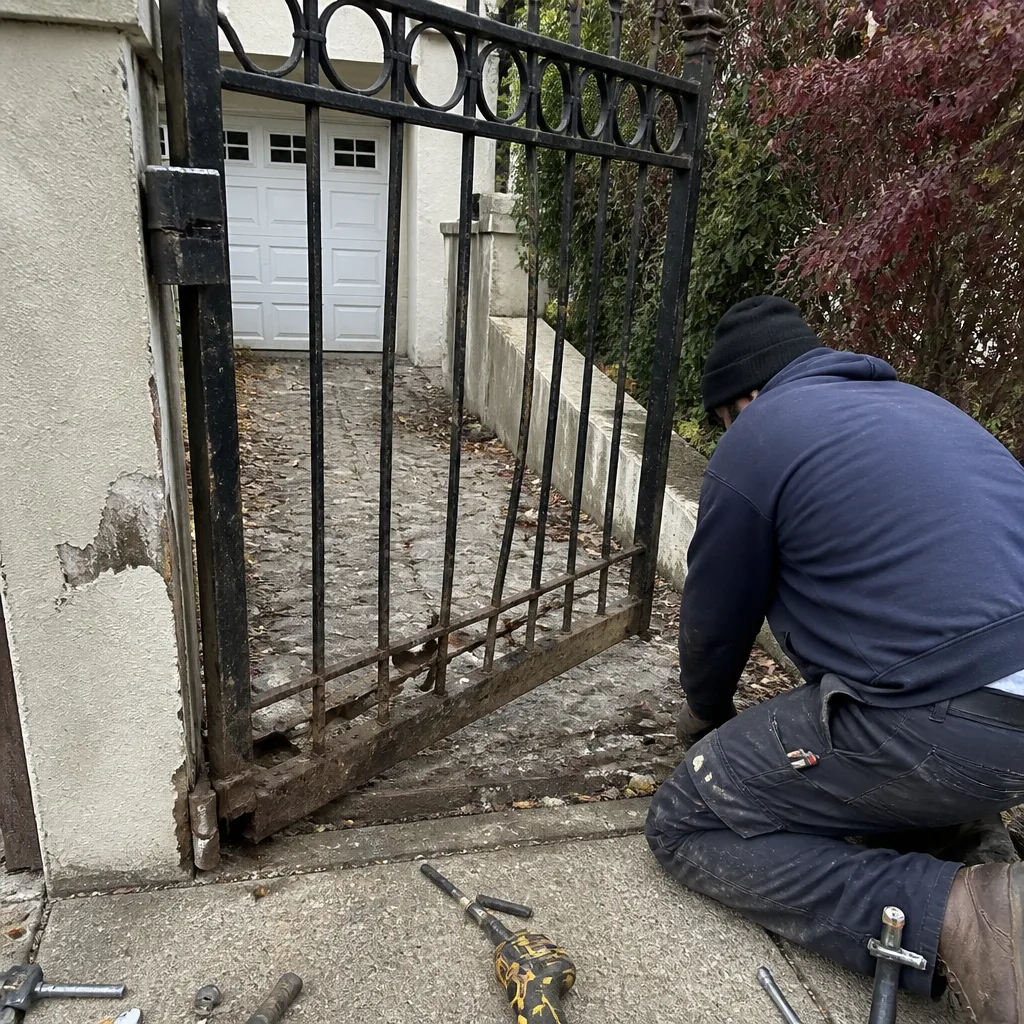 Before
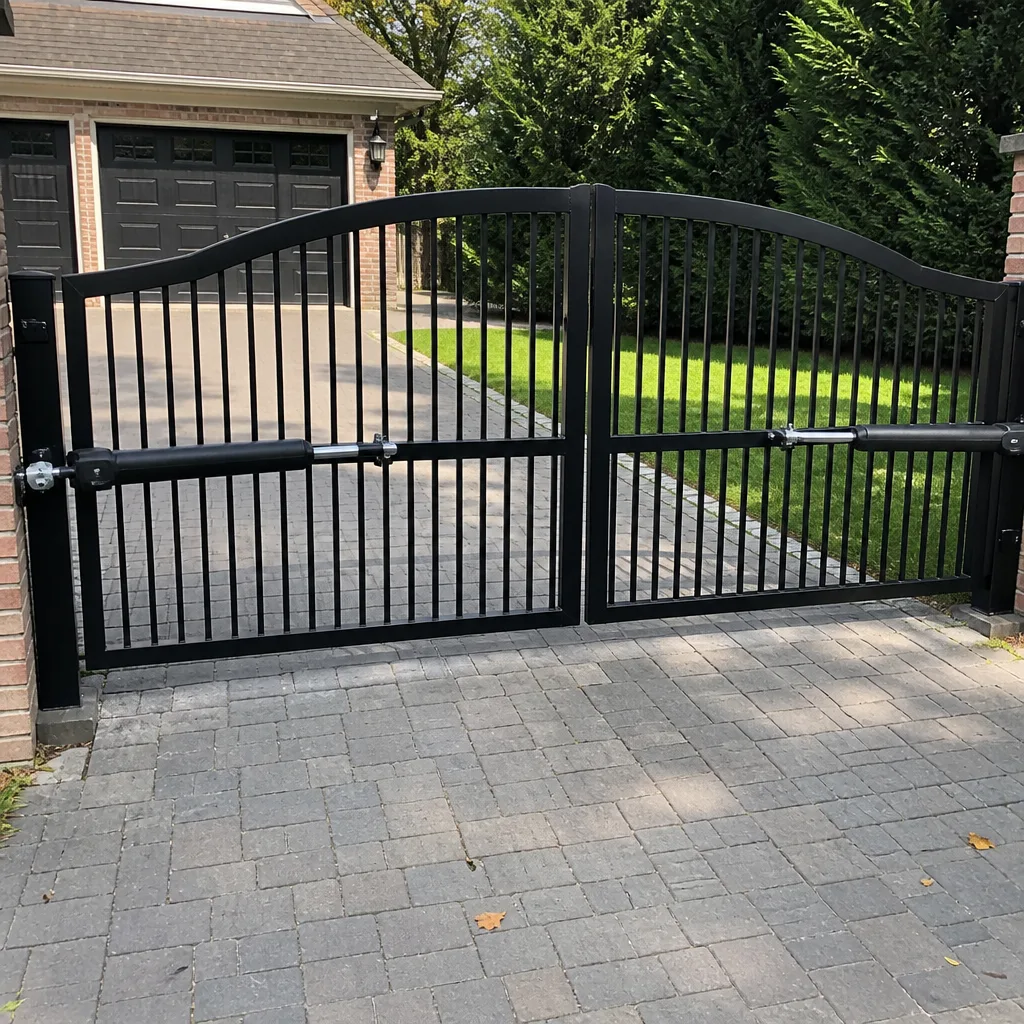 After
AfterLoud Grinding When the Gate Moves
A grinding sound from a moving gate almost always means metal is contacting metal where it shouldn’t be, or a lubricated surface has run dry and is now wearing itself apart. In most cases the cause is one of four things: worn rack-and-pinion gear teeth, dry or seized rollers and hinges, a misaligned track pulling the gate off its path, or a motor drive gear that has lost its lubricant and is starting to chew through itself. The noise is the gate telling you something is wrong before it tells you by stopping completely.
The grinding you’re hearing is friction that belongs somewhere else. Every gate system has moving parts designed to roll, slide, or mesh with a thin film of grease or lubricant between them. When that film disappears, whether from age, weather, or just time, the metal-on-metal contact starts. Left alone, it doesn’t stay at “grinding” for long. It moves to “stripped gear” or “cracked roller bracket,” and the repair bill moves with it. The good news is that caught at the grinding stage, most of these problems are fixable in a single visit.
Why It Happens
1. Dry or Worn Rack-and-Pinion Gear
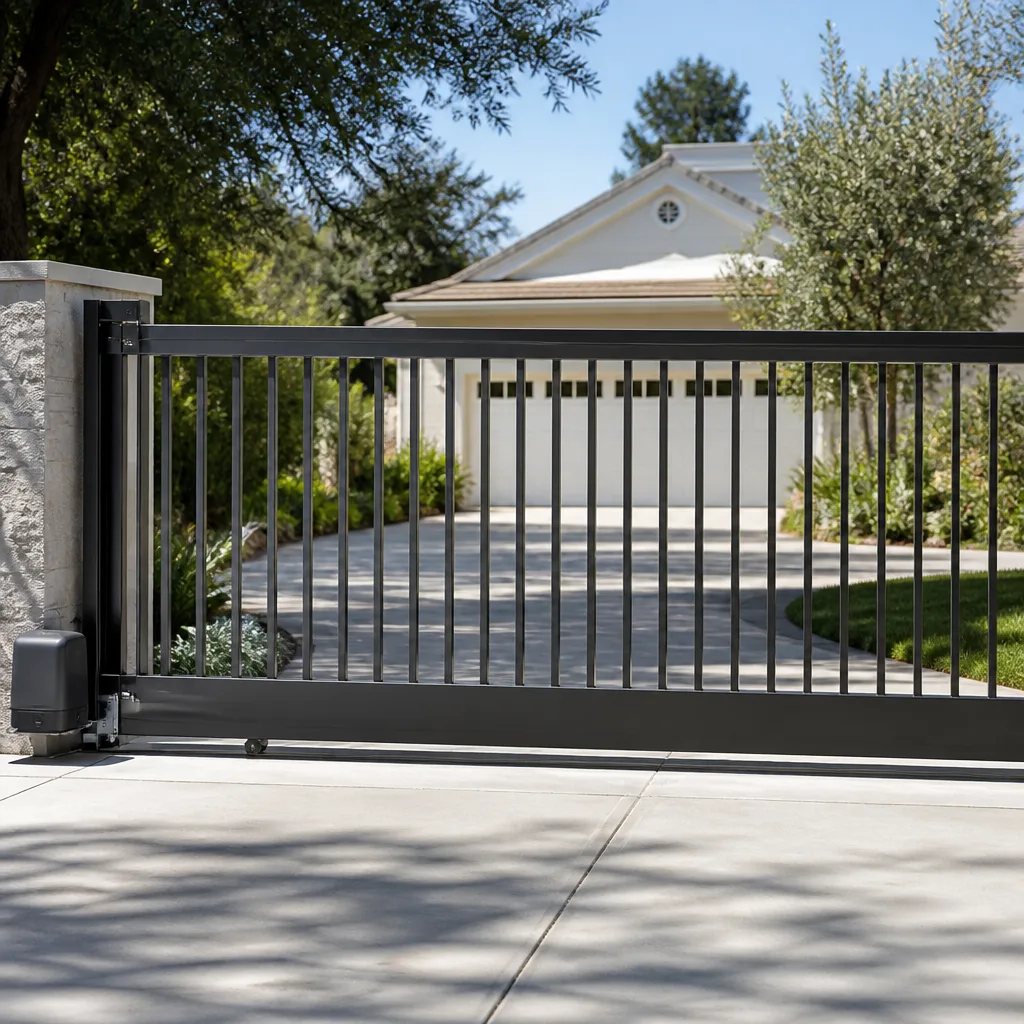
On a sliding gate, a toothed rack runs along the bottom of the gate and a small pinion gear on the motor meshes with it to drive the gate open and closed. When the rack is dry, caked with dirt, or the teeth are rounded from years of use, the pinion skips and grinds rather than rolling smoothly. You can usually confirm this one visually: look at the rack along the gate’s bottom rail. If you see grease that has turned black and gritty, or teeth that look chipped or flattened, the rack is the source.
2. Seized Rollers or Dry Hinges
Sliding gates ride on wheels that roll inside a track. Swing gates pivot on hinges. Both wear out and both need periodic lubrication. When a roller seizes, it stops rolling and starts dragging, which produces a deep grinding or scraping sound. A seized roller often leaves a flat spot on the wheel and a scuff mark on the track you can see if you get low and look. A hinge that’s run dry will make a similar sound but tends to be louder during the first few inches of movement when the gate is changing direction.
3. Track Misalignment
A sliding gate track that has shifted out of true forces the gate to fight its own path. The gate’s rollers push against the track walls instead of rolling freely through them, which creates grinding or a heavy dragging noise that’s usually consistent throughout the travel rather than just at one point. You may also notice the gate moving slower than usual or stopping mid-travel. Look at the track from one end while the gate is closed. If it bends or curves where it should be straight, misalignment is likely involved.
4. Motor Drive Gear Wearing Down
The drive gear inside the motor operator is a smaller plastic or nylon gear that transfers torque from the motor to the drive mechanism. These gears are intentionally softer than the metal parts around them so they fail first and protect the motor. When they start to go, you’ll hear a grinding or crunching sound that seems to come from inside the motor housing itself rather than from the gate or track. Sometimes you’ll also notice a burning smell alongside the noise. That’s a sign to stop operating the gate and call – running a motor against a failing gear accelerates the damage quickly.
What to Do Right Now
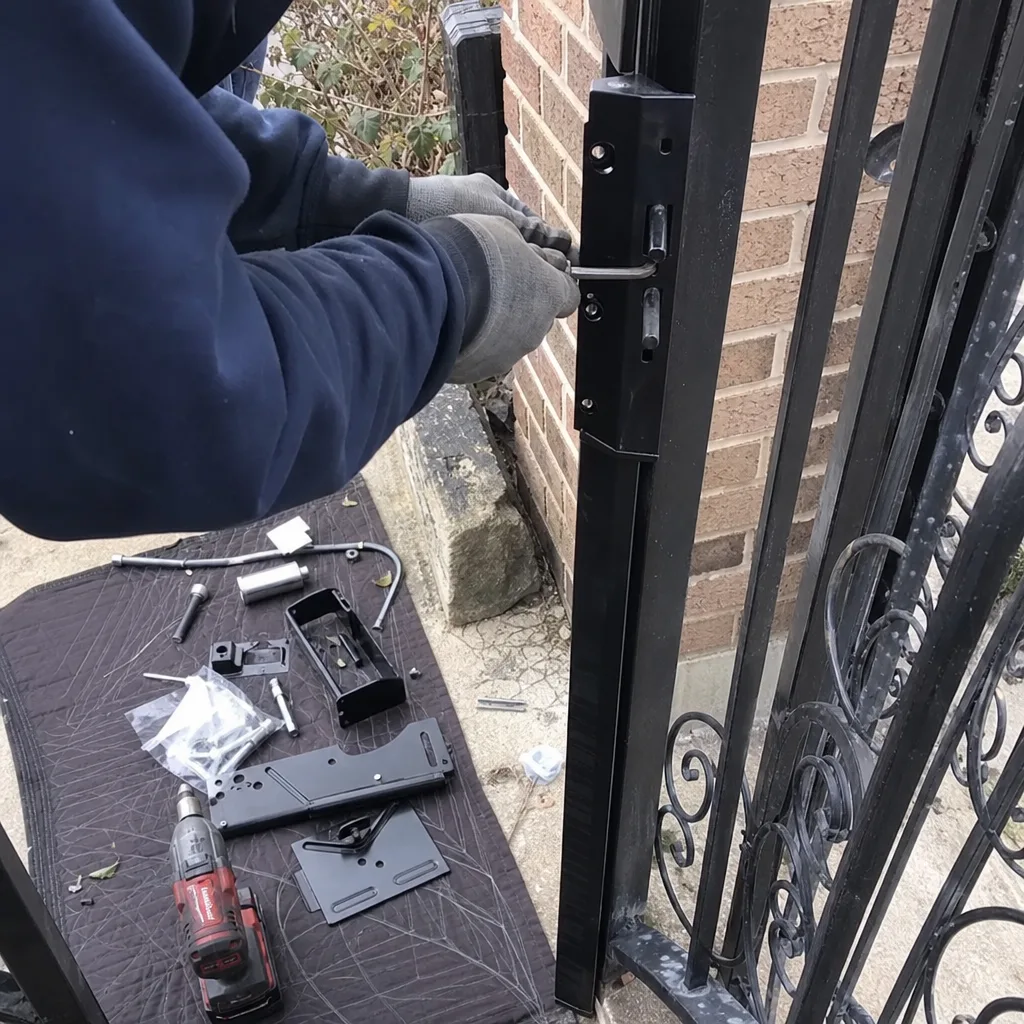
- Stop cycling the gate. Each open-close cycle with metal grinding against metal removes material. The more cycles you run before the repair, the closer you are to a complete failure or a stripped component that costs more to replace.
- Take a short video with your phone. Walk alongside the gate as it moves and record both the sound and whatever section of the gate is near the noise. A 20-second video tells your technician more than a description and can cut diagnostic time on the visit.
- Look at the rack and rollers without touching anything under tension. If you have a sliding gate, you can safely look at the bottom rack and the track rollers from ground level. Note any visible grease that’s black and gritty, rollers that look flat-sided, or sections of rack with chipped or missing teeth. Do not reach into the motor housing or attempt to adjust limit switches – those components can move without warning.
- Do not lubricate anything yet. This sounds counterintuitive, but spraying lubricant before a technician arrives can mask the wear pattern that helps diagnose the problem accurately. Let the tech see it dry.
- If the gate is partially open and won’t close, leave it and call. Don’t force it manually if you feel resistance. A gate under mechanical stress can move unexpectedly, and four hundred pounds of steel moving without control is a serious injury risk. Your local Vance Gate Repair team can assist with getting it safely to a closed position as part of the visit.
BeforeAfterHow We Fix It
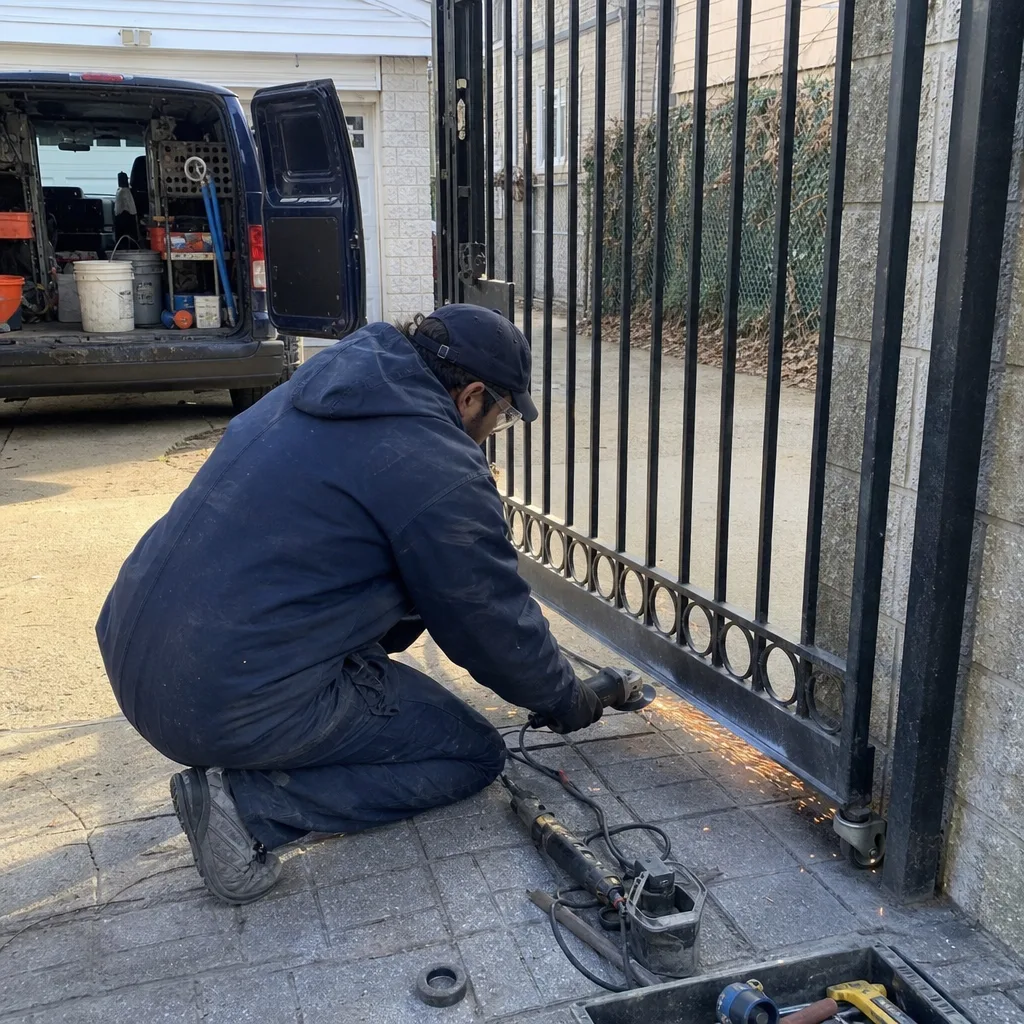
When your local Vance Gate Repair technician arrives, the first thing they do is cycle the gate once and listen. That one pass usually narrows the cause to one or two candidates. From there, they check the rack condition and grease type, spin each roller by hand, pull a measurement on track alignment, and inspect the drive gear if the sound is coming from the motor housing. Everything found is photographed before any work starts – that’s not optional on a Vance job, it’s how Adrian built the documentation habit starting in 2014 on commercial access-control sites, and it applies to every residential call the same way.
Once the cause is confirmed, you receive a written price before anything is touched. That’s Haven Standard Clause 1 on every job, no exceptions. Most grinding repairs fall under our Gate Repair service, and if a drive gear or rack section needs to be sourced, that falls under Gate Parts. The typical visit for a grinding diagnosis and single-cause repair runs one to two hours. All completed work is covered by the 365-Day Done Right Promise: if it’s not right within that year, we make it right at no additional charge.
Frequently Asked Questions
Yes, in the practical sense. A gate that’s grinding is actively damaging itself with each cycle, and the failure mode isn’t gradual – it often ends with the gate stuck open, stuck closed, or (in the case of a swing gate with failing hinges) moving in a way that wasn’t intended. Beyond the repair cost, a gate that stops mid-travel or behaves unpredictably near vehicles or children is a real safety concern. Stop cycling it until it’s been looked at and call (928) 260-0864 to get someone out to you.
A week of daily cycling on a grinding gate frequently turns a lubrication and roller job into a rack-and-pinion replacement or a drive gear rebuild. The parts that grind are the ones that hold the gate on its path and keep it moving in a straight line. Once a roller cracks or rack teeth strip past a certain point, those parts have to come off and be replaced rather than cleaned and re-greased. Waiting rarely saves money. Call (928) 260-0864 and your local team will get it on the schedule.
A live person answers at (928) 260-0864 around the clock, every day of the year – not a voicemail, not an automated system. Gate repair is same-day eligible depending on your location and the current schedule. Call, describe what you’re hearing, and the person on the phone will tell you what the nearest available window looks like and who’s coming. You’ll get the technician’s name and photo before they arrive.
There’s no flat price we can publish for a grinding repair because the cause ranges from a simple rack cleaning and re-lube to a roller set replacement to a drive gear swap, and the cost varies accordingly. What we can tell you is that your local Vance technician will diagnose the problem, identify the parts needed, and hand you a written price before any work begins – not an estimate that grows, a flat price. If you’ve already got a written estimate from another company, bring it: we review competitor quotes at no charge as a free second opinion.
Get It Fixed
A gate grinding through every cycle isn’t going to fix itself. Call (928) 260-0864 right now – a live person picks up – and your local Vance Gate Repair team will get a technician to you, written price in hand, ready to diagnose and repair it the same day.
Written by Adrian Vance, Owner at Vance Gate Repair, serving communities nationwide since 2014.
What Our Customers Say
"Gate had been dragging for a year. They photographed the bent hinge post, explained why the operator kept faulting, and gave me a fixed price to correct both."
- Terrence B."They installed the opener and left me a diagram of the wiring and the limit settings. When I needed a second remote programmed I could do it myself."
- Nadine C."The safety loop had never been installed correctly by the previous company. They showed me the reading, fixed it, and did not charge me for the diagnosis."
- Patrick H.