
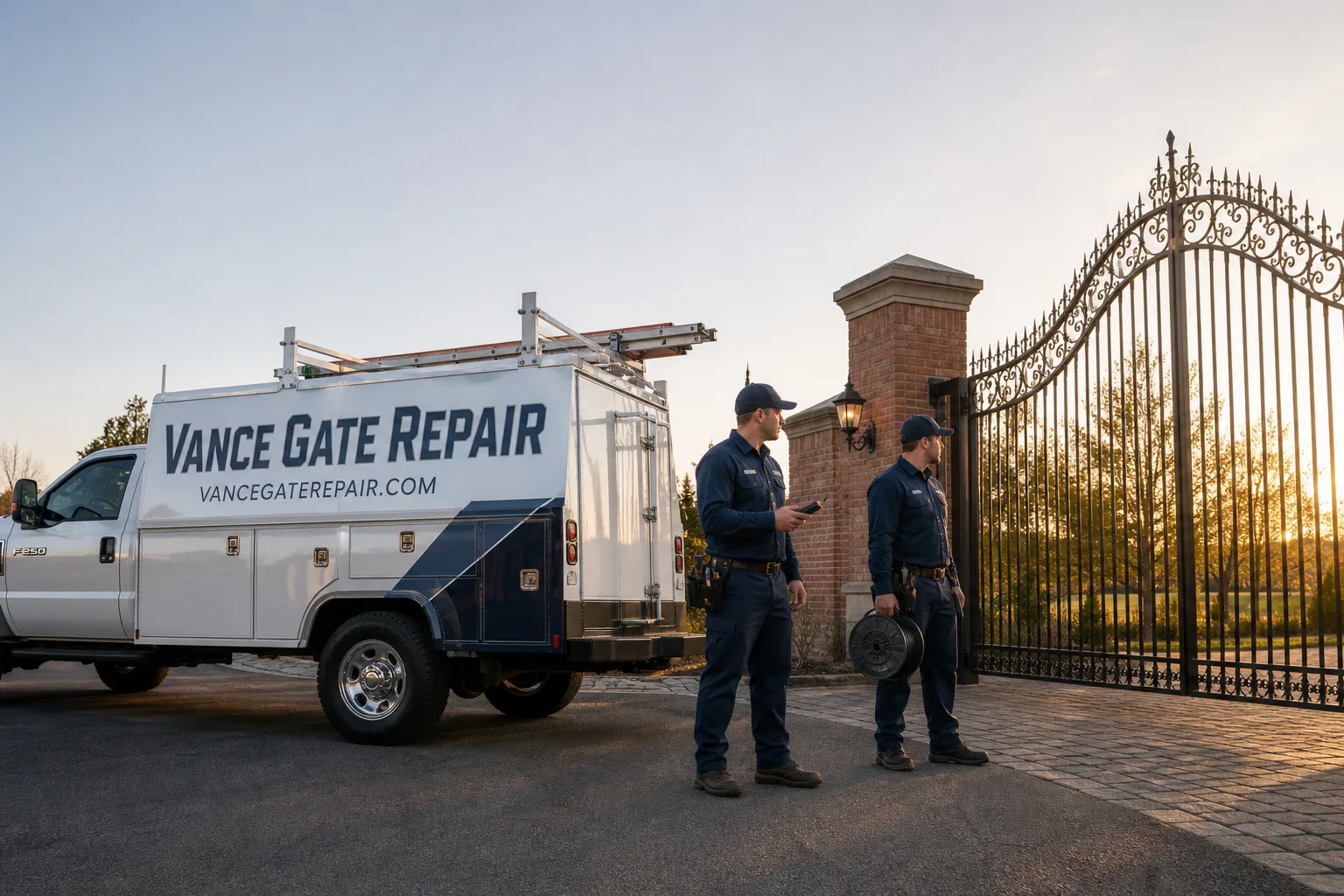
Free on-site gate assessment - hinges, posts, and your LiftMaster or Nice gate operator checked before anything is quoted
The assessment is free and the quote is the invoice.

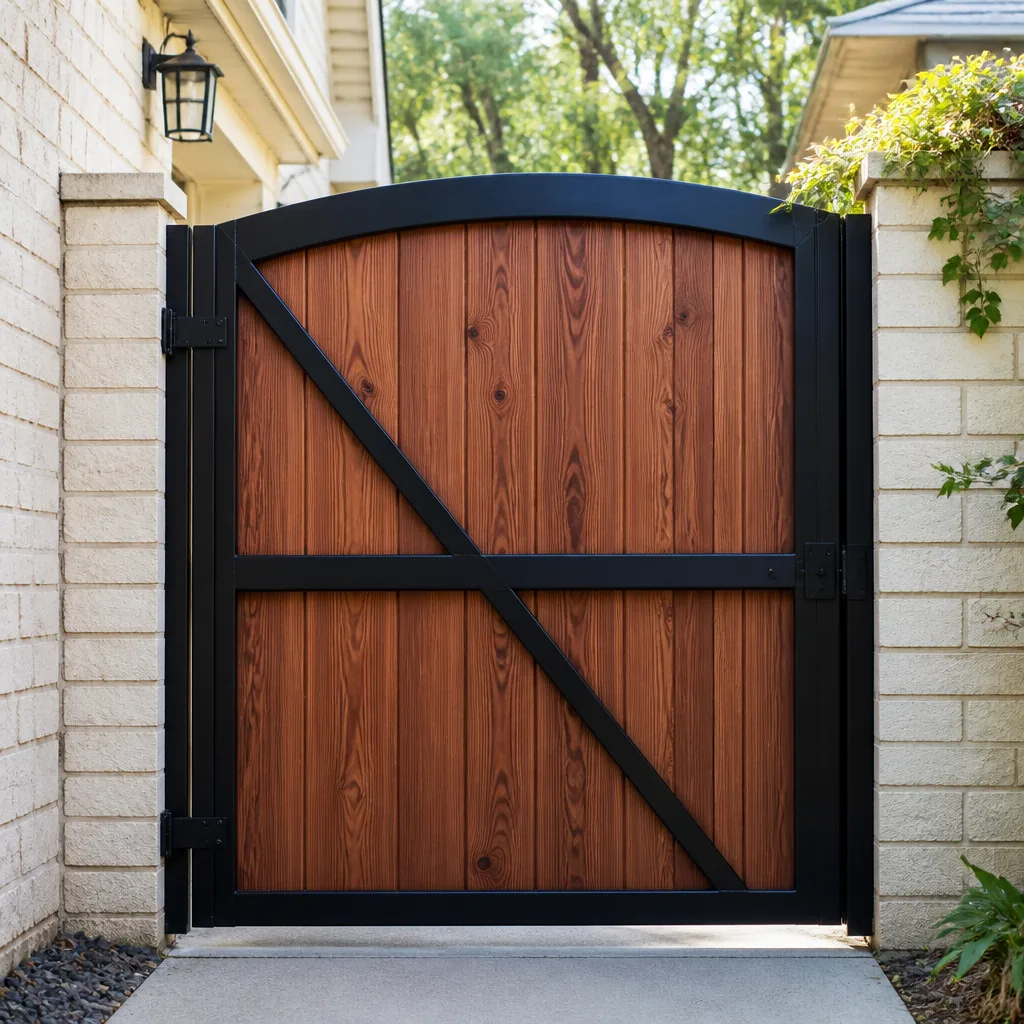
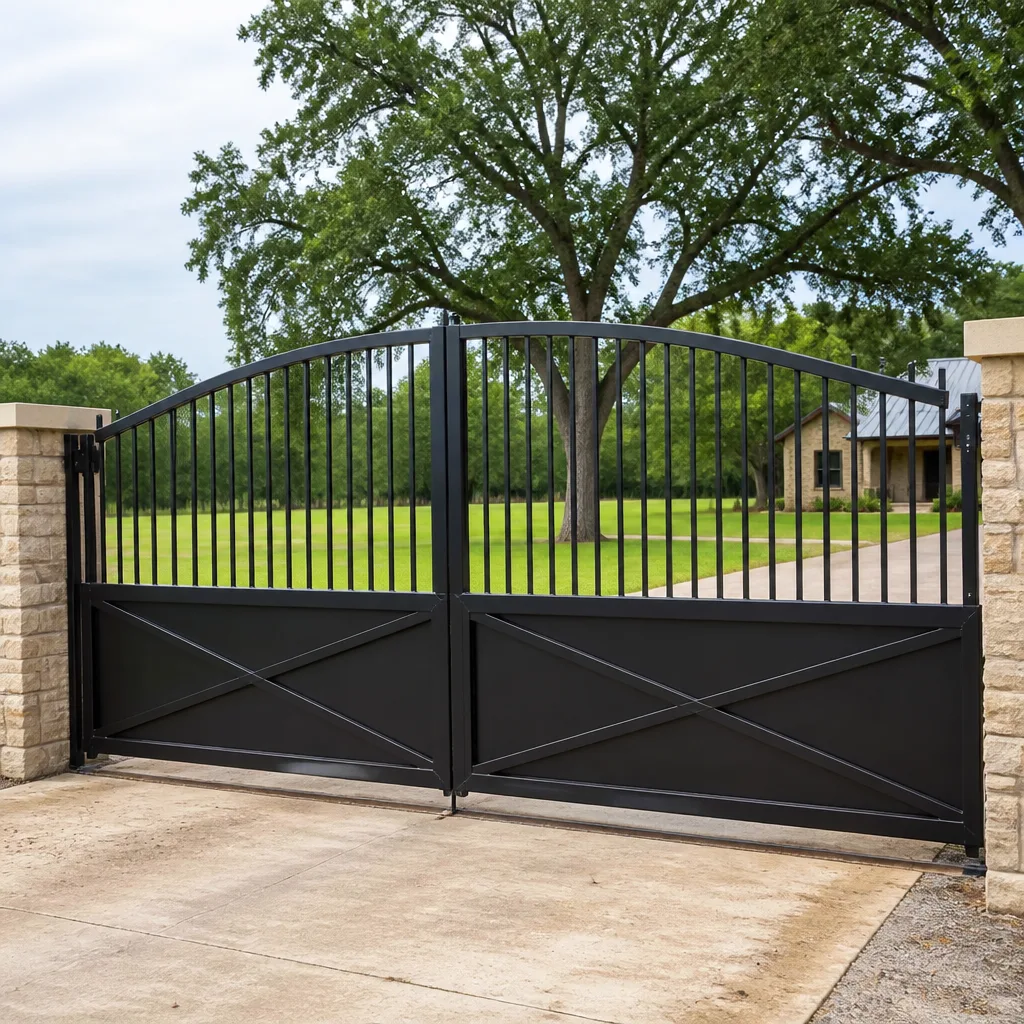
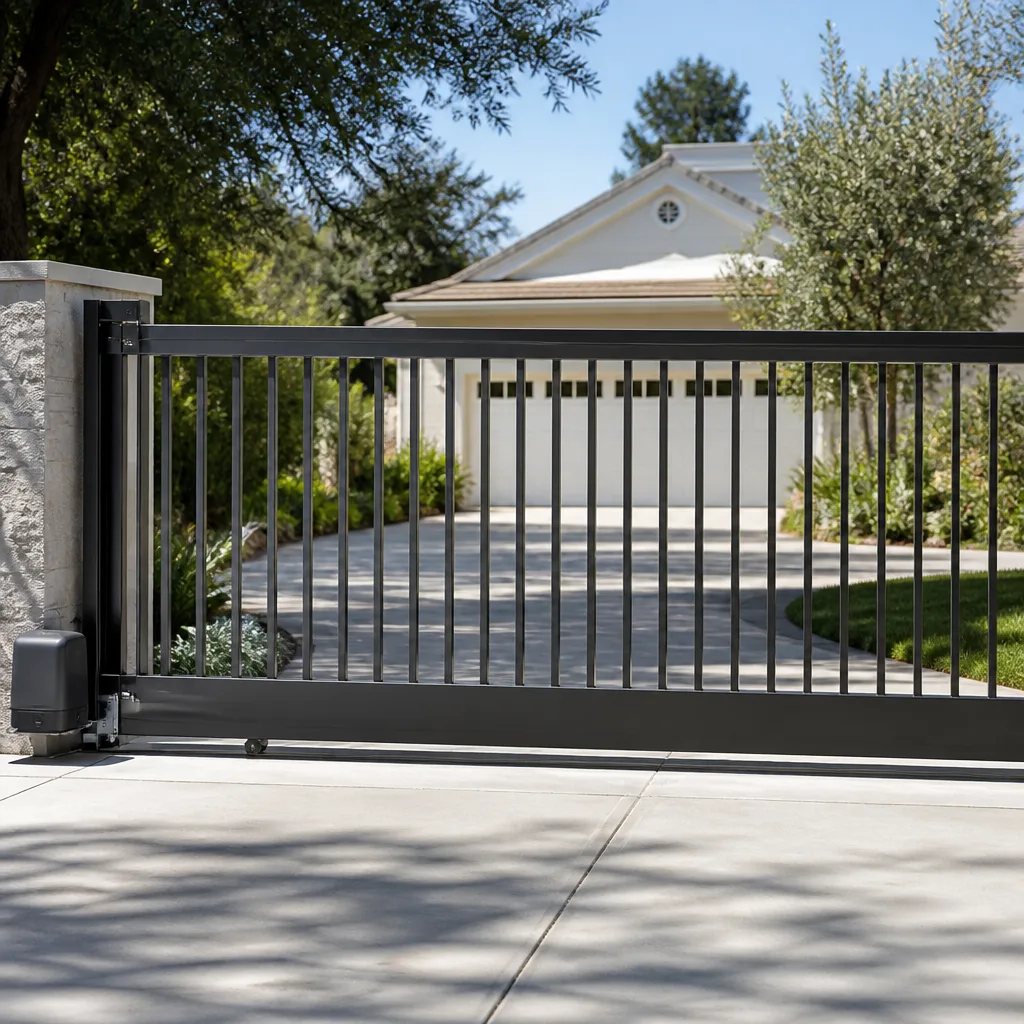
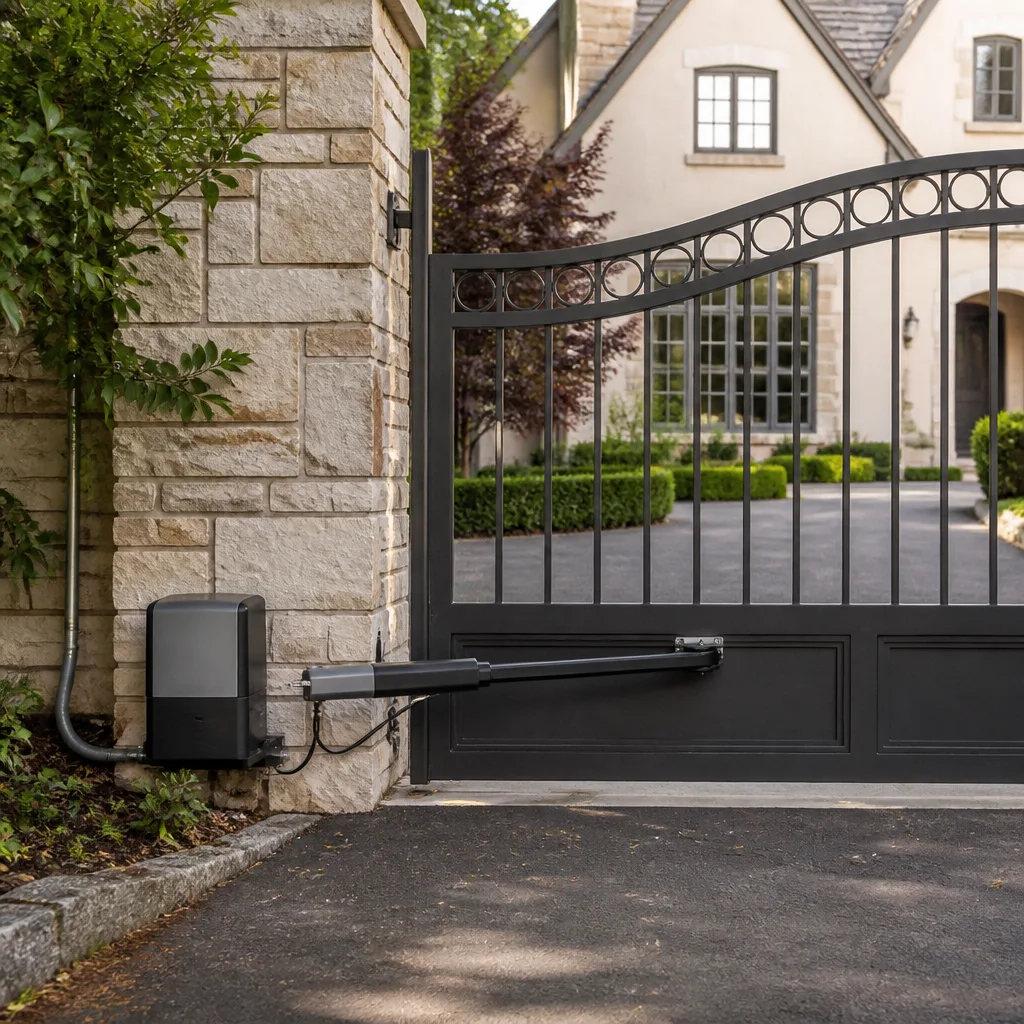
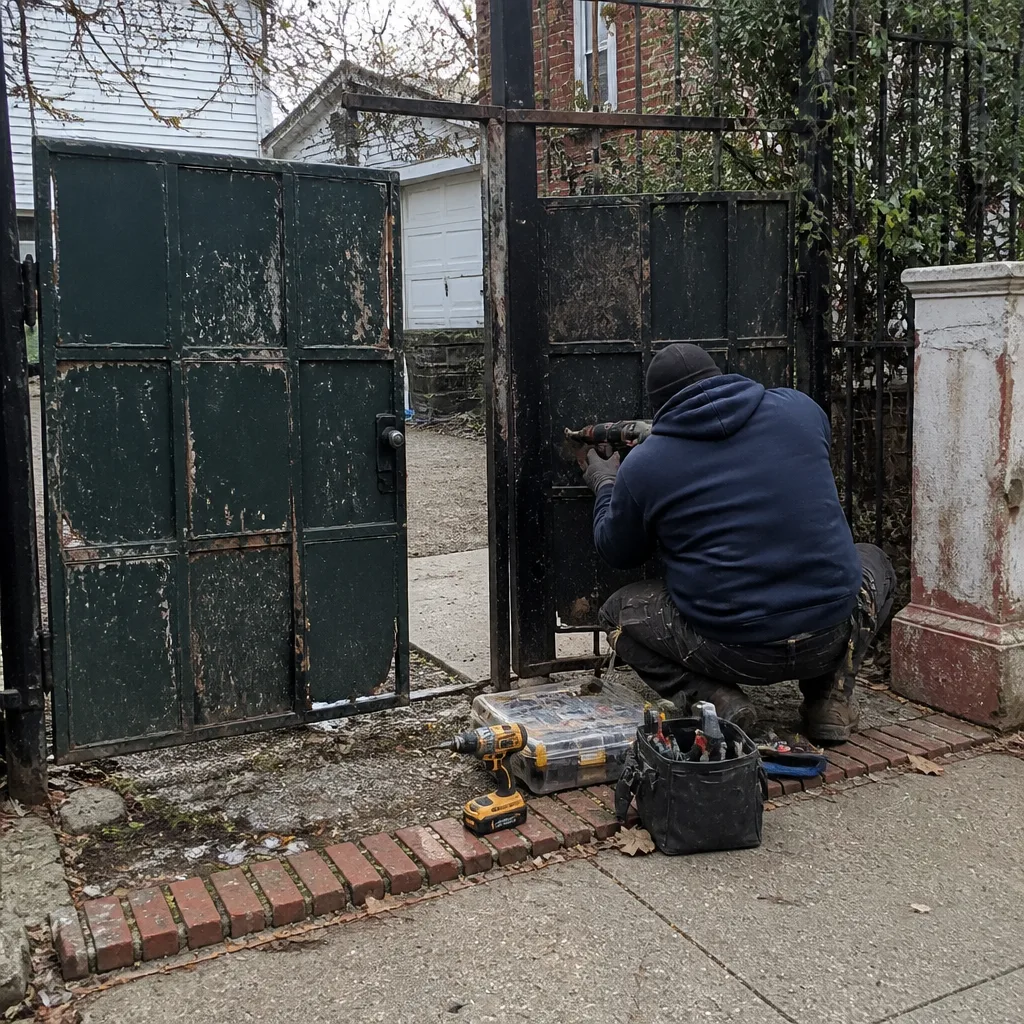 Before
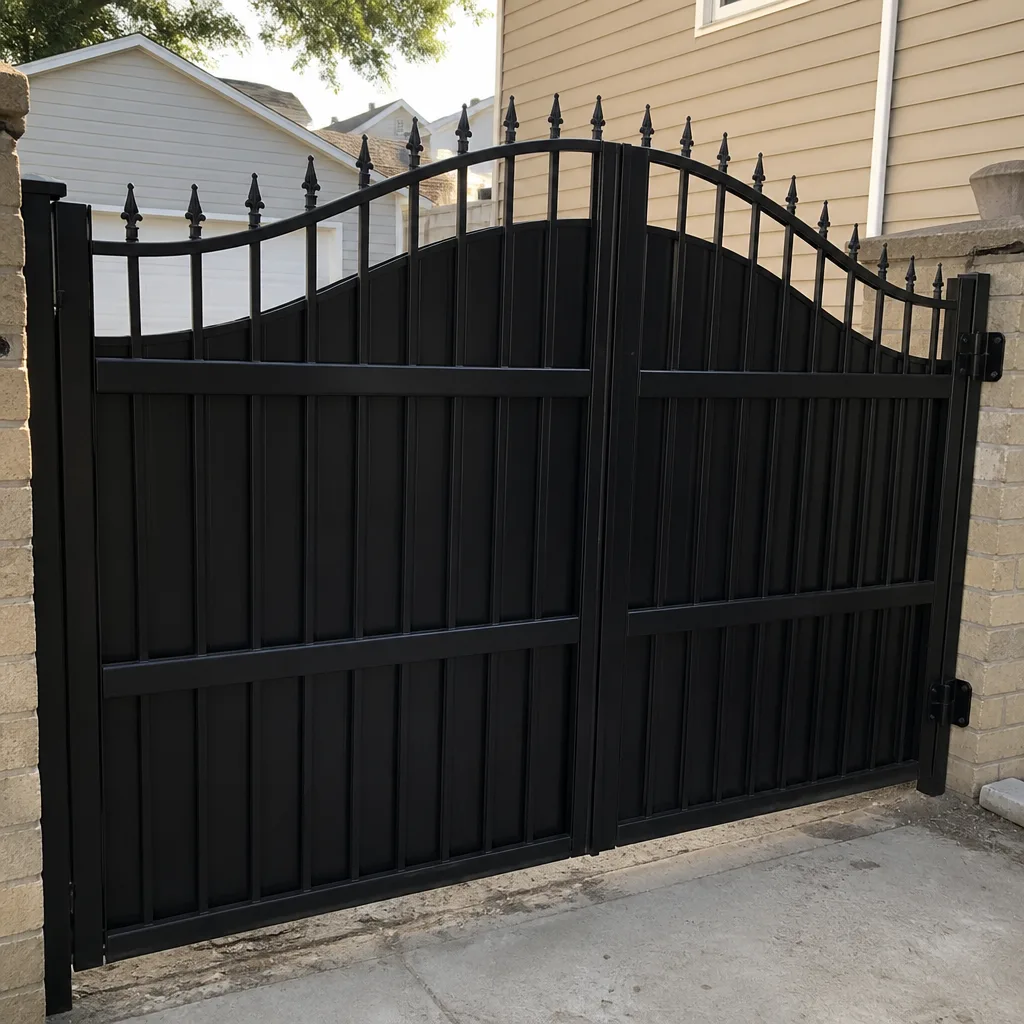 After
After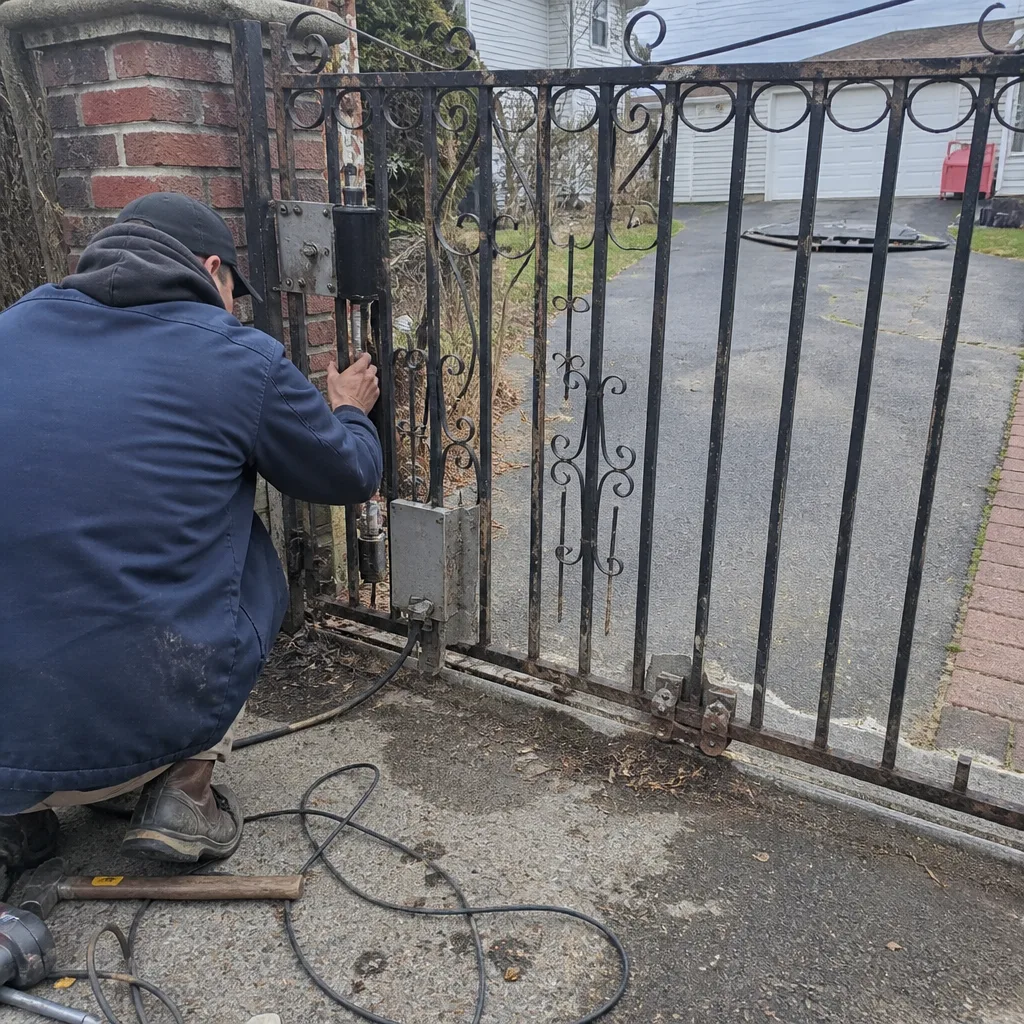 Before
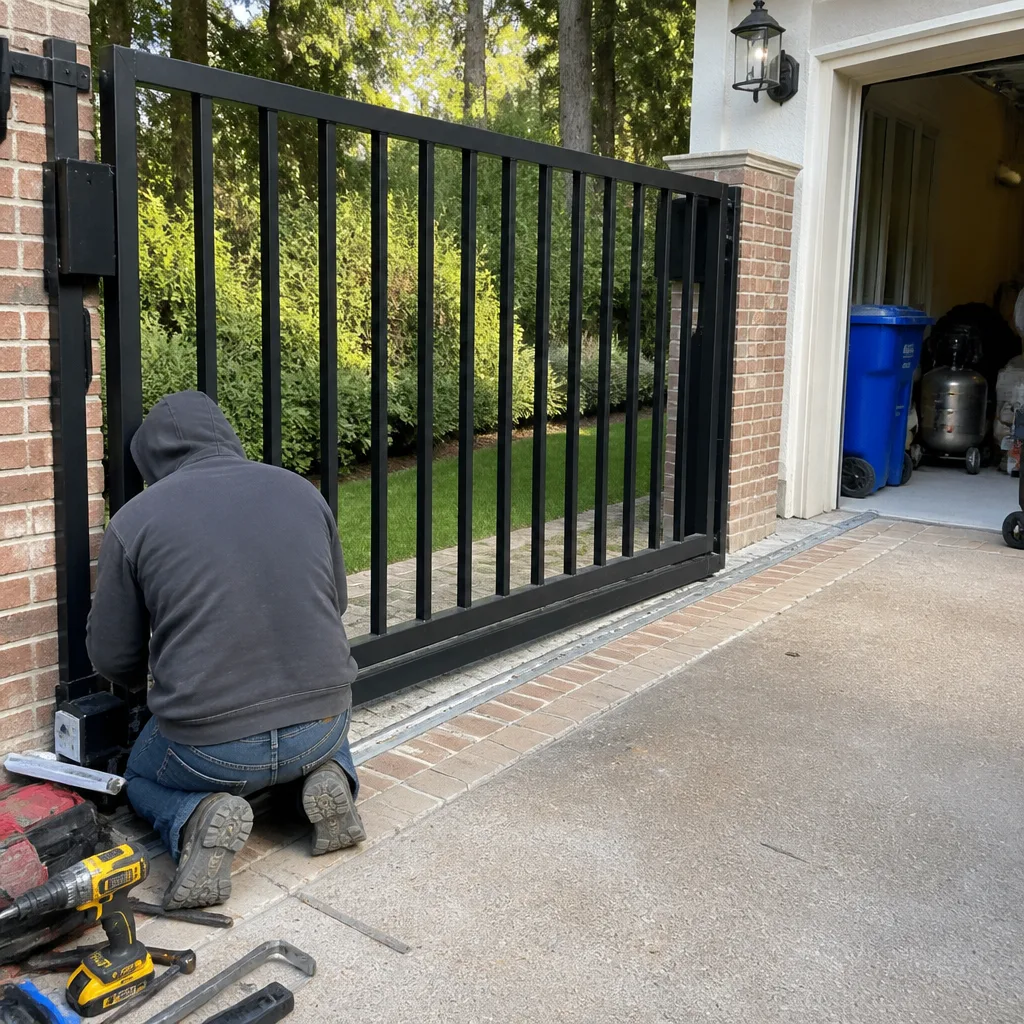 After
After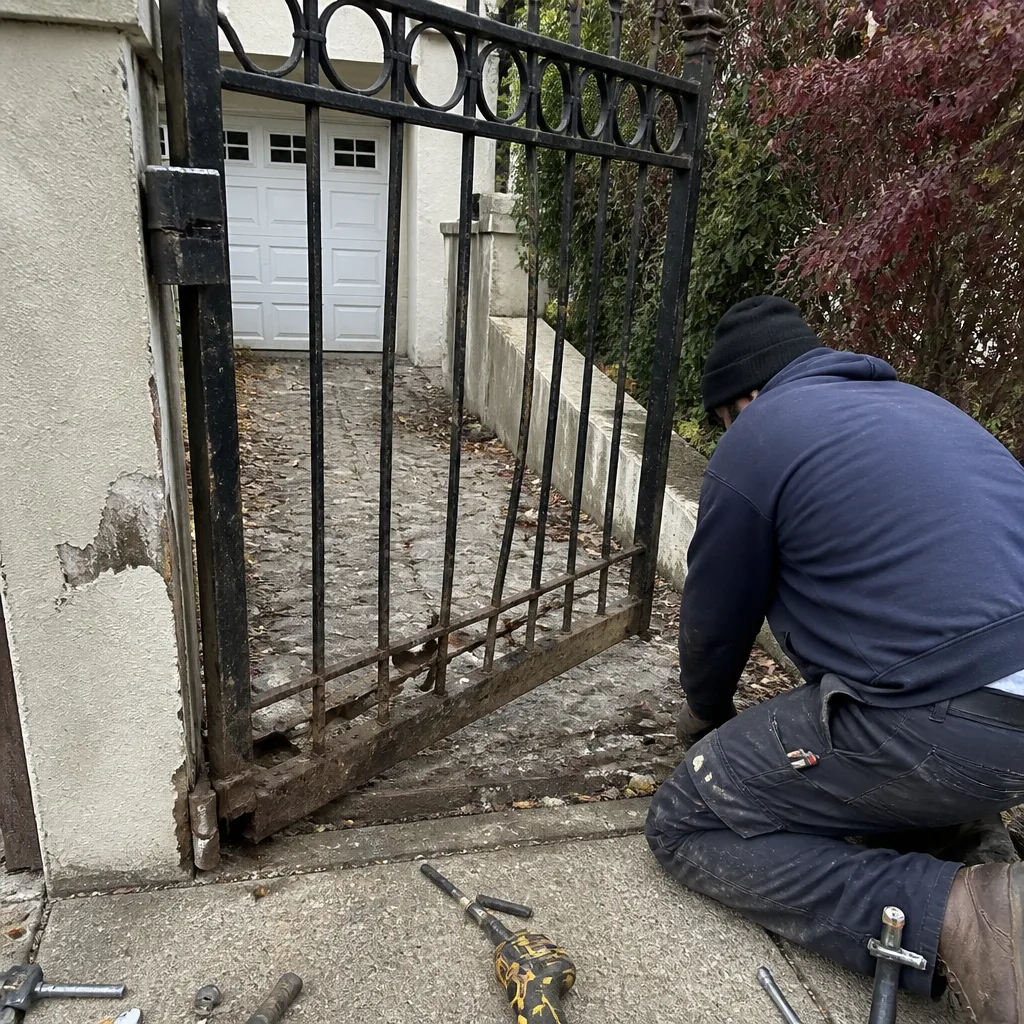 Before
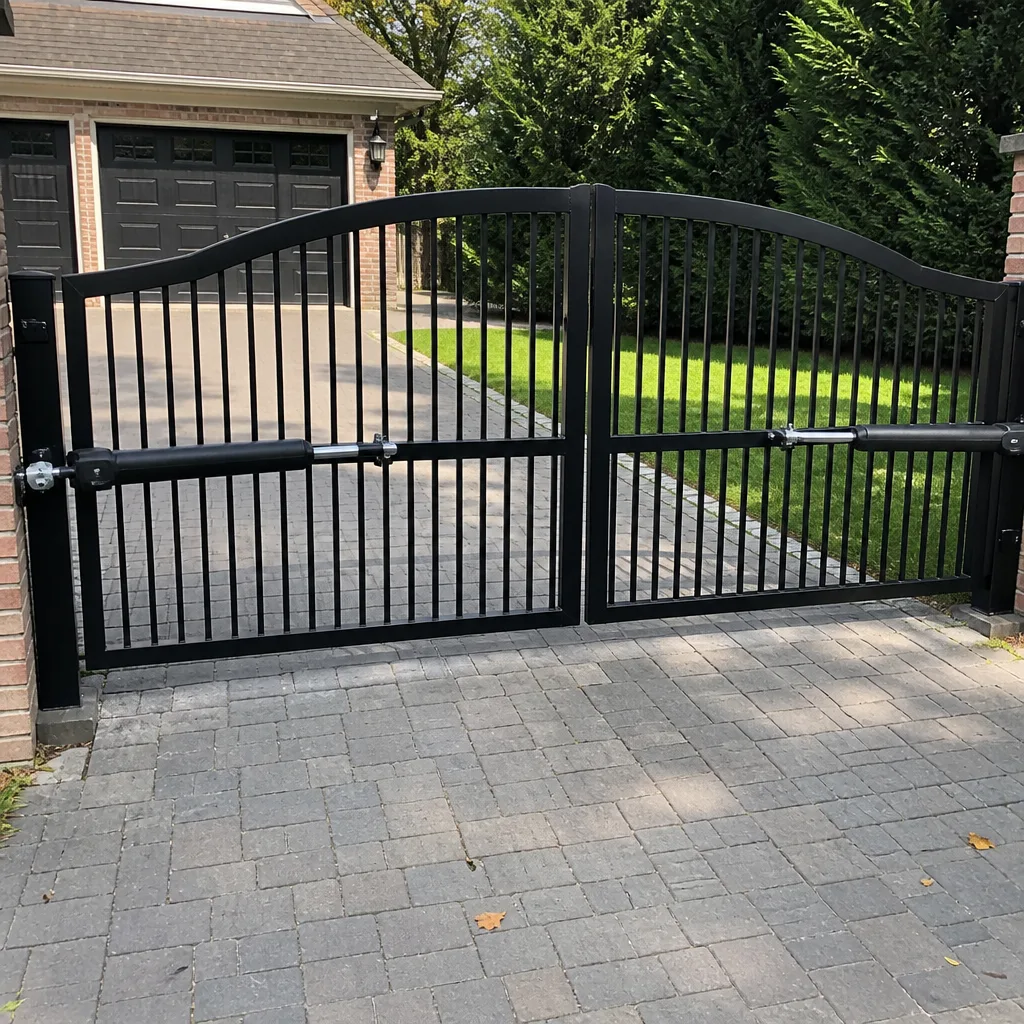 After
AfterGate Reverses Immediately
When a gate starts to move and then immediately reverses direction before traveling more than a few inches, the operator’s safety system has tripped. In almost every case, the cause is one of four things: an obstruction sensor detecting something in the path, a limit switch set incorrectly, a motor that’s straining against physical resistance, or a control board registering a fault code. The gate itself is working as designed – it’s refusing to complete a movement it has been told is unsafe.
That distinction matters. A gate that reverses isn’t broken in the way a gate that simply won’t respond is broken. The safety logic is active and doing its job. But the job it’s doing is wrong, and until someone finds the underlying trigger, the gate will keep reversing every time you send it a command. The fix is usually straightforward once the cause is identified. The danger is guessing.
Why It Happens
The Obstruction Sensor Has a Clear View of Nothing (and Still Sees Something)
Most gate operators use a pair of photoelectric sensors – a beam emitter on one side and a receiver on the other. When something breaks the beam, the gate reverses. Dirt on the lens, a spider web, a leaf caught at sensor height, or a mounting bracket that’s shifted slightly out of alignment can all trigger this without any visible object in the path. You can usually spot this cause by looking at the indicator light on the receiver unit: on most LiftMaster, Linear, and Viking operators, a solid green means the beam is clear and a blinking or amber light means it’s interrupted. If the light is amber and the path is empty, start with the sensors.
The Limit Switch Is Telling the Motor It’s Already at the End of Travel
A limit switch is the small mechanism that tells the operator “you’ve traveled far enough – stop here.” On swing gates especially, these are set mechanically and can drift after seasons of use, a hard impact, or any time the gate sags on its hinges. When the limit is set too short, the operator thinks it’s already at the closed or open position the moment it starts moving, so it reverses. You’ll often hear the motor engage, travel an inch or two, and then the gate stops and returns. No grinding, no hesitation – just a very short, decisive reversal.
The Gate Is Physically Fighting the Motor
Slide gates on worn rollers, swing gates with a sagging hinge, or any gate that’s dragging against a post or the ground puts back-pressure on the operator. The motor detects that resistance as an obstruction and reverses to avoid forcing through what might be a person or a vehicle. You can usually confirm this by disconnecting the operator from the gate manually (there’s a release lever or pull cord on every operator – your manual will show you where it is) and then pushing the gate by hand. If it moves hard, sticks, or scrapes, the problem is mechanical, not electronic. Do not force it. Note where it drags and stop.
The Control Board Has Logged a Fault
On more sophisticated operators – FAAC, BFT, DoorKing, and Elite boards in particular – the controller runs a self-diagnostic and will refuse to complete a cycle if it detects an internal fault: low voltage, a bad ground, a motor that drew too much current on the last cycle, or a communication error from an access control device. These boards typically display a fault code on a small LED or LCD screen on the operator housing. The code itself tells the technician exactly what the board saw. If your operator has a display and it’s showing a number or blinking pattern you don’t recognize, photograph it before you do anything else.
What to Do Right Now
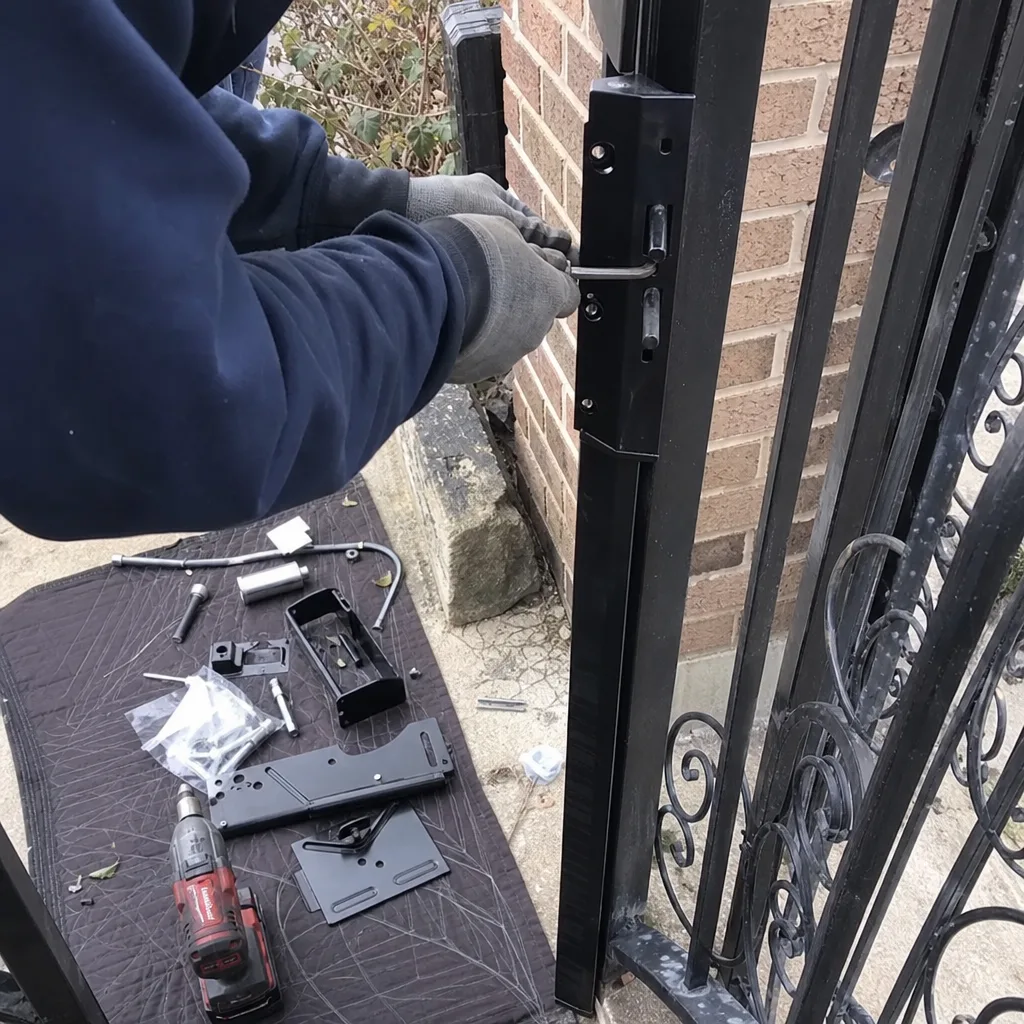
- Stop cycling the gate. Every command you send to a gate that’s reversing puts more wear on the motor and can, on certain fault conditions, lock the controller into a deeper error state. Send it a command once to confirm the symptom, then leave it alone until someone can diagnose it properly.
- Photograph the sensor lights. Walk up to both sensor units and take a clear photo of the indicator lights on each. This takes 30 seconds and gives a technician diagnostic information before they’ve touched the gate.
- Look at the beam path at sensor height. Crouch down and look straight across the opening from one sensor to the other. A strand of weeds, a piece of packing material, or a mulch pile that’s crept into the beam path is a common cause and an easy fix. Clear it if it’s safe to reach, then try one command.
- Manually release and hand-test the gate. Using the manual release (pull cord or lever – check your operator’s manual), disengage the gate and move it by hand through its full range of travel. If it moves freely, the problem is almost certainly electronic or sensor-related. If it drags, binds, or sticks, note the exact location and do not force it further.
- Photograph any fault codes on the control board display. If your operator has a screen or LED indicator showing a code, photograph it in good light. Do not attempt to reset or clear it – that code is the clearest diagnostic information available and a technician will want to see what it said before it was wiped.
One thing to leave alone: if your gate uses a spring-assist mechanism and you suspect the spring is broken or under abnormal tension, do not attempt to inspect it by removing covers or touching the spring hardware. Gate springs carry serious stored energy and can cause significant injury if they release suddenly. Call your local Vance Gate Repair team and describe what you’re seeing.
BeforeAfterHow We Fix It
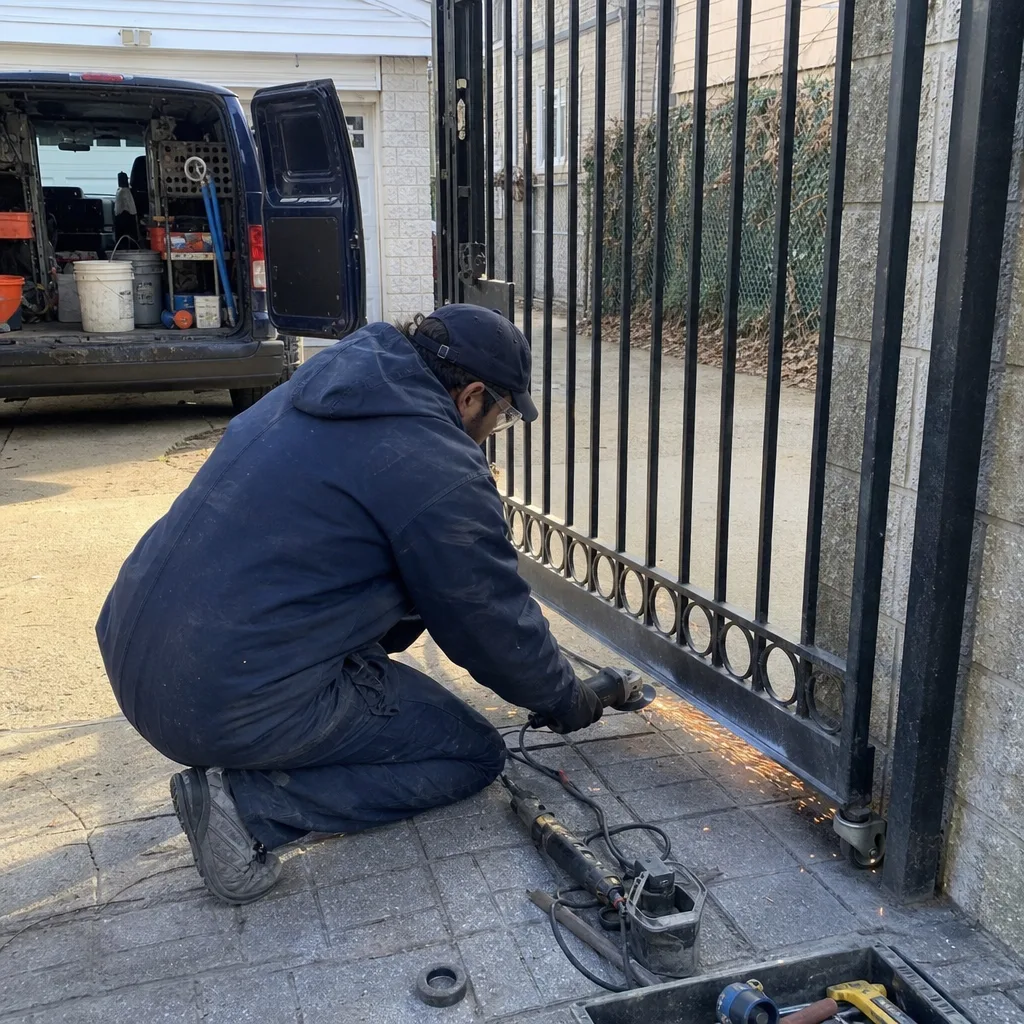
When your local Vance Gate Repair team arrives, the technician starts by running a full cycle with the gate in view, watching where in the travel the reversal happens and listening to the motor during that fraction of a second. That single observation usually narrows the cause to sensors, limits, mechanical drag, or a board fault.
From there, it’s a systematic check: beam alignment and sensor lens condition first, limit switch position second, a hand-test of the gate’s physical travel third, and a board fault-code read fourth if the earlier checks don’t land on the cause. Most reversals resolve at step one or two. On jobs where mechanical drag turns out to be the culprit, the repair path moves into Gate Repair – hinge adjustment, roller replacement, or track work, depending on what’s dragging. If the control board has failed, that’s a Gate Motor and Opener job, and the technician will show you the fault reading and explain exactly what the board needs.
Before any of that work starts, you’ll have a written price in hand – flat, all-in, the number you’ll actually pay. That’s Haven Standard Clause 1, and it applies to every job. When the technician leaves, you’ll have a documented photo record of what was found, what was adjusted, and what was replaced – filed in the job record and left with you. All completed work is covered by the 365-Day Done Right Promise: if it’s not right, we come back and make it right, no argument and no additional charge within that window.
Frequently Asked Questions
It depends on why it’s reversing. If the gate is reversing because a sensor is misaligned or a limit is set wrong, the gate is actually in a safe state – it won’t run uncontrolled. But a gate that can’t close leaves a property access point open, and a gate cycling on a fault repeatedly can wear the operator motor. If the reversal is caused by a mechanical issue – the gate dragging or binding – continuing to force it through cycles can cause a hinge failure or cause the gate to come off its track entirely, which is a real hazard. Get it diagnosed before you keep using it. Call (928) 260-0864 and a live person will pick up.
A gate stuck open is a security and liability issue that most homeowners don’t want to leave open for a week. A gate stuck partially closed at least secures the entry, but the underlying fault will not resolve on its own. Sensor faults sometimes worsen as weather or debris conditions change. A board fault that’s throwing codes now is a board that’s running outside its normal operating parameters. We wouldn’t leave it more than a day or two. Call (928) 260-0864 to get your local team scheduled.
Your local Vance Gate Repair team handles repair and diagnostic calls on a same-day and next-day basis whenever the schedule allows. Call (928) 260-0864 – a live person answers around the clock, seven days a week, including weekends and holidays. No voicemail, no callback queue. Tell them what the gate is doing and they’ll tell you what’s available today.
Yes, always. The written price is handed over before any work begins – that’s Haven Standard Clause 1, and it applies to every single job. The number you see on that page is the number you pay. There’s no scope creep, no “while we’re in here” add-ons, and no surprise invoice when the job is done. If you have a written estimate from another company, bring it – Vance will review it at no cost as a free second opinion.
Get It Fixed
Call (928) 260-0864 right now – a live person picks up 24 hours a day, seven days a week. Describe what the gate is doing and your local Vance Gate Repair team will get a technician scheduled. A written price comes before any work starts, and the 365-Day Done Right Promise covers everything they do.
Written by Adrian Vance, Owner at Vance Gate Repair, serving communities across the country since 2014.
What Our Customers Say
"Good work on a long driveway gate. Arrived when they said, finished when they said."
- Sofia E."Honest about what did not need doing. Told me the operator had years left and only the control board needed replacing."
- Douglas N."Quoted in writing, installed on the day promised, and the price did not move. The crew was licensed and the number was on the paperwork."
- Wes A.