
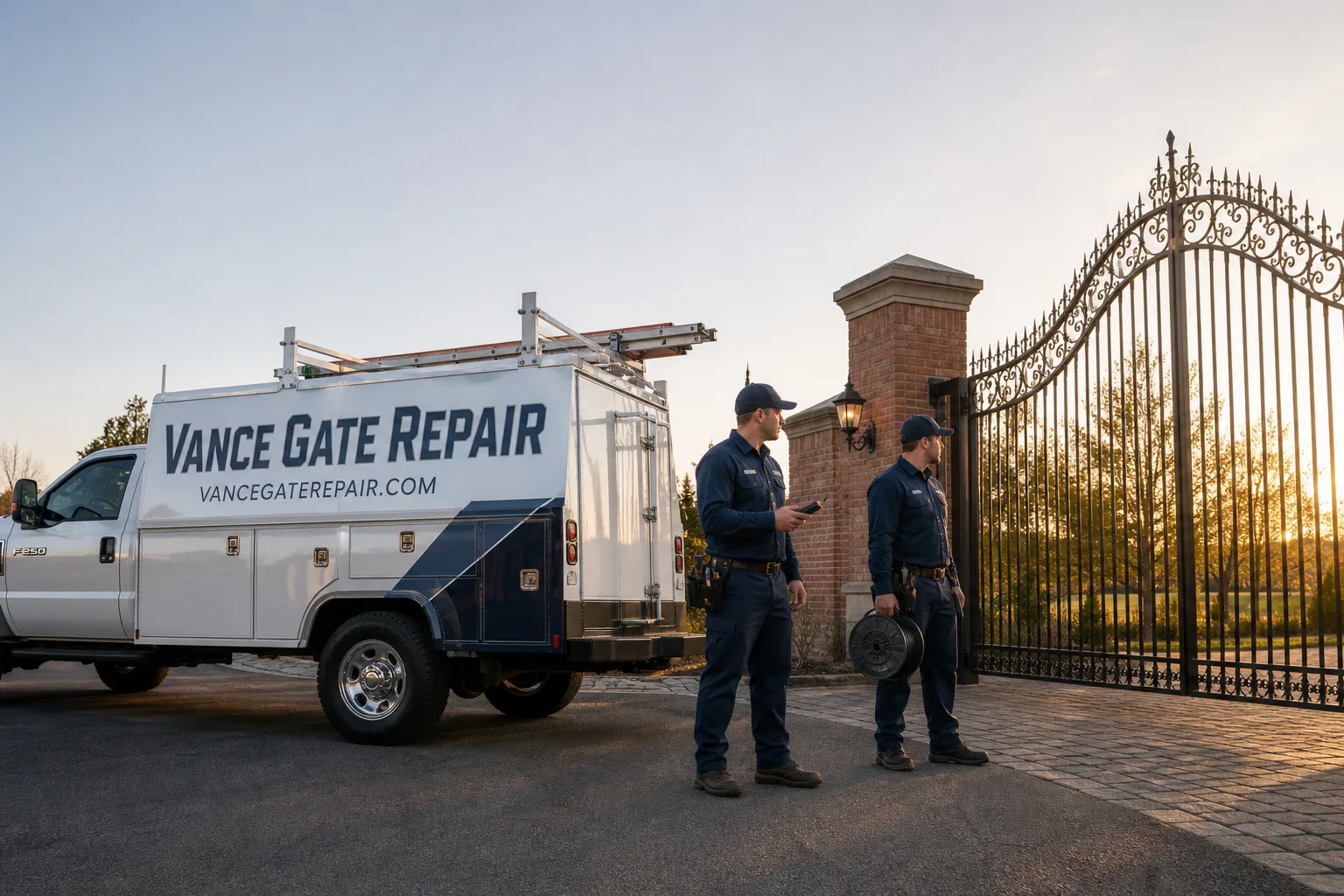
Free on-site gate assessment - hinges, posts, and your LiftMaster or Nice gate operator checked before anything is quoted
The assessment is free and the quote is the invoice.

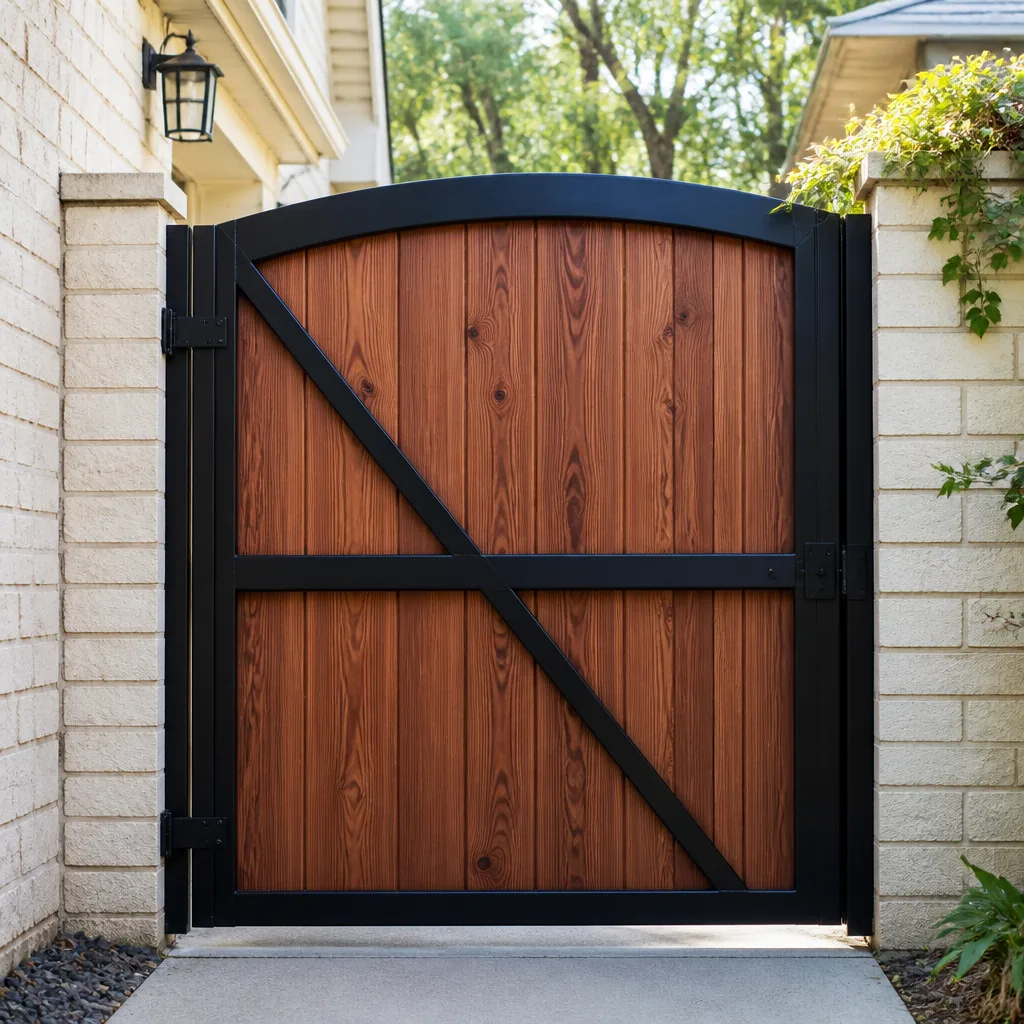
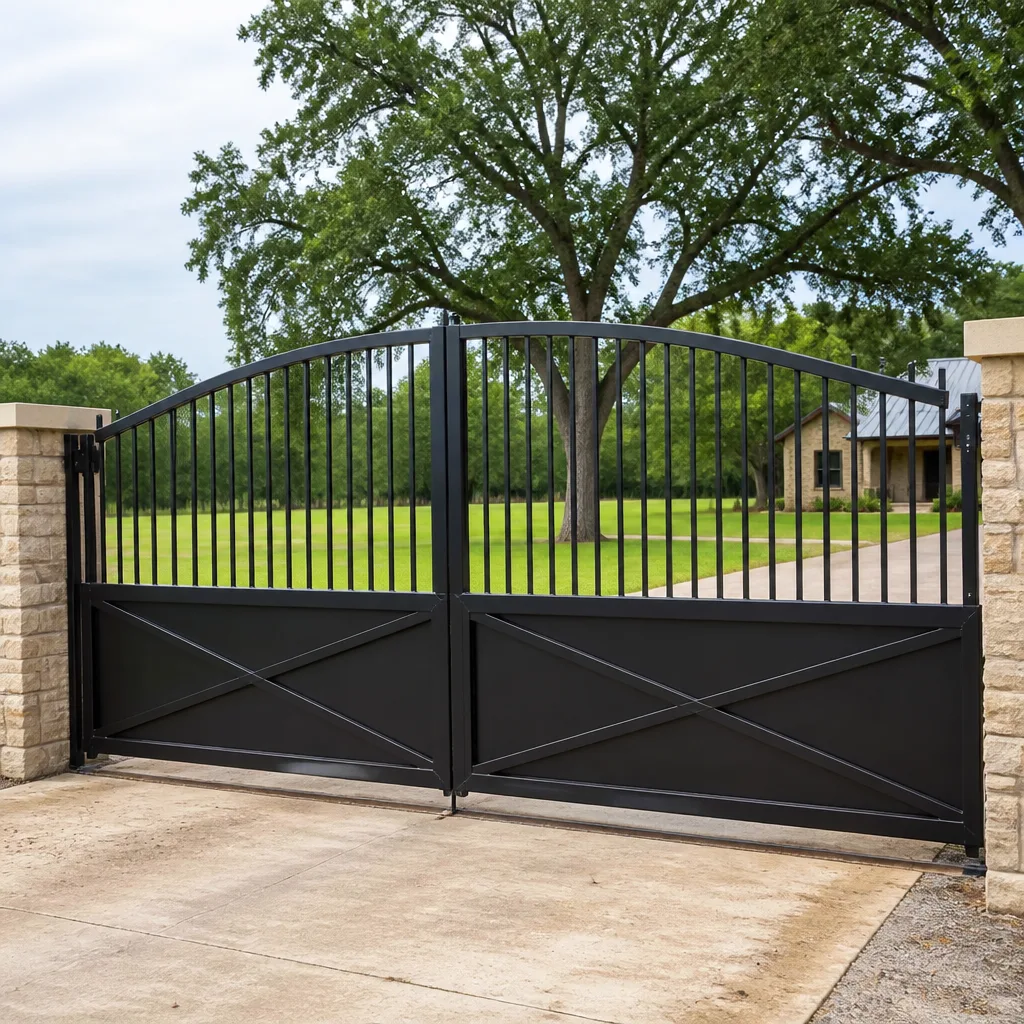
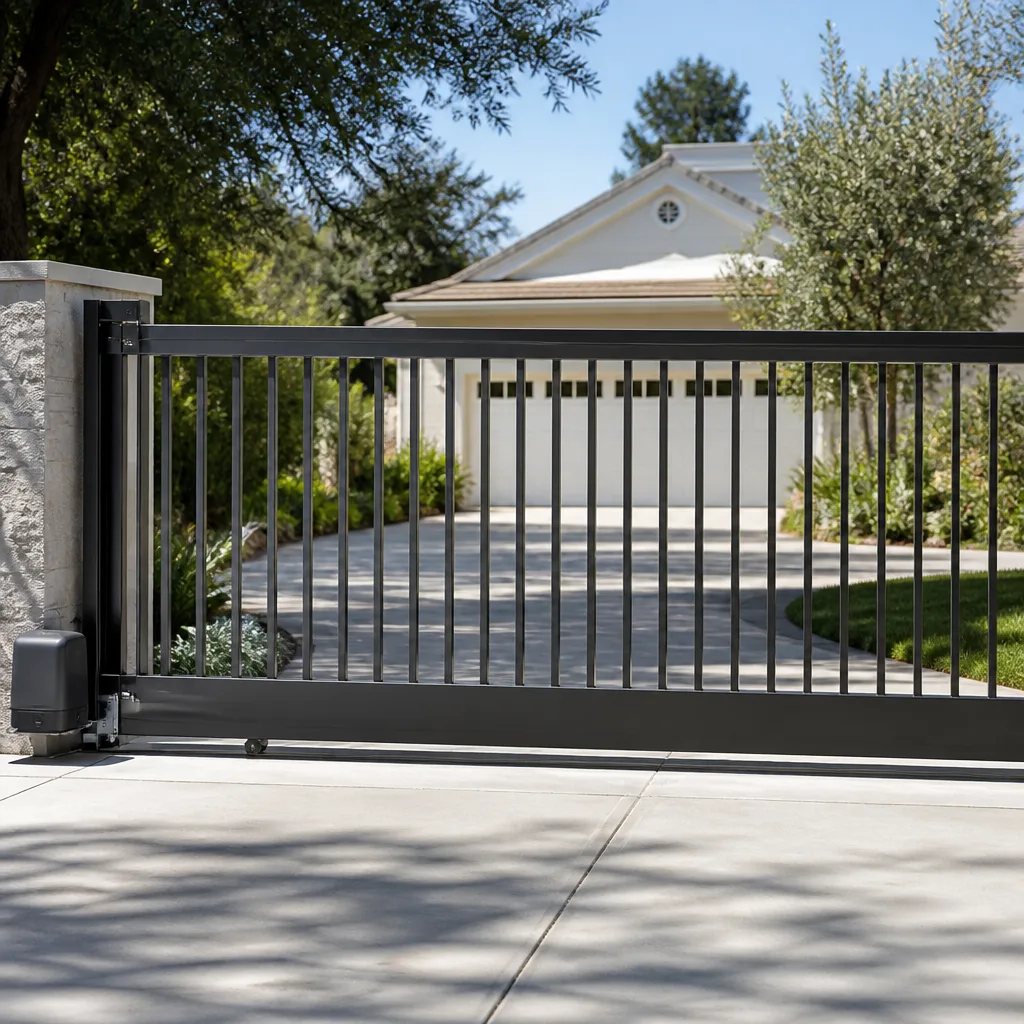
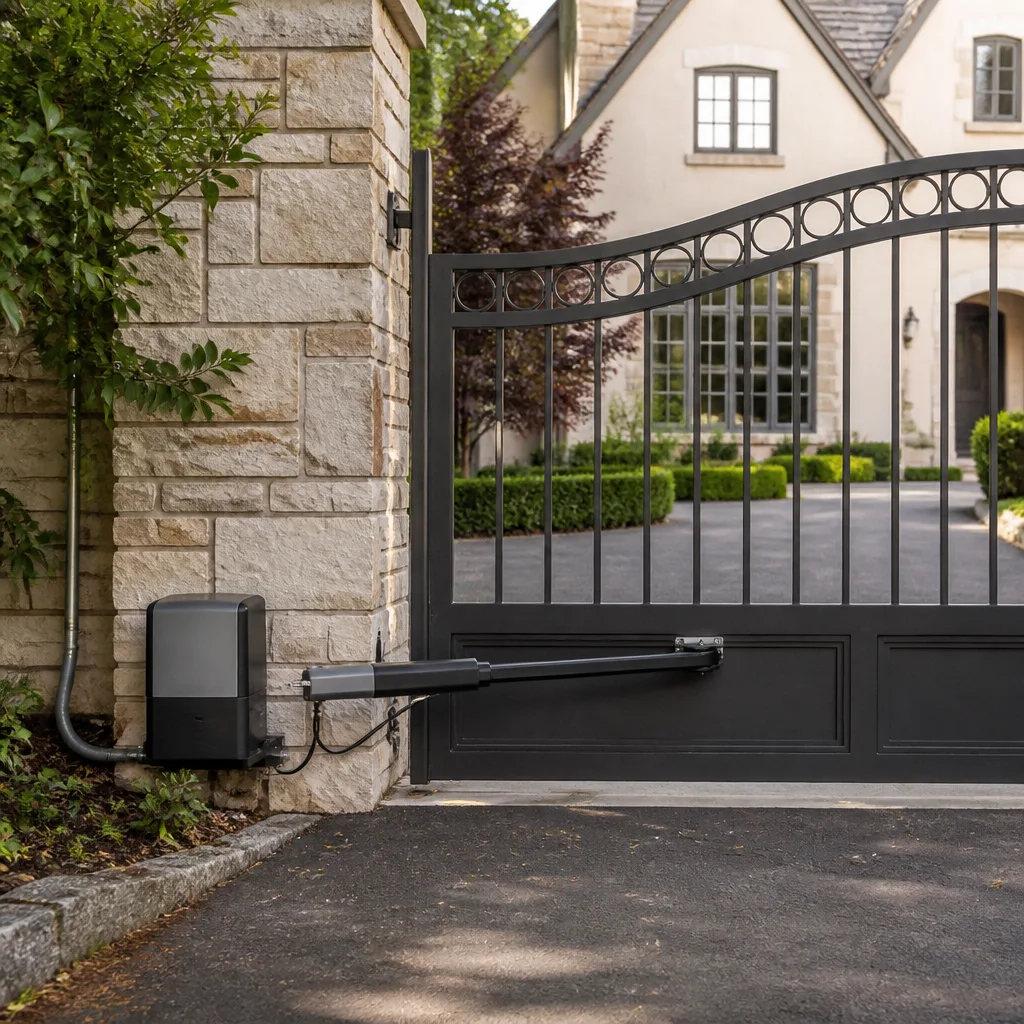
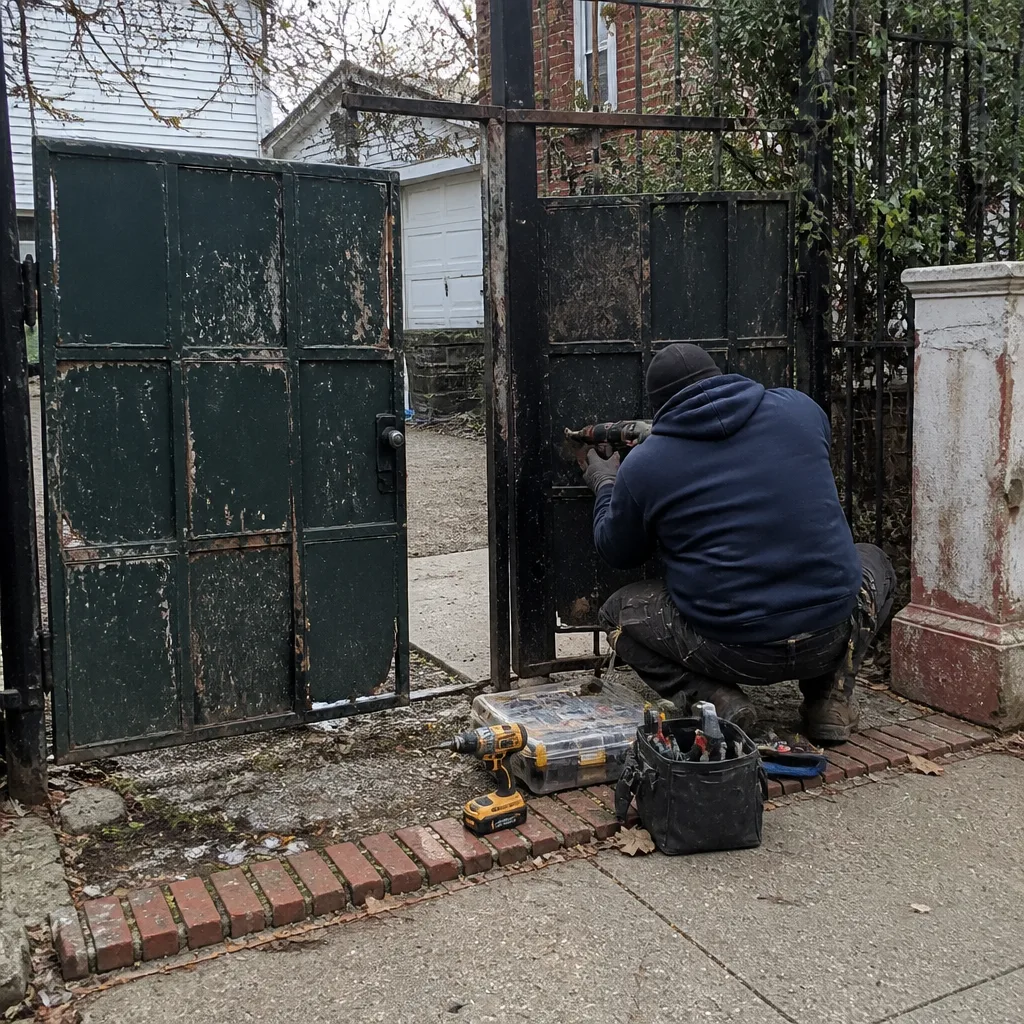 Before
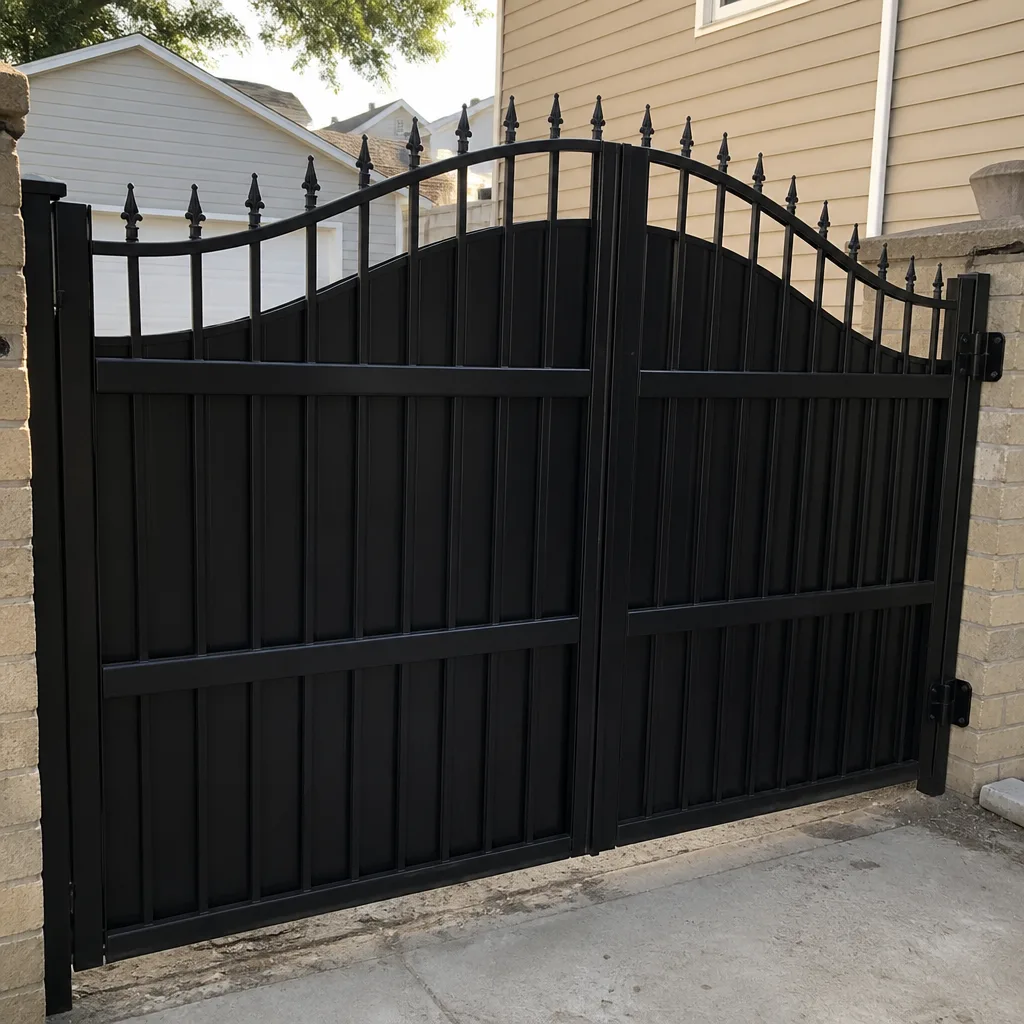 After
After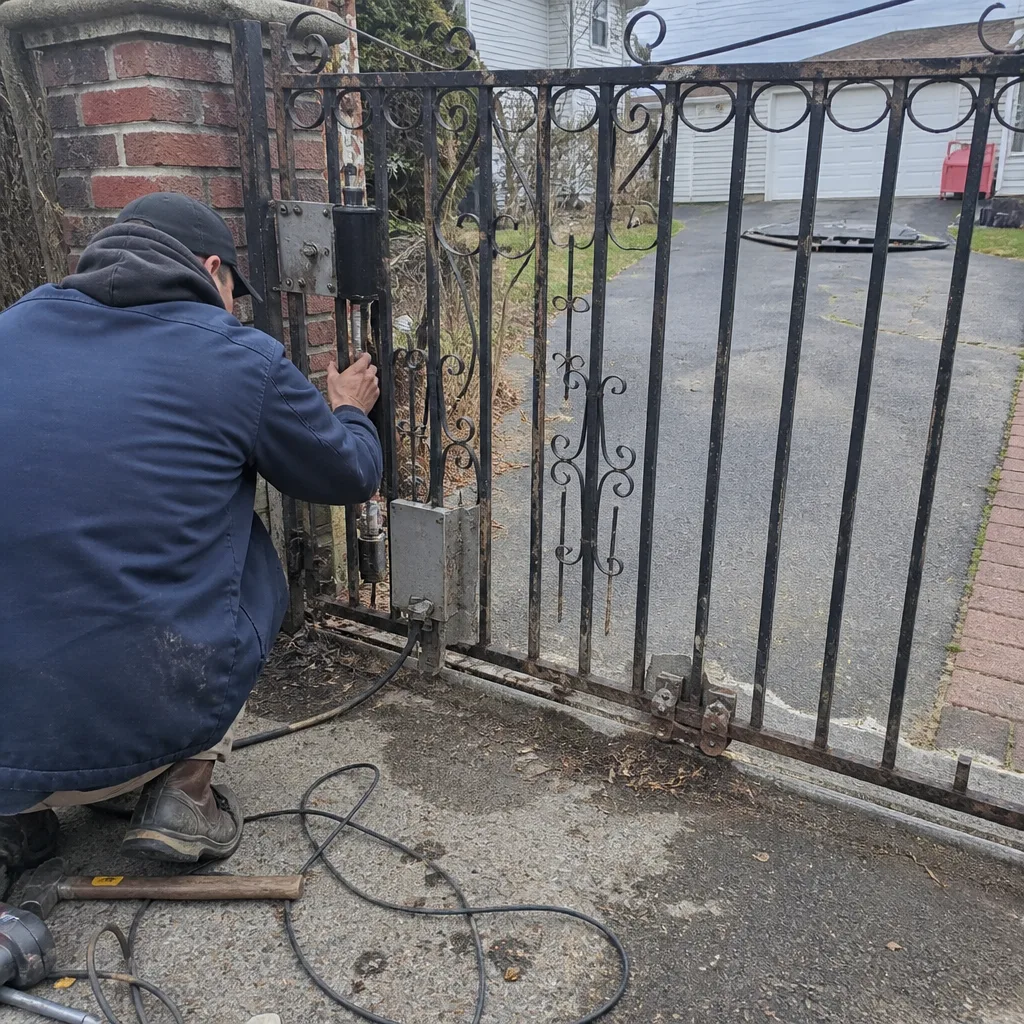 Before
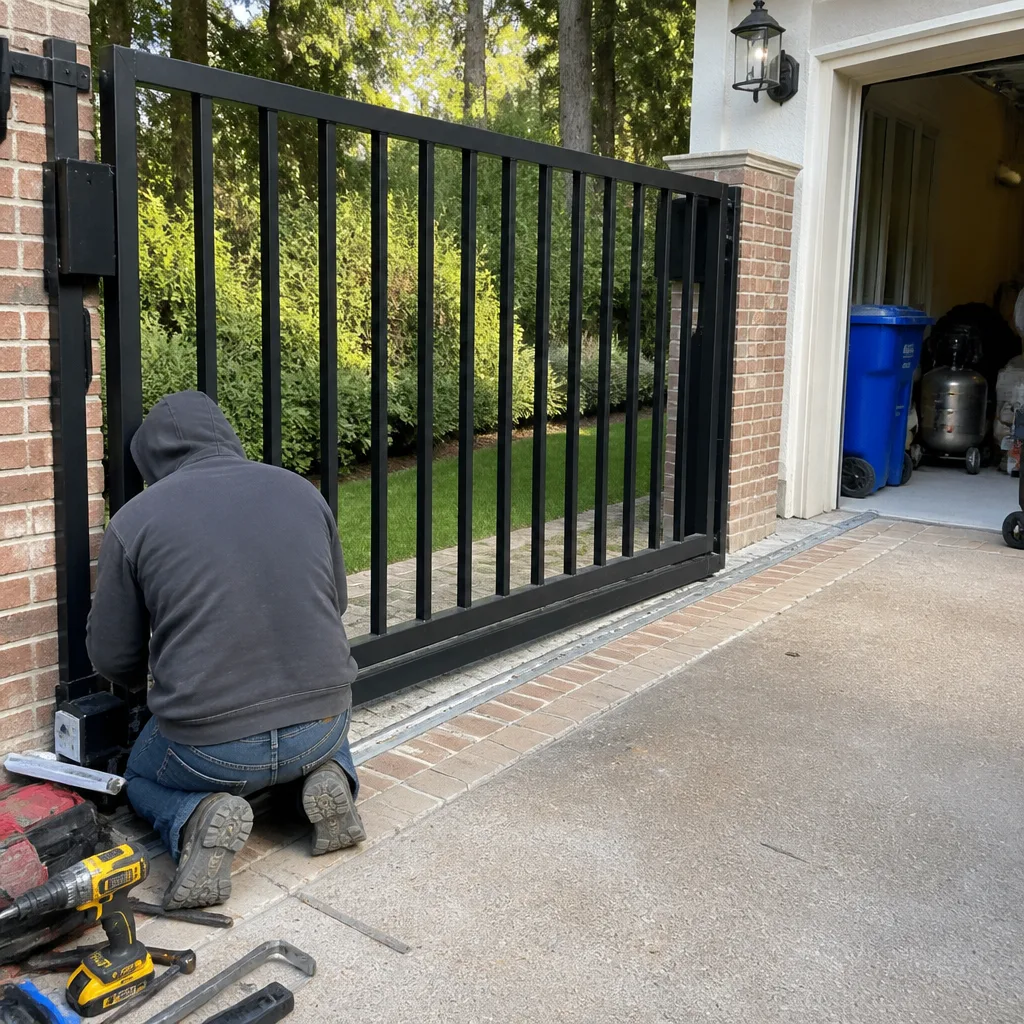 After
After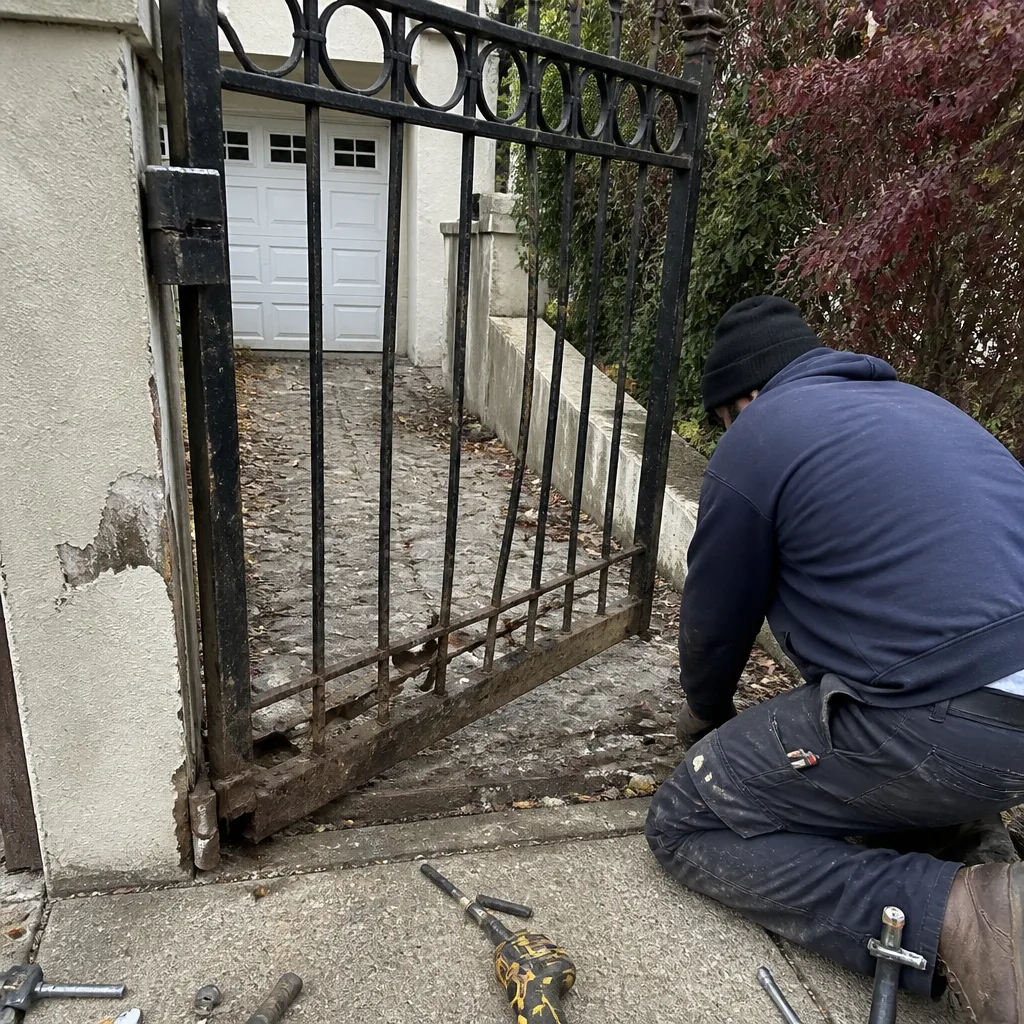 Before
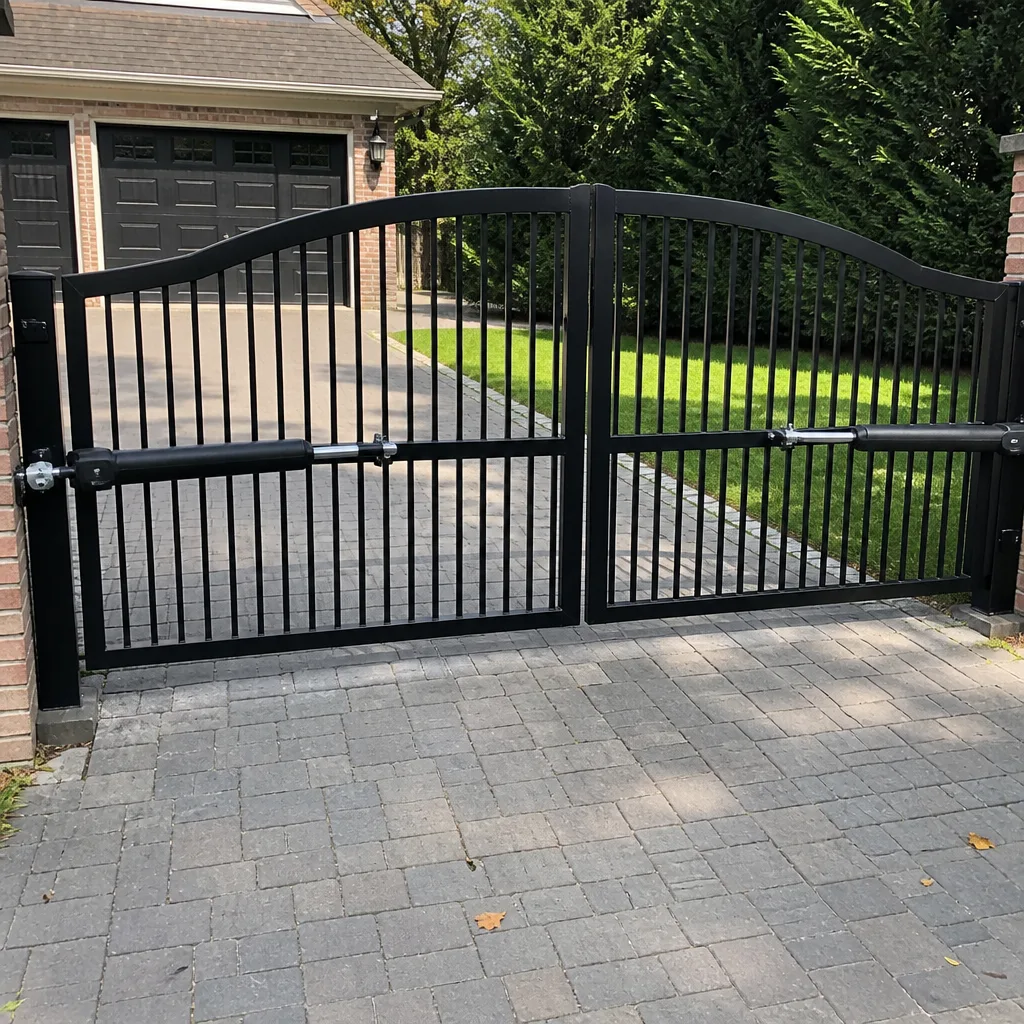 After
AfterGate Won’t Open or Close
A gate that won’t open or close is almost always caused by one of four things: a failed motor or operator, a broken hinge or track hardware, a power or circuit issue at the control board, or a sensor/obstruction problem the system treats as a safety stop. In most cases the gate itself is fine – the failure is in the mechanical or electrical system that moves it. A technician can usually identify the root cause within the first fifteen minutes on site.
The tricky part is that the symptom – “it just stopped” – can come from a dead battery in a remote, a snapped torsion arm, a fried control board, or a gate that physically cannot travel its full arc because something shifted in the ground or the hinge. Each of those has a different fix and a different cost. Guessing is expensive. A proper diagnosis is not.
Why It Happens
1. The Motor or Operator Has Failed
Gate operators – the motor units that actually drive the gate – work under load every single day. Over time the motor windings, capacitors, or gear assemblies wear out. If you hear a humming or clicking sound when you press the remote but the gate does not move, the operator is trying to run but something mechanical inside it has given out. If there is no sound at all from the motor box, the problem is likely electrical – power, board, or both.
2. A Mechanical Component Has Broken
Hinges crack, mounting brackets shear, rack gears strip, and torsion arms snap – especially on gates that see heavy daily use or that were installed without adequate clearance for seasonal ground movement. The clearest sign of a mechanical failure is visible: the gate is sitting at a wrong angle, one side has dropped, or you can see that a bracket has pulled away from the post. Do not keep pressing the remote button if the gate is visibly misaligned. Forcing a motor against a broken mechanical connection damages the operator too.
3. A Power or Control Board Problem
Most residential gate operators run on 120V AC power with an internal transformer and a control board that interprets commands from remotes, keypads, and sensors. A tripped breaker, a burned transformer, or a fried board will kill the gate completely with no warning signs beforehand. Check whether the power LED on the motor unit is lit. If it is dark and the breaker is not tripped, the transformer or board is the likely failure point. Control board diagnostics require a technician with the right equipment – do not open the operator enclosure and probe around it yourself if you are not trained on live electrical components.
4. A Sensor, Limit Switch, or Obstruction Signal
Most modern gate operators have safety sensors – photo eyes, edge sensors, or inductive loops – that stop the gate when they detect something in the path. If one of those sensors is dirty, misaligned, or failed, the operator reads a permanent obstruction and refuses to move. You may hear a short movement followed by a reversal, or no movement at all with an indicator light flashing on the control board. Check whether anything physical has fallen against the sensor eyes and clean the lens faces with a dry cloth. If clearing the sensor path does not fix it, the sensor itself needs to be tested or replaced.
What to Do Right Now
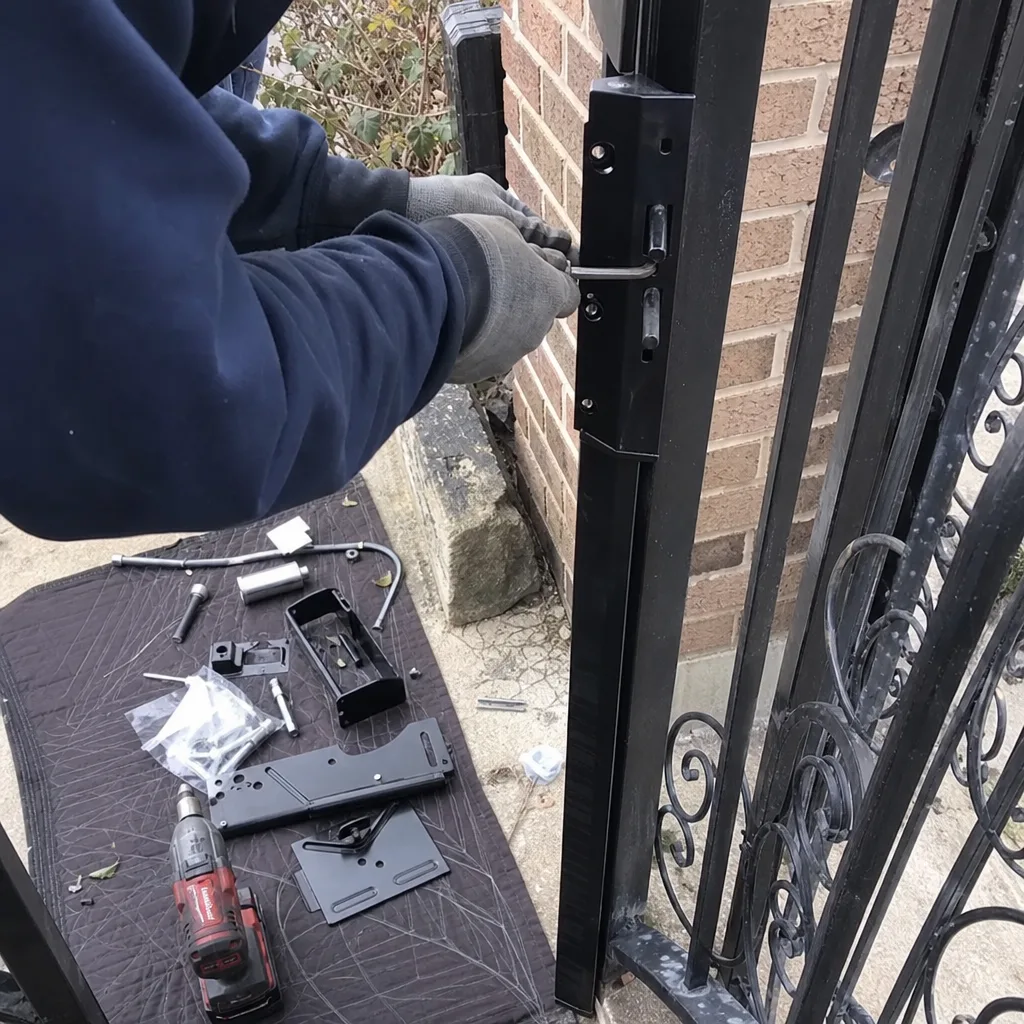
- Stop cycling the remote. Pressing the button repeatedly when the gate is not responding puts extra load on a motor that may already be in distress. If the gate is stuck partway open or in an unusual position, leave it where it is.
- Check the breaker. Go to your electrical panel and confirm the breaker for the gate circuit has not tripped. If it has, flip it back once. If it trips again immediately, stop and call – a short in the wiring or operator needs a technician, not another reset.
- Look at the gate from a distance. Is it sitting level? Is any bracket visibly cracked, pulled away, or bent? Is the gate still on its track or guide rail? A gate that has shifted physically can cause serious injury if it falls or swings unexpectedly – if it looks structurally unstable, keep people away from it until a technician arrives.
- Check the sensor eyes. Most photo-eye sensors sit on short posts near the bottom of the gate opening. Wipe the lenses, make sure they are aimed at each other, and look for an indicator light on each one. A flashing or off sensor is a strong diagnosis clue to give the technician.
- Photograph what you see. A photo of the gate’s current position, the motor unit, any visible damage, and the indicator lights on the control board takes thirty seconds and gives the technician information before they arrive. Text it to the number you call – it can help them bring the right parts.
BeforeAfterHow We Fix It
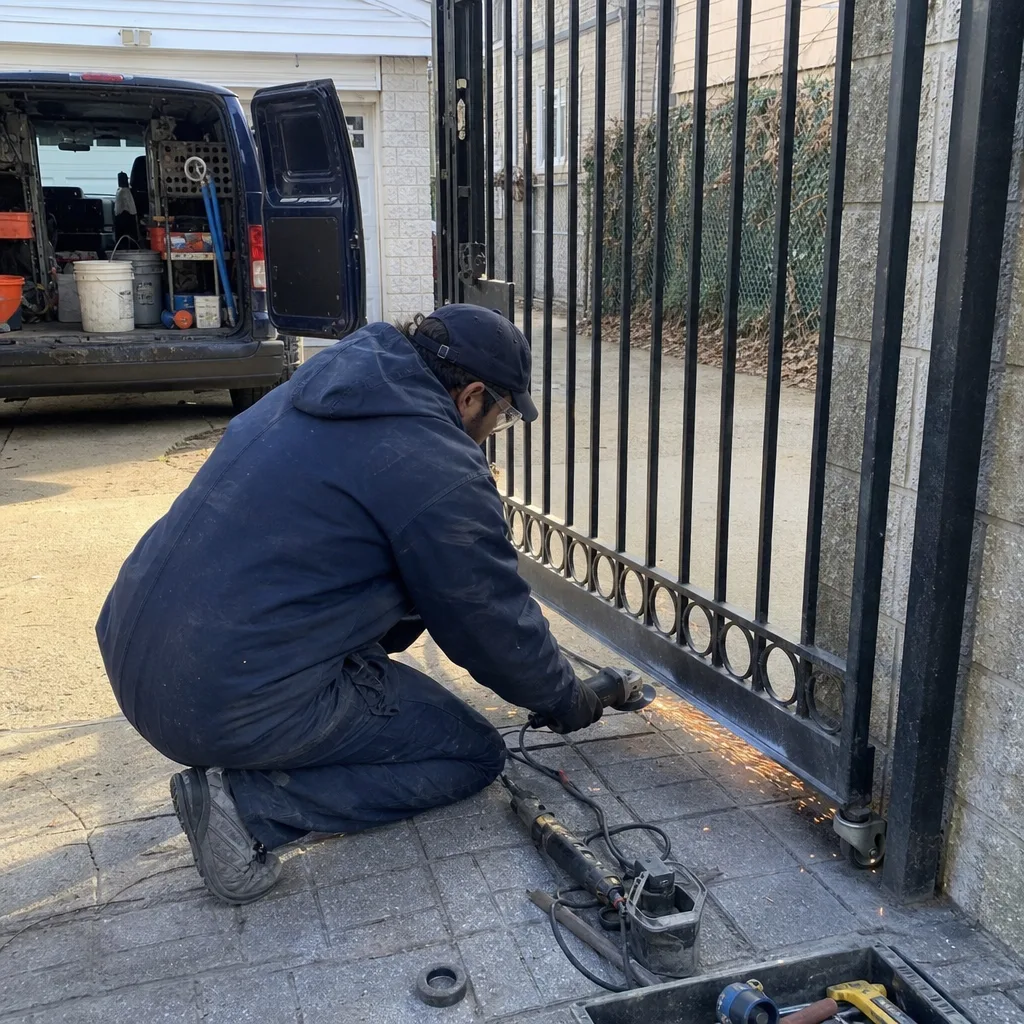
When your local Vance Gate Repair technician arrives, the first thing they do is a systematic diagnosis – power trace from the circuit breaker to the operator, visual inspection of all mechanical connections, sensor test, and a manual-release check on the gate itself. That takes fifteen to thirty minutes and gives a clear picture of what actually failed, not what might have failed.
Before any work starts, you get a flat written price. That is Haven Standard Clause 1 – the scope is written, the price is written, and nothing changes once you approve it. No labor surprises when the invoice arrives.
Most gate-won’t-move failures are resolved through our Gate Repair service, which covers operator repairs, control board replacement, mechanical hardware, and sensor calibration. If the operator itself is beyond repair, our Gate Motor and Opener service covers nine major brands – LiftMaster, FAAC, BFT, Linear, Viking, Ghost Controls, DoorKing, Elite, and Mighty Mule – so we work on whatever is already on your property. The repair is documented with photos when we leave, and every completed job is covered by the 365-Day Done Right Promise: if it is not right, we come back and make it right at no additional charge.
Frequently Asked Questions
It depends on what is wrong and where the gate is stuck. A gate frozen in the closed position is a nuisance and a security inconvenience, but if it is stuck partway open, stuck against a vehicle, or sitting at a crooked angle because a hinge has given out, it is a genuine hazard – four hundred pounds of steel moving unpredictably or falling is not something to leave unattended. If the gate looks structurally compromised in any way, treat it as urgent. Call (928) 260-0864 and a live person will pick up, any hour of the day or night, to help you figure out next steps.
Your local Vance Gate Repair team handles repair calls as quickly as scheduling allows, and we answer the phone around the clock – call (928) 260-0864 right now and you will reach a live person, not a voicemail. They will get your situation in front of the local team and confirm timing. We do not make a dispatch promise we cannot back up, but we do not make you wait through a callback queue either.
Diagnosis comes first – the technician traces the fault from the power source through the operator, the control board, and the mechanical components before any price is put in front of you. The written estimate reflects what actually needs to be fixed, not a guess. That is how every Vance job works: you see the price, you approve it, then work begins. No estimate, no work.
Sudden failures with no prior warning are most often a tripped breaker, a blown fuse inside the operator, a dead backup battery that was silently failing, or a sensor that got bumped or wet. Occasionally a control board fails without giving any advance symptoms – they can run fine for years and then stop. In any of those cases, the fix is straightforward once the technician confirms which component is the culprit. Call (928) 260-0864 and describe what you heard or saw – even small details help narrow it down before anyone rolls a truck.
Get It Fixed
Call (928) 260-0864 right now – a live person answers 24/7, no voicemail, no callback queue. Your local Vance Gate Repair team will confirm timing, arrive with the diagnosis tools to find the fault, and hand you a written price before anything starts. A gate that won’t open is not a gate.
Written by Adrian Vance, Owner at Vance Gate Repair, serving communities nationwide since 2014.
What Our Customers Say
"The safety loop had never been installed correctly by the previous company. They showed me the reading, fixed it, and did not charge me for the diagnosis."
- Patrick H."Our gate was hit by a delivery truck. They came out, documented the damage properly for the insurer, and the claim went through without an argument."
- Camille R."Good work on a long driveway gate. Arrived when they said, finished when they said."
- Sofia E.