
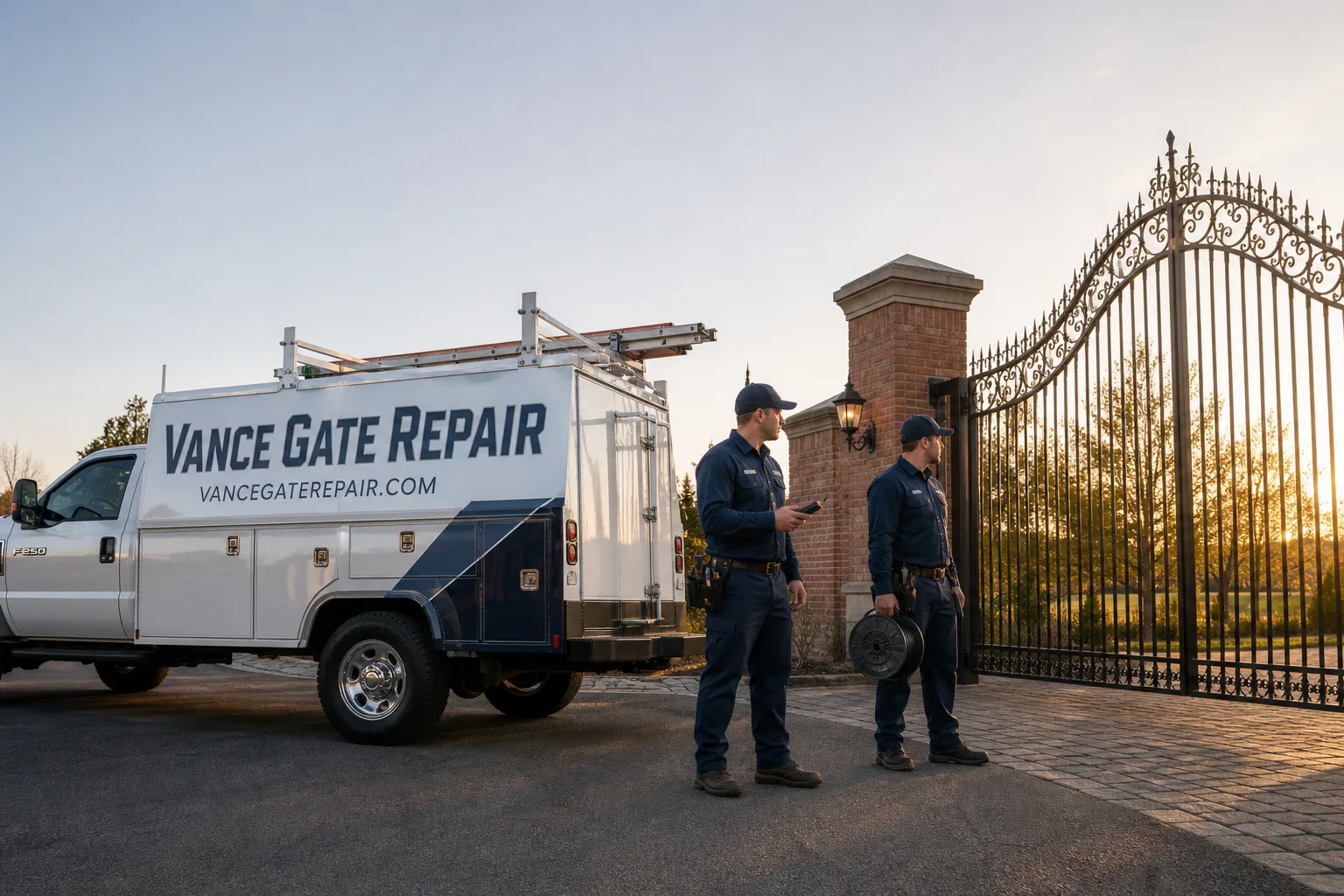
Free on-site gate assessment - hinges, posts, and your LiftMaster or Nice gate operator checked before anything is quoted
The assessment is free and the quote is the invoice.
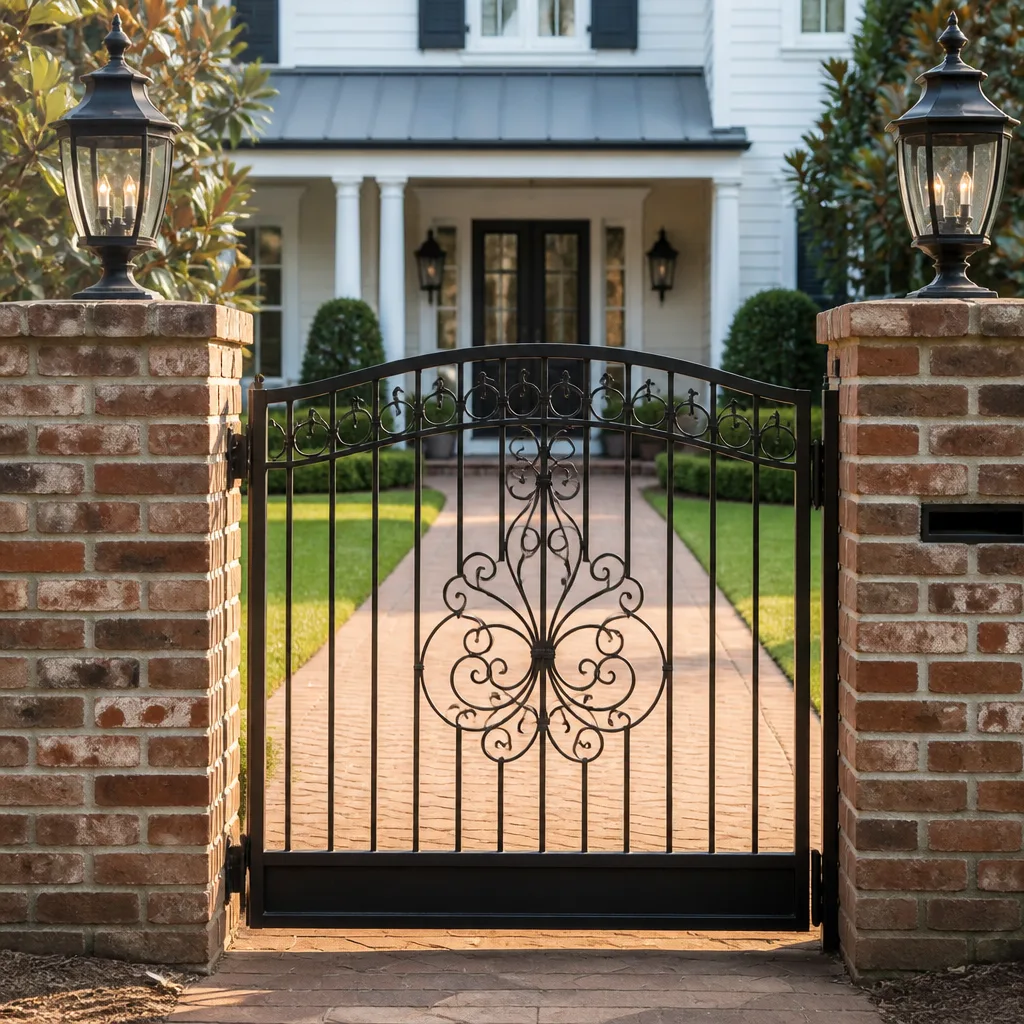
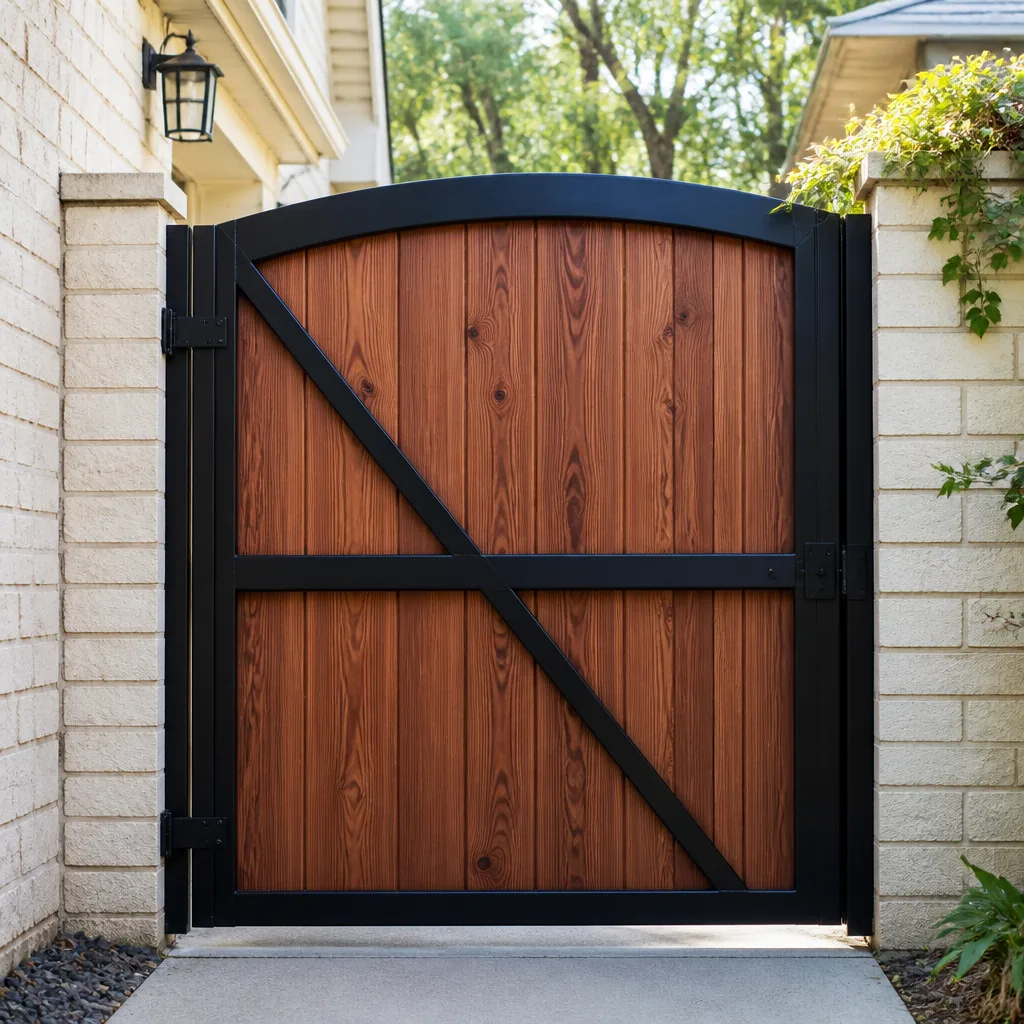
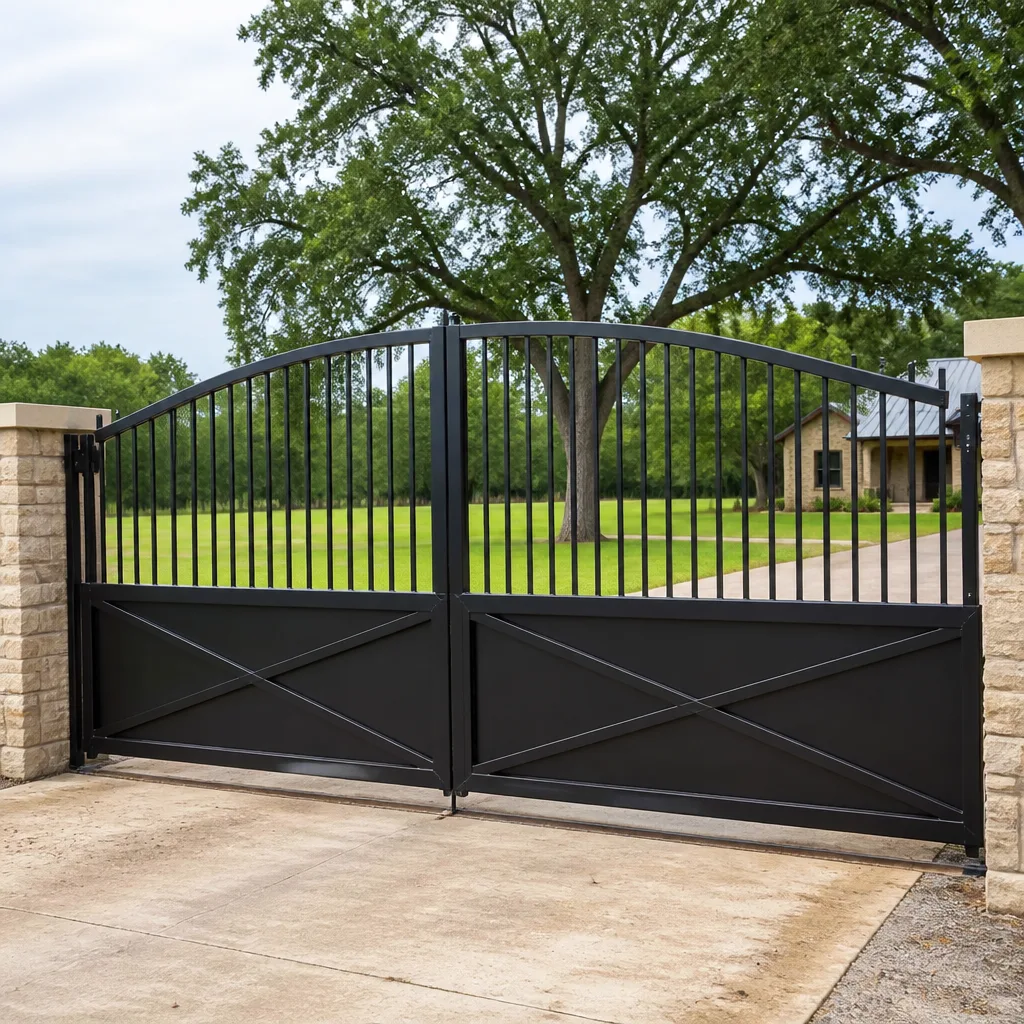
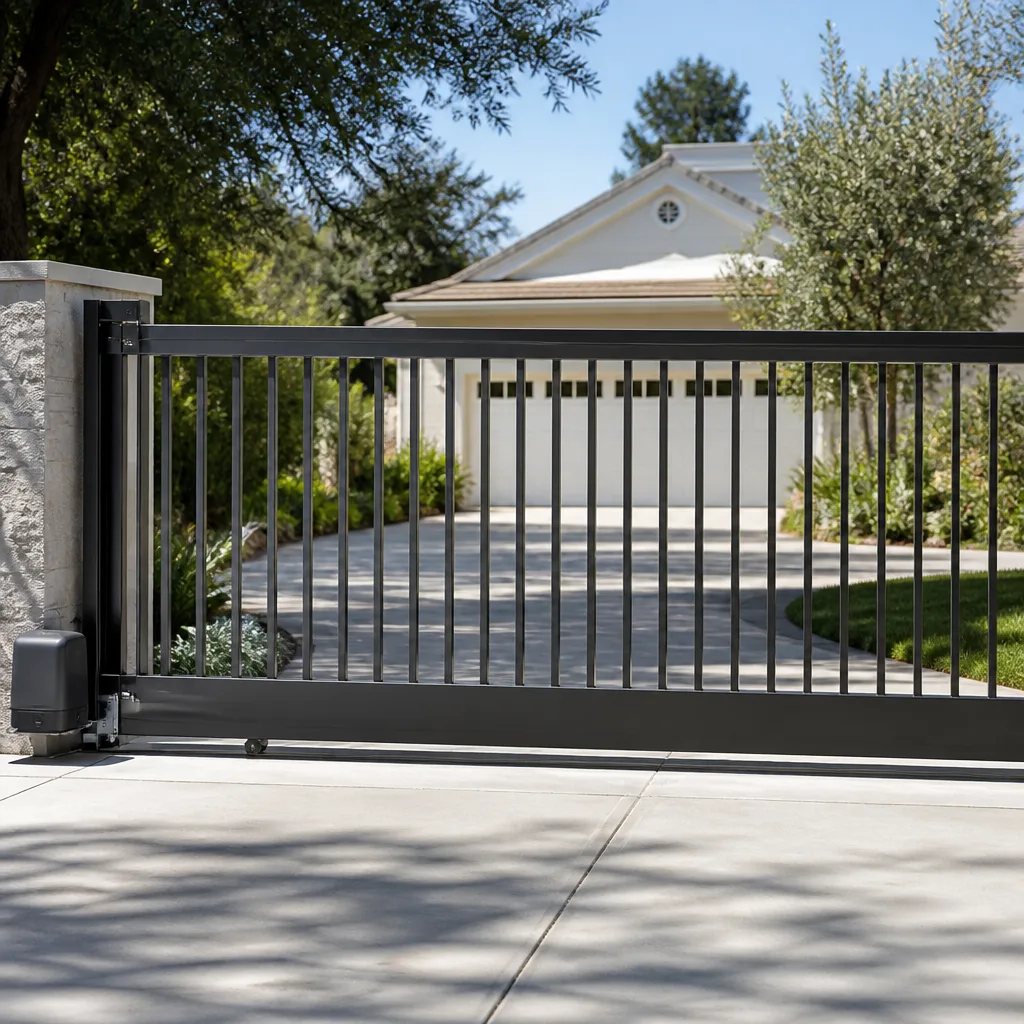
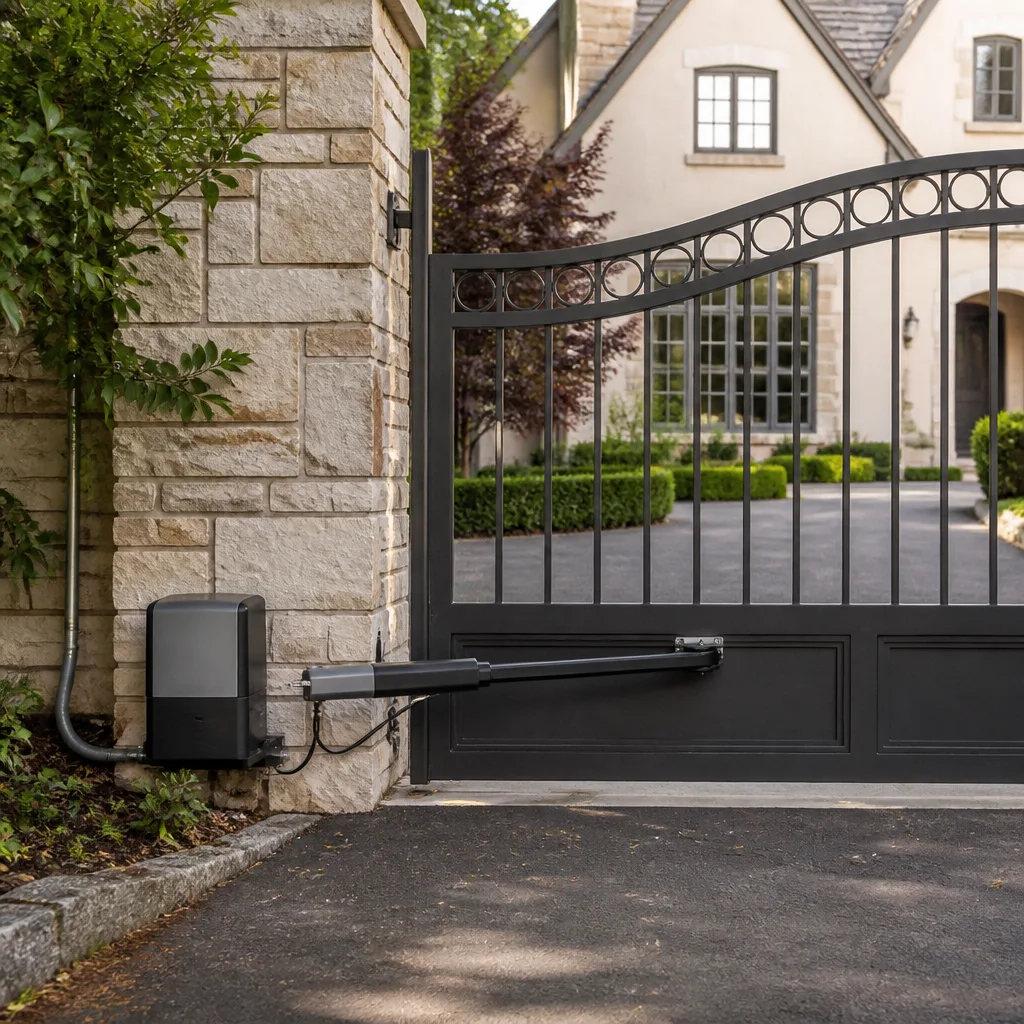
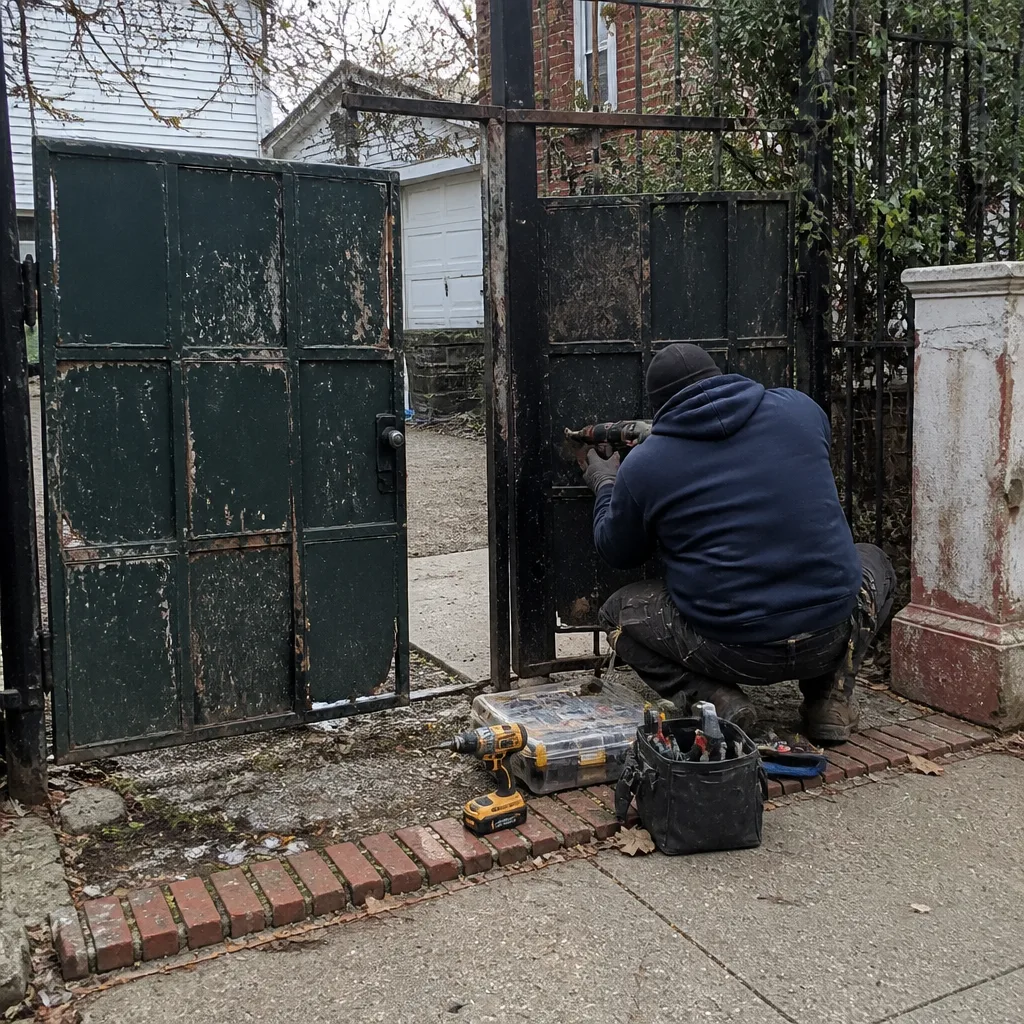 Before
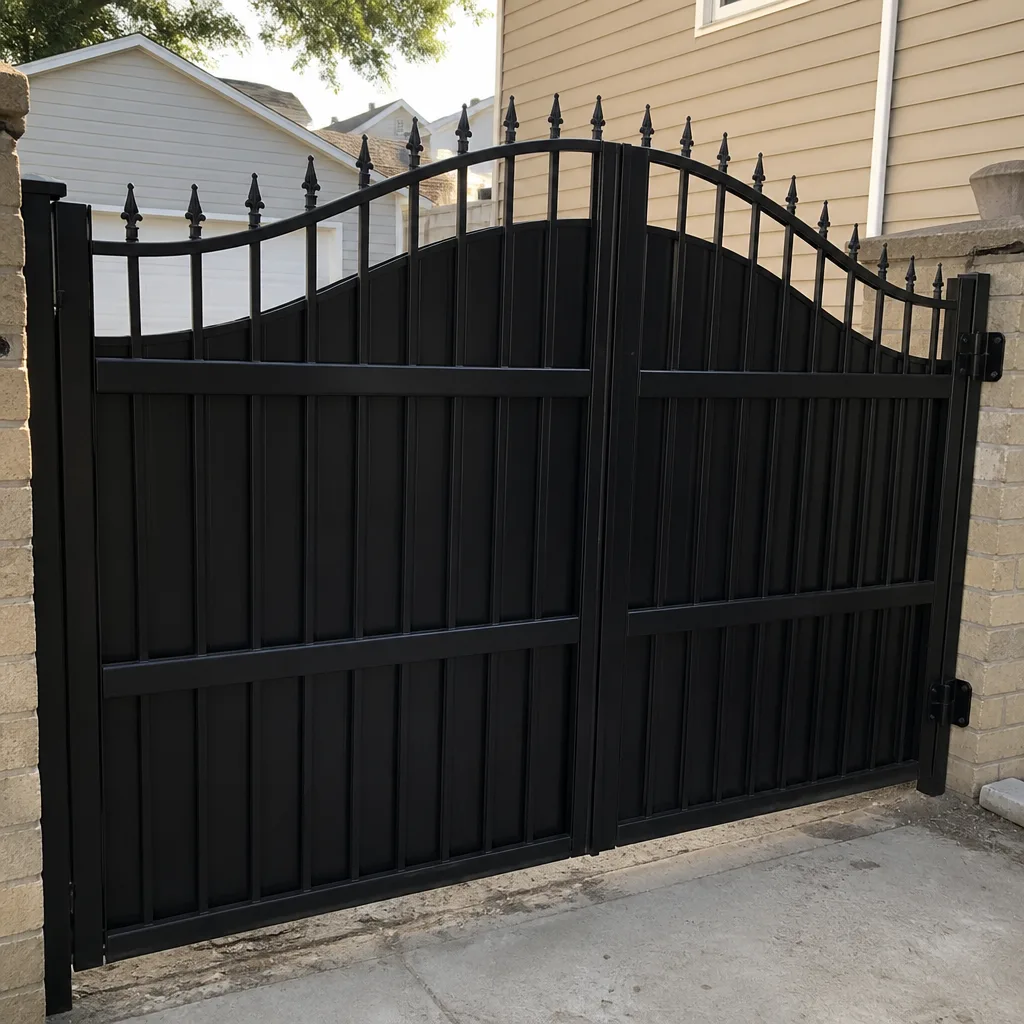 After
After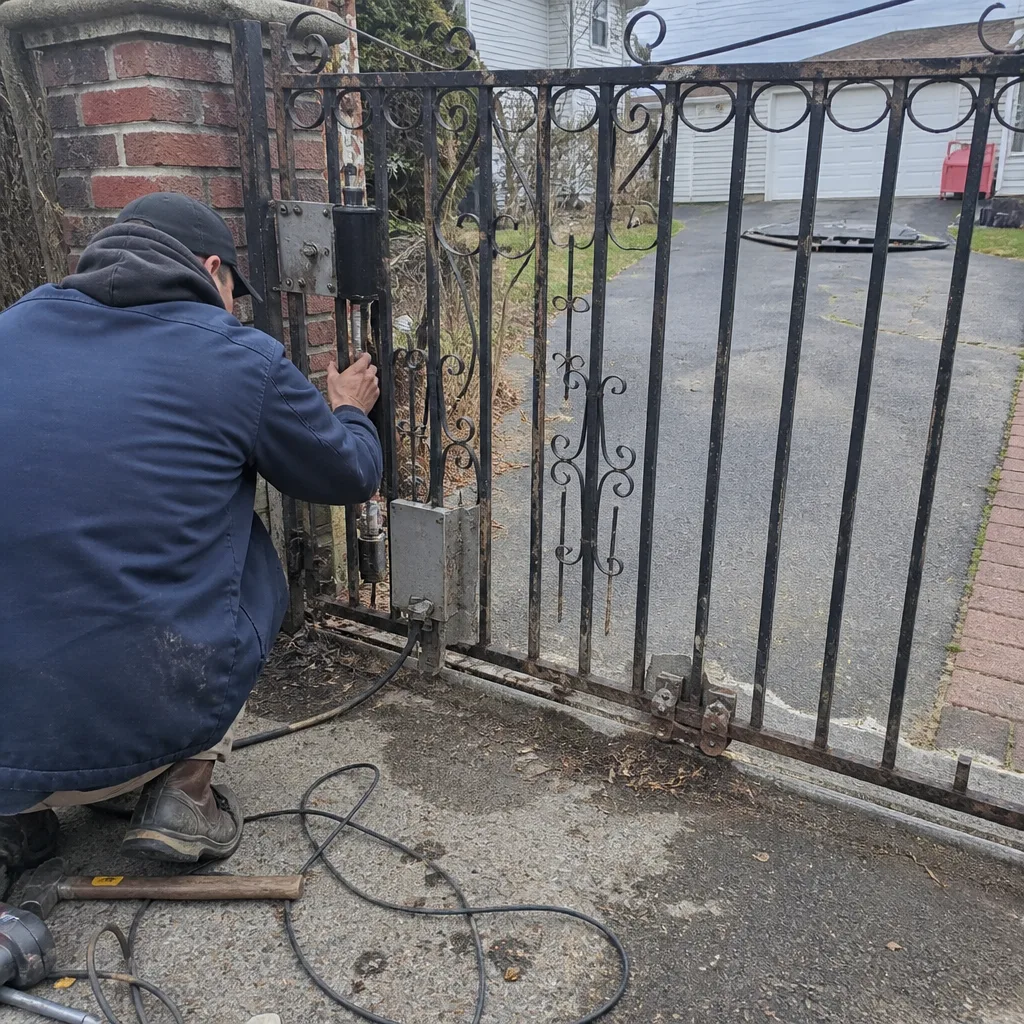 Before
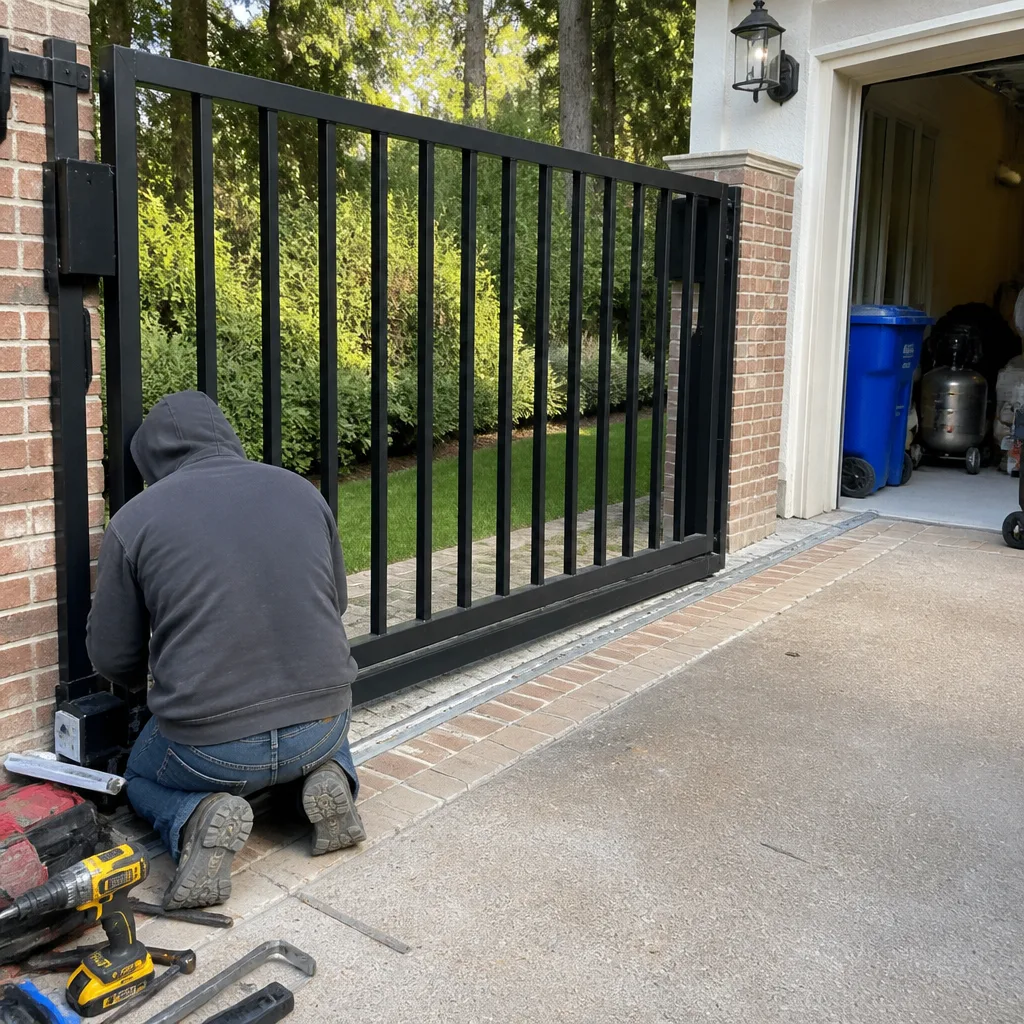 After
After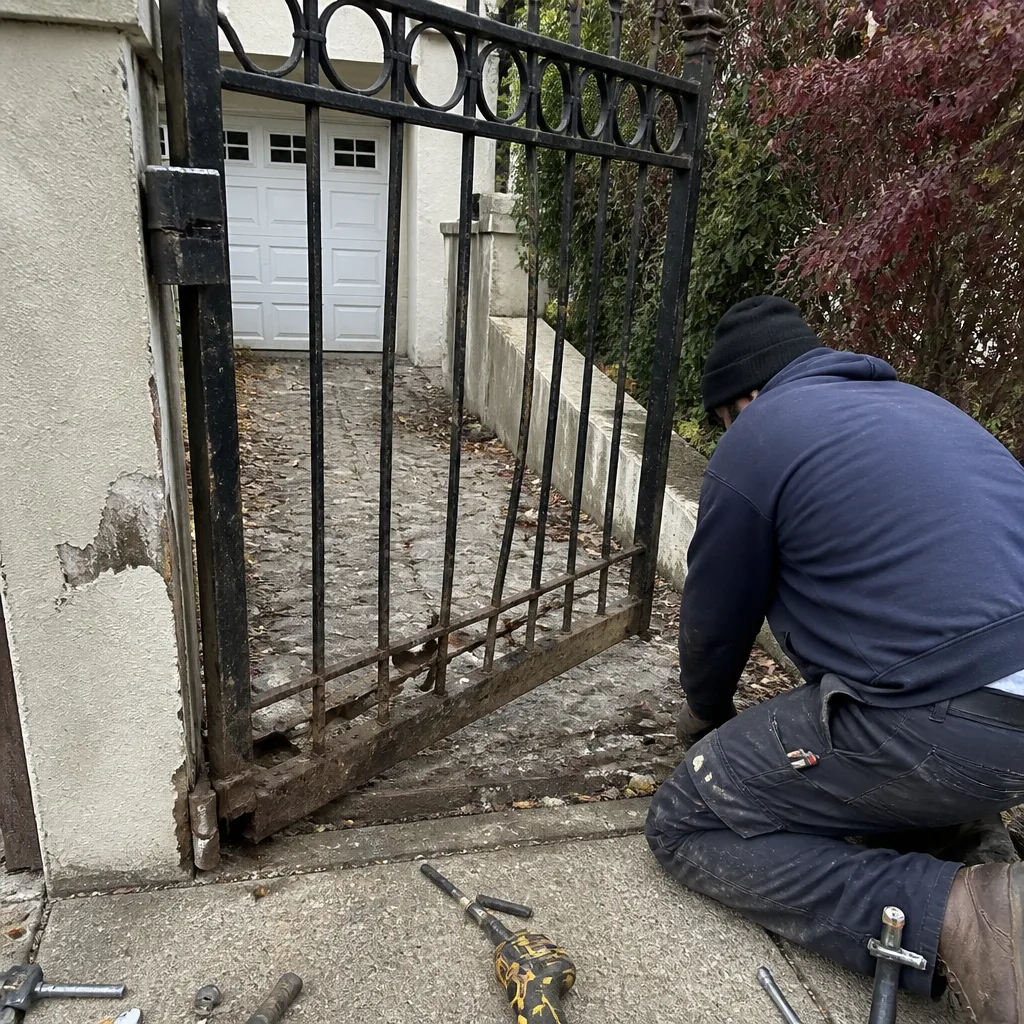 Before
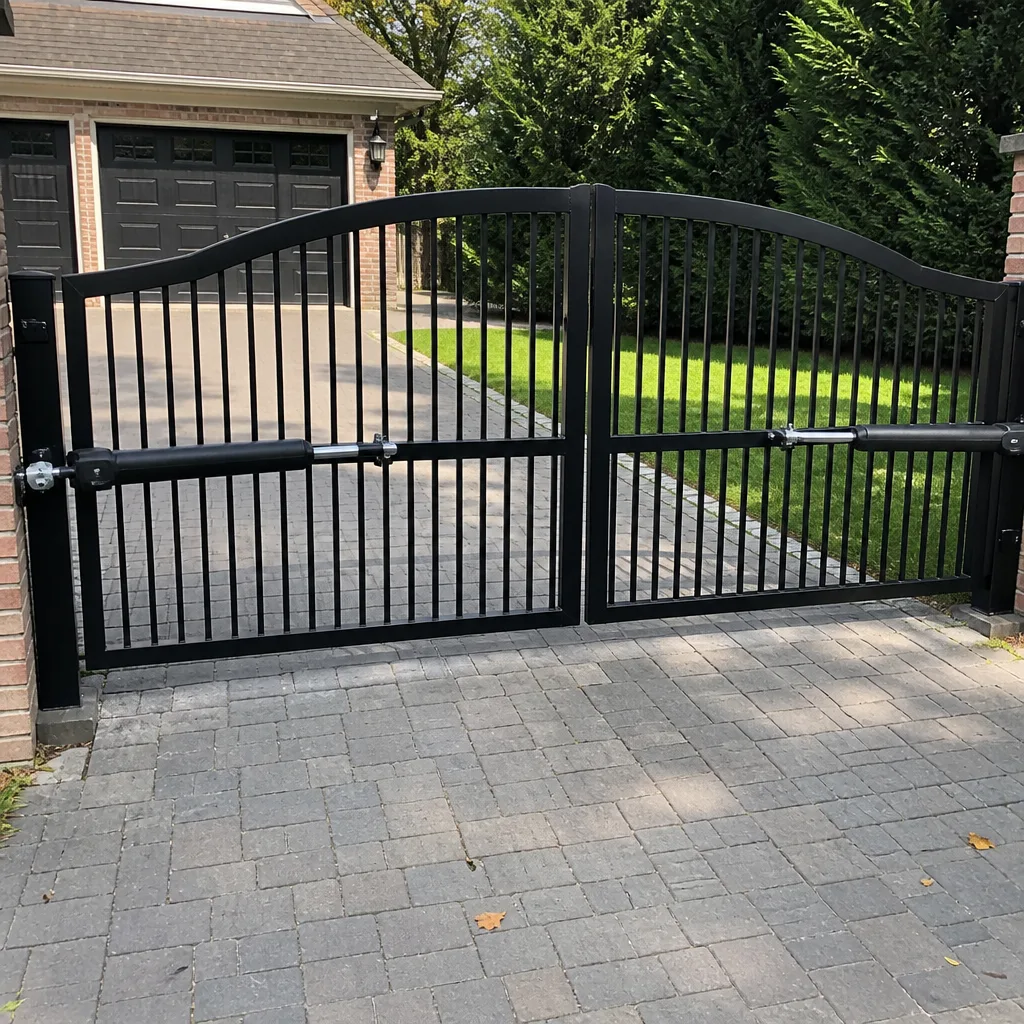 After
AfterFast, Reliable Gate Repair Across Reading
Gate repair in Reading usually costs between $220 and $680 for common hinge, post, and realignment work, and most visits are booked within one to two business days. If a gate has come off its hinges or an automatic opener has stopped responding, we can often have a technician on site the same day. The crews we dispatch to Reading know the alley-access rowhouses, the Mount Penn grade changes, and the rust-heavy cast iron hardware that define this city’s gate stock. Call (928) 260-0864 and a live person answers, any hour, with a straight answer and a written price before any work begins.
This page is about Reading specifically. Not generic gate talk. What actually fails here, why it fails, what it costs to fix, and how we document every repair so you’re not paying twice to rediscover the same problem.
Why Vance Gate Repair Is Reading’s Preferred Gate Repair Company
We work under a rule called The Haven Standard. Four clauses. The two that matter most to Reading homeowners are Clause 1, Have it in writing, and Clause 4, Evidence on every job. The written price comes before any tool touches your gate. The photo record comes before the technician leaves. Found a rusted hinge pin? You get a photo of it. Reset a limit switch? You get a photo of the new setting. That documentation habit comes from Adrian Vance’s commercial access-control background, and it translates directly into residential gate work on Reading’s older housing stock, where guessing at what a previous contractor did can double the cost of the next repair.
Since 2014, our team has repaired and installed more than 22,000 gates, each one priced in writing and documented at completion. The 365-Day Done Right Promise covers every repair we complete in Reading: if the work isn’t right within a year, we make it right at no additional charge. No argument, no fee, no expiration date inside that window.
Our technicians dispatch from the brand’s Boston office and serve Reading locally. Each tech is background-checked, uniformed, and identified by name and photo before arrival. You’ll know who’s coming down your rear alley before they get there.
We also offer a free second opinion on any written estimate from another gate company. Bring us the paperwork and we’ll review it at no cost. If we can’t beat the price, at least you’ll know the other quote was fair.
Our Gate Repair Services in Reading
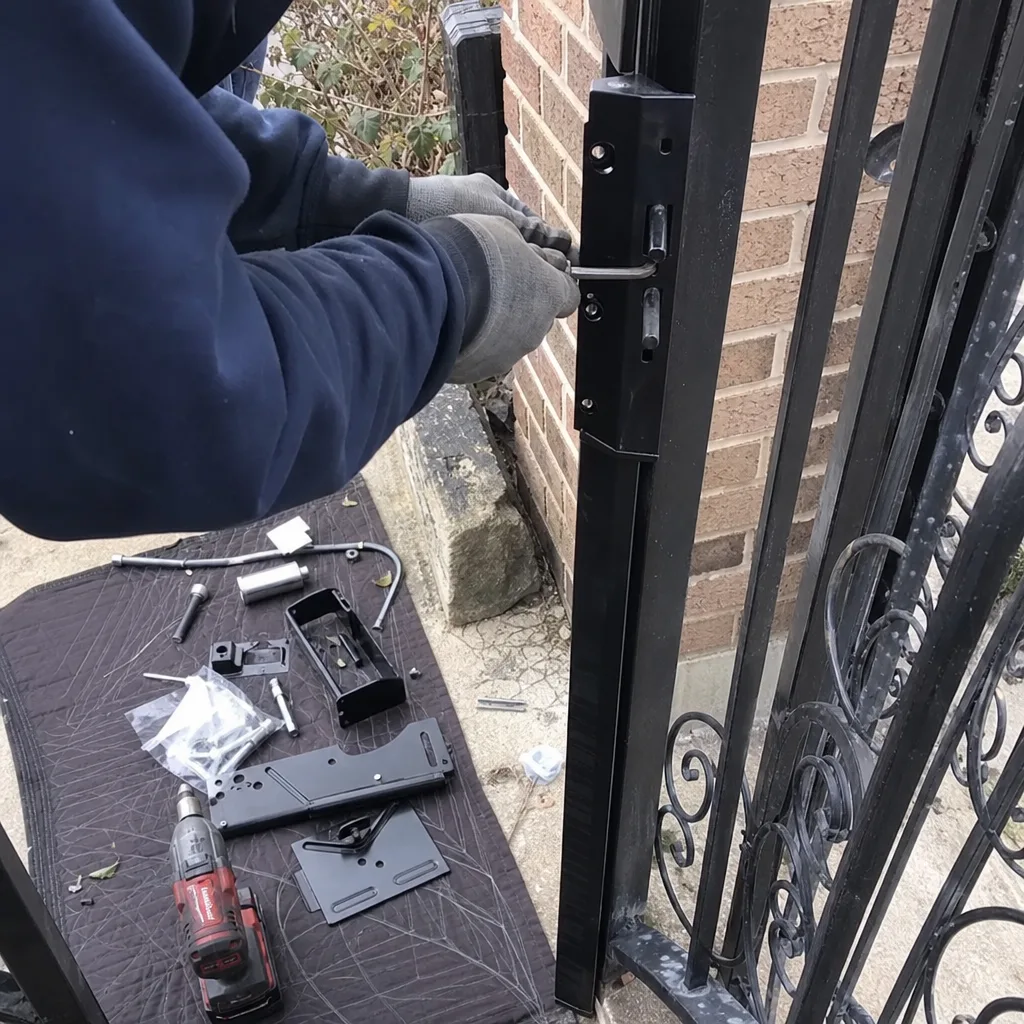
Hinge & Post Repair
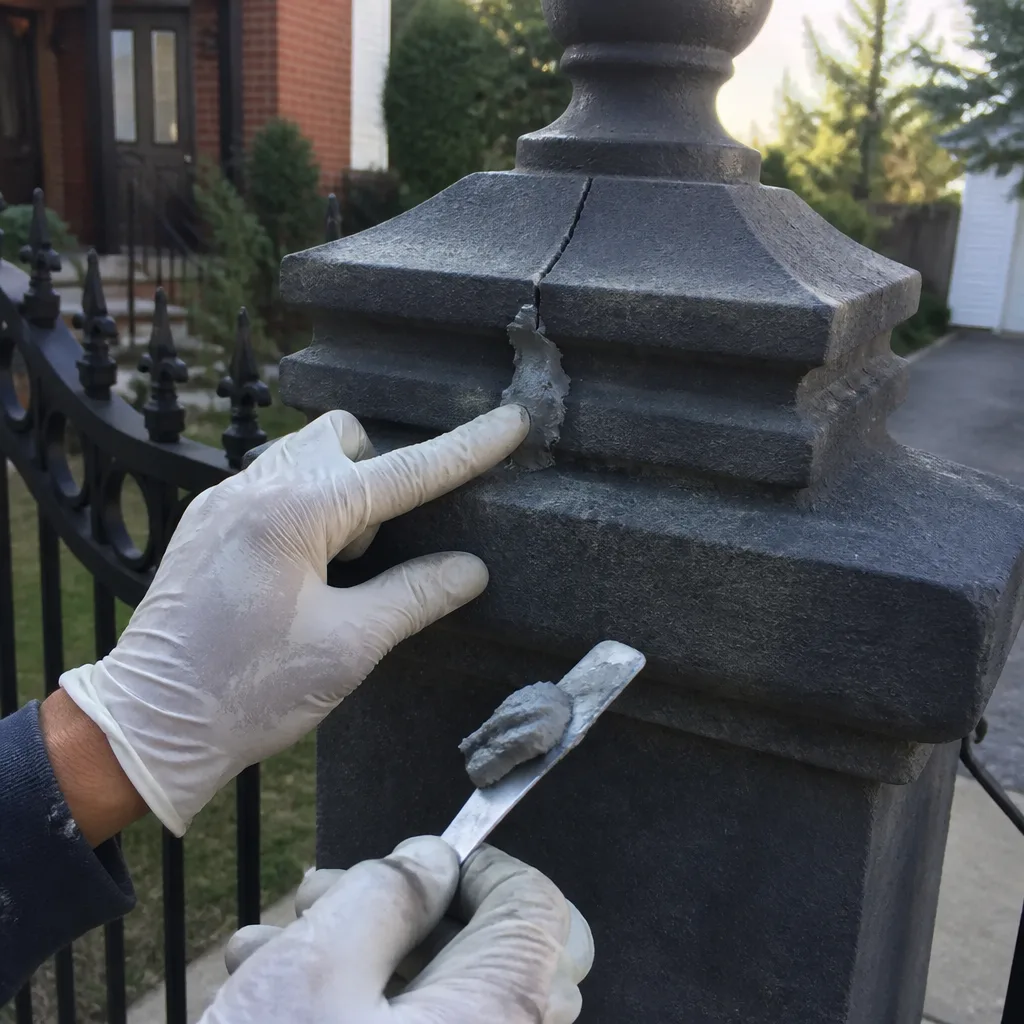
Hinge and post work is the single most common gate repair we perform in Reading, and the reason is baked into the city’s housing stock. Most properties in the core rowhouse districts were built between 1880 and 1930, and the original cast or wrought iron hardware is still hanging on many rear alley gates. Decades of freeze-thaw cycles along the Schuylkill valley have worked hinge posts loose, cracked the mortar columns they sit in, and seized hinge pins with rust. A hinge repair in Reading typically runs $180 to $420 depending on whether we’re re-bedding a post, replacing a strap hinge, or cutting out and welding in new hinge barrels.
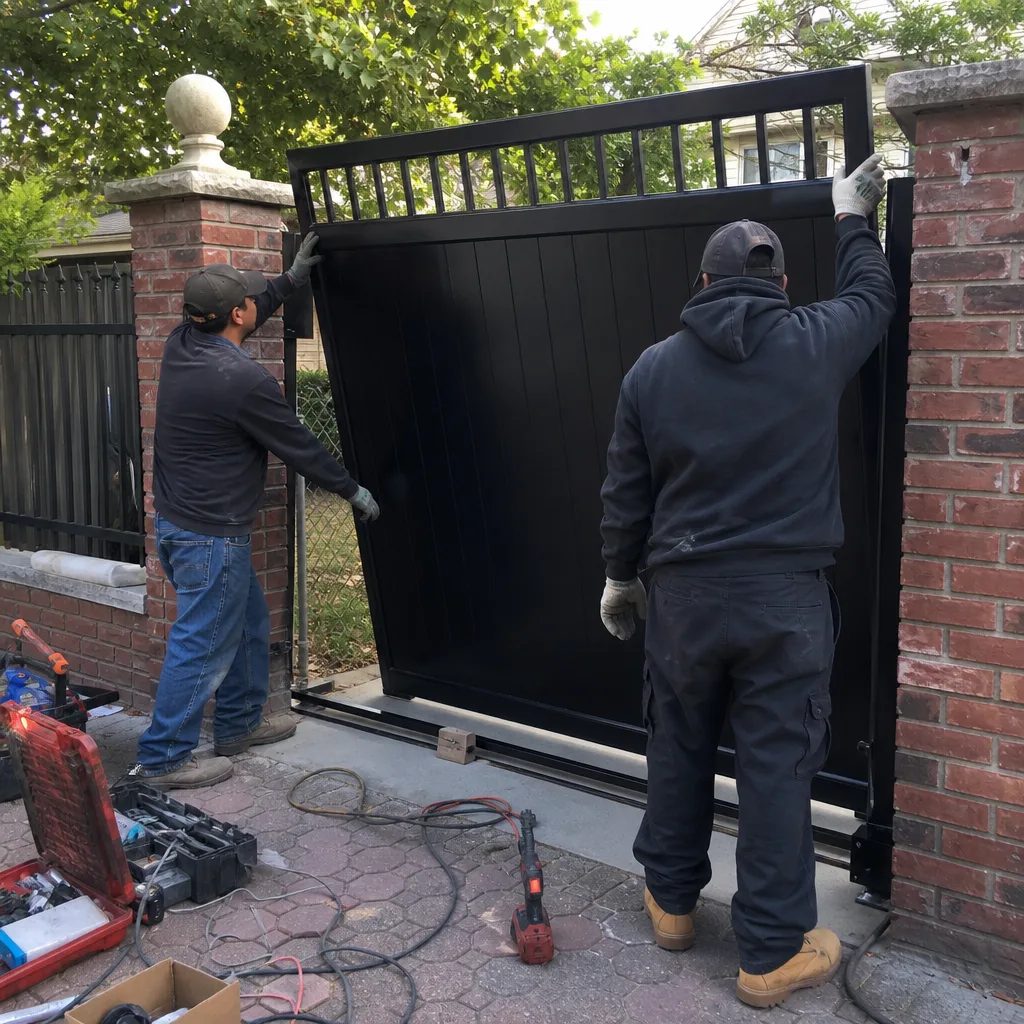
Gate Realignment
Realignment is the repair Reading residents ask for by symptom, not by name: “my gate drags,” “my gate won’t latch,” “my gate swings open on its own.” On the streets climbing toward Mount Penn, driveway grade changes make standard level-hung gates bind almost immediately. We default to raked-panel or stepped configurations for sloped Reading driveways because a gate that hangs level on paper will scrape asphalt in practice. Most realignments run $150 to $350, including hinge adjustment, latch repositioning, and a sag correction kit where needed.
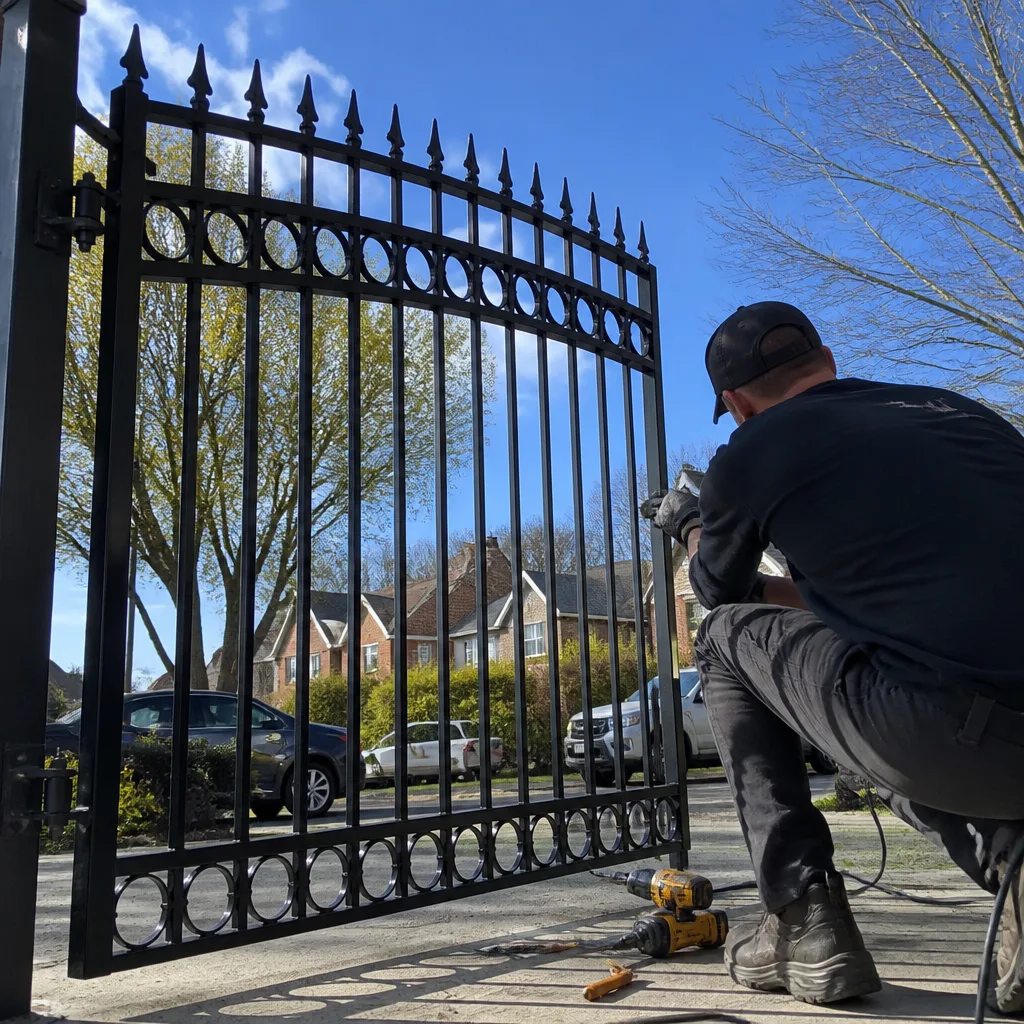
Weld & Rust Repair
Original ornamental iron gates from Reading’s foundry era are worth repairing, not replacing. But decades of deferred maintenance leave them heavily corroded, especially where panels meet rails and where hinge pins sit in sockets. Our weld and rust repair service covers cracked pickets, broken scrollwork, rusted-through rail sections, and seized hardware. We grind back to sound metal, weld with matching profile, and prime and paint the repair area. Pricing for weld and rust repair in Reading generally lands between $250 and $550, with the exact figure written down before the torch comes out.
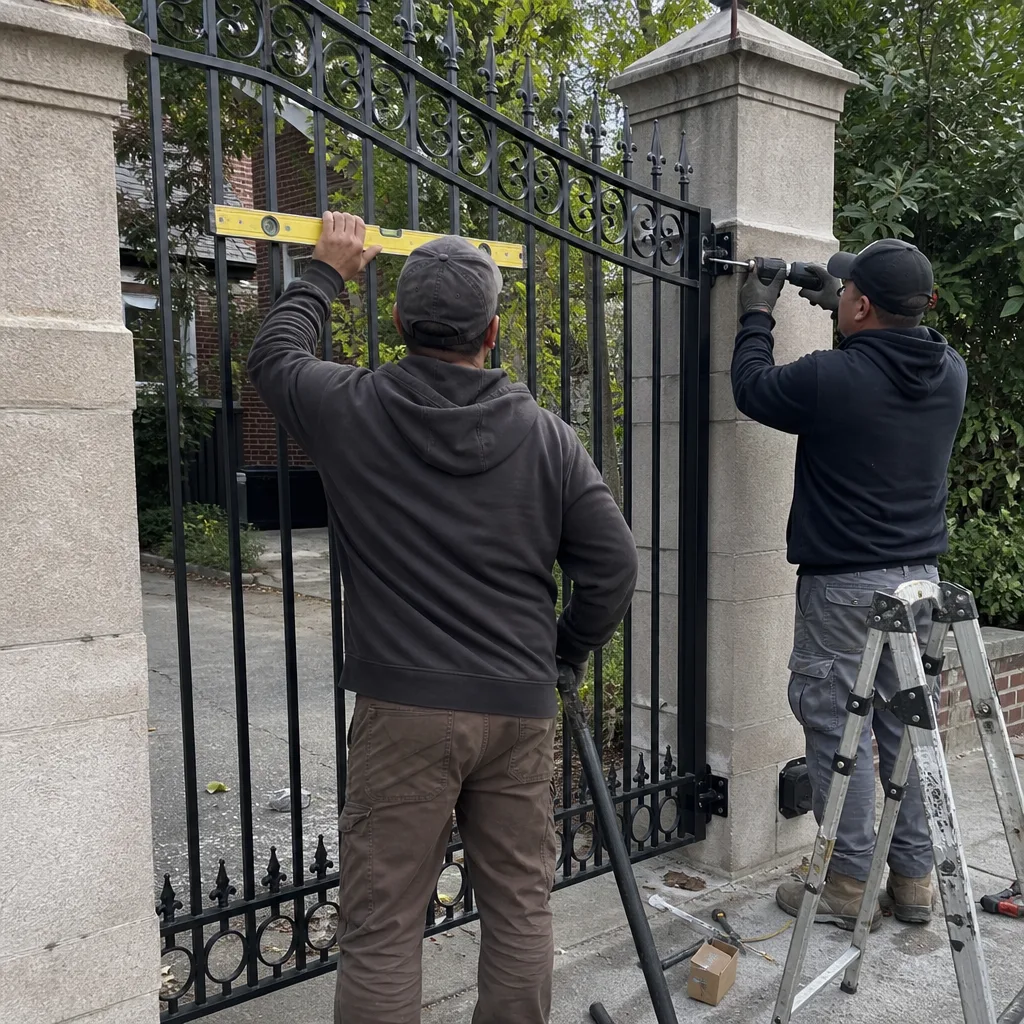
Electric Gate Repair
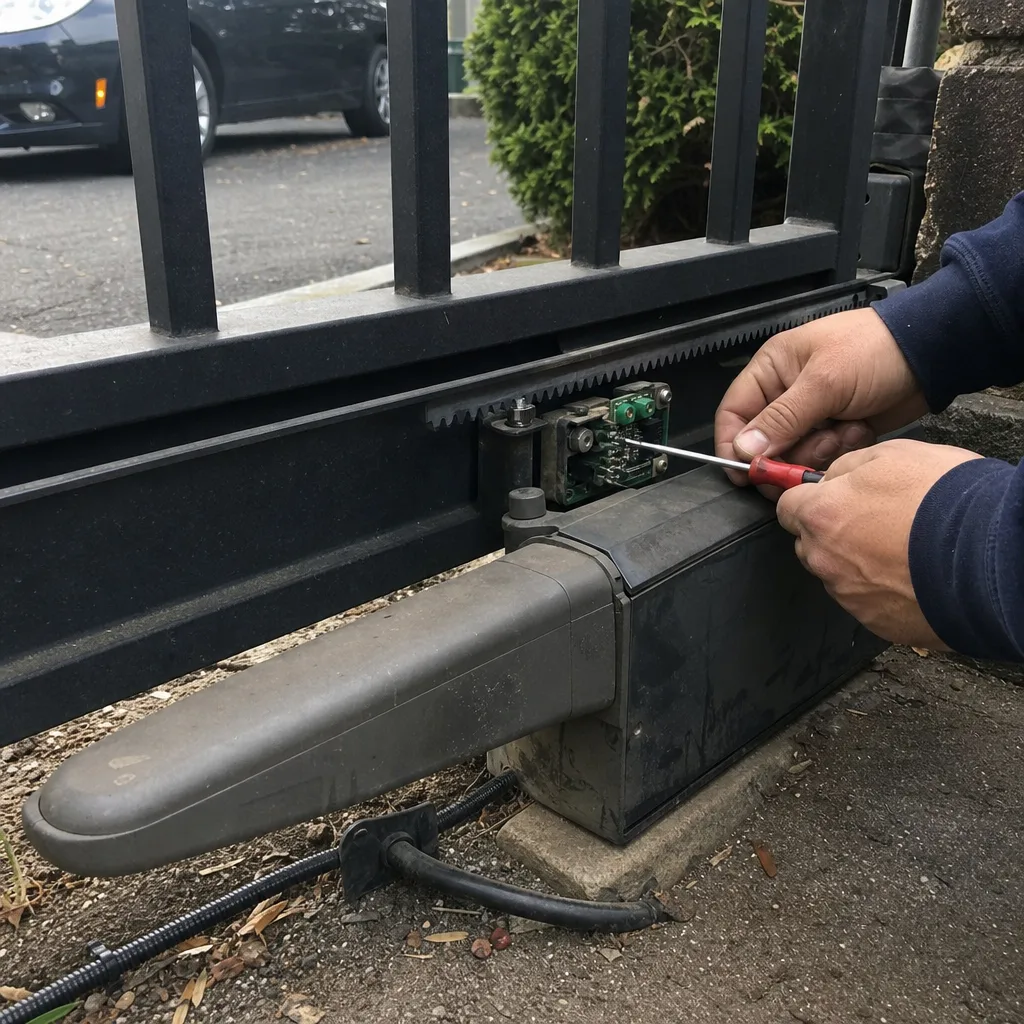
When an electric gate stops responding in Reading, the culprit is usually one of three things: a limit switch knocked out of adjustment, a photo-eye misaligned, or a control board shorted by moisture. Automatic gate openers on rear alley gates sit close to the ground where spring runoff and winter road salt collect, and we see corrosion on terminal blocks far more often than we see motor failure. Repair of electric gates in Reading typically starts at $190 for adjustments and runs up to $650 for control board or arm replacement. We service BFT, Linear, Viking, and Ghost Controls openers, plus four other common automation brands, so there’s no reason to replace a motor that another company simply didn’t know how to service.
What happens when you call
- 1
A real person answersNo phone trees - you reach a local pro.
- 2
You get an upfront price rangeHonest numbers before anyone is dispatched.
- 3
A background-checked tech heads outLicensed & insured, dispatched right away.
- 4
You approve before work beginsNothing starts until you say go.
BeforeAfterTrusted Brands We Service in Reading
Our Gate Repair technicians carry diagnostic equipment and common parts for nine automation brands, which means most Reading repairs are completed in a single visit. When a rear alley gate with a BFT opener won’t close, or a Linear board is throwing a fault code, or a Ghost Controls arm has lost its travel limits, we don’t need to order parts and reschedule. We keep the most common control boards, limit switches, photo-eyes, and arm brackets stocked in our service vehicles. One company that works on whatever motor is already on your property, rather than steering you toward a replacement.
Common Gate Repair Problems We See in Reading Homes
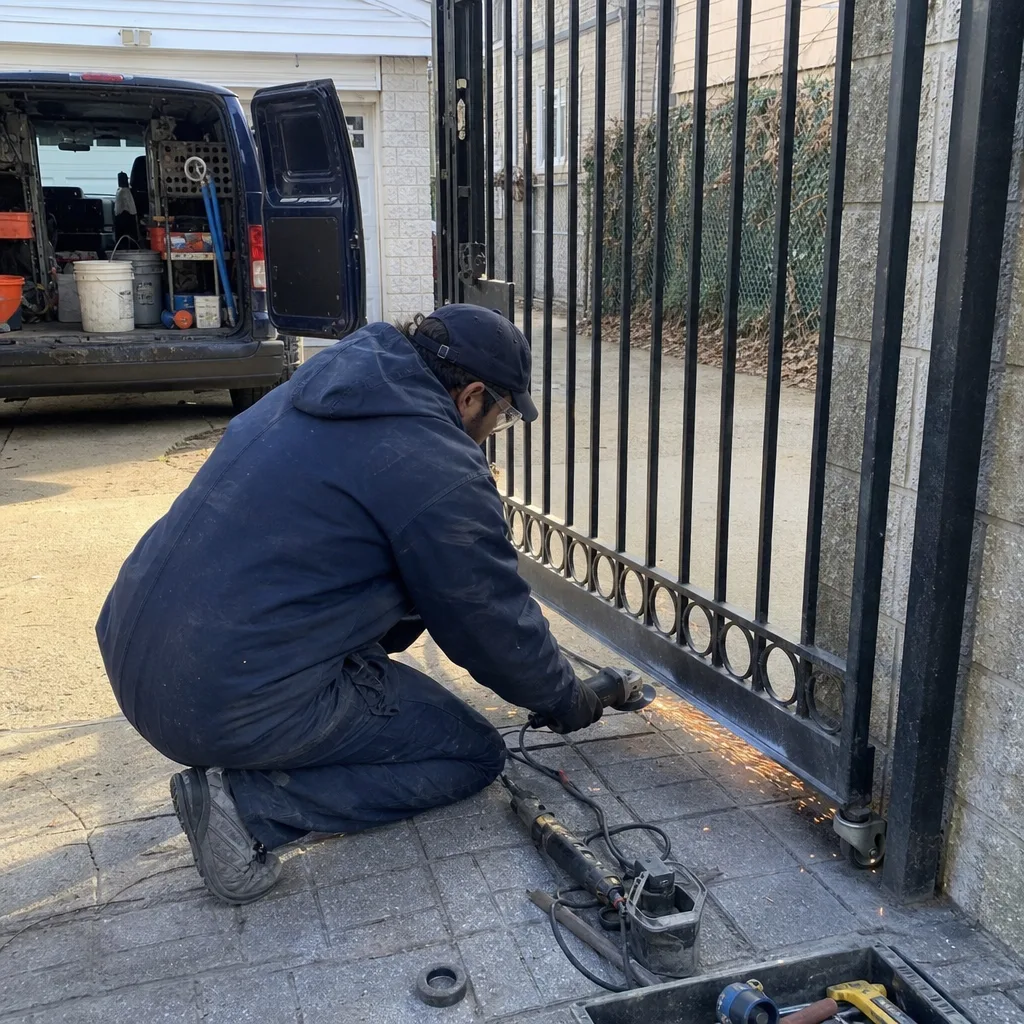
- Freeze-thaw heaving in rear alleys. Reading sits in the Schuylkill River valley, where winter moisture and repeated hard freezes push hinge posts out of plumb and crack brick columns. A gate that looked fine in October can drag by February, and nearly every March we’re re-bedding posts that moved.
- Rusted cast iron hardware on 1880-1930 rowhouse gates. The original strap hinges and pintle pins on Reading’s ornamental iron gates are heavily corroded. Hinge pins seize, panels sag, and eventually the gate drags on brick pavers until it can’t be opened at all.
- Storm wind load on solid infill gates. A solid wood or iron infill gate catches wind like a sail. After a nor’easter, we regularly find twisted hinge posts, broken welds, and latches pulled out of alignment on exposed Reading properties, particularly on the east side where storm winds come up the slope.
- Saturated post footings after river-corridor flooding. Low-lying blocks along the Schuylkill see spring flooding that softens post footings and shifts fence lines. Swing gates lean, automatic openers fall out of sync, and the gate binds against the post.
Pricing for Gate Repair in Reading, MA
Here are the numbers, in writing, because that’s how we operate.
- Hinge & post repair: $180-$420
- Gate realignment: $150-$350
- Weld & rust repair: $250-$550
- Electric gate repair: $190-$650
- Full automatic opener replacement: $850-$1,800 depending on brand and arm type
These Reading ranges reflect the local housing stock: century-old iron, tight alley access, and grade changes that add labor time. Every quote is written and handed to you before any work starts. No surprise invoice at the end. Call (928) 260-0864 for a free estimate on your specific gate, and we’ll put the price in your hand before we pick up a tool.
Reading-Specific Playbook: Storm Wind, Saturated Footings, and Slope Realignment
Most gate companies approach every gate the same way. The flatland playbook works fine in the wider Berks suburbs. It fails in Reading. Here’s what we’ve learned from thousands of visits to this city.
First, wind load on solid infill gates is a different problem here than it is in flatter townships. On the east side streets that climb toward Mount Penn, storm winds accelerate up the slope and hit solid iron or wood gates with enough force to twist hinge posts in soft ground. A gate that stayed square for twenty years will suddenly bind after one bad nor’easter because the post moved, not the gate. Standard repair advice, “tighten the hinges,” doesn’t address a post that’s now five degrees out of plumb. Our crews check post plumb on every wind-related call and document the measurement in the photo record.
Second, saturated post footings along the river corridor are a springtime constant. When the Schuylkill rises and the ground saturates, post footings lose bearing capacity. Swing gates lean, automatic openers lose their travel limits, and a gate that closed cleanly in December scrapes the ground in March. We excavate, add gravel, and pour a deeper footing with a wider base when we re-bed posts in Reading. The old footing gets photographed before we bury the new one, so you can see what was under there.
Third, and this is the one most contractors from Allentown or Lancaster miss: driveway grade changes on the slope streets require raked-panel or stepped gate configurations. A level-hung swing gate on a 9-inch grade change will bind at the latch post. Every time. Our crews measure the grade, order or modify panels to match the slope, and set hinge positions so the gate clears the ground throughout its full swing. If your gate has been dragging since it was installed, it was probably hung level on a sloped driveway by a company that didn’t know to check.
One Repair, In Our Own Words
We rehung an original 1890s wrought iron gate on a Center Park rowhouse off Douglass Street after a nor’easter twisted its rusted hinge post out of plumb in saturated ground. Our crew excavated and replaced the post footing, realigned the gate with a sag correction kit, and reinstalled the original strap hinges so the gate clears a 9-inch grade change without dragging. Before we left, the homeowner had a photo log of the old footing, the new footing, the hinge positions, and a written record of the exact strap hinge manufacturer we sourced to match the originals. That’s the standard on every Reading job.
Trusted Advice for Reading Homeowners: What to Do in a Power Cut
Automatic gates in Reading lose power during storms more often than people expect. The safe procedure is the manual release, and if your opener has one, here’s how it works, framed as what to check, not what to attempt if you’re unsure. Most Linear, BFT, and Ghost Controls openers have a release handle or key that disengages the motor from the arm or chain. Pull it and you can push the gate by hand. On a Mount Penn slope, two cautions: first, a released gate will roll downhill if the ground slopes away from the post, so block or chain it before releasing. Second, if the gate is heavy ornamental iron, it can gain momentum quickly, so keep your body behind the gate, never downhill of it. When power returns, re-engage the release and the opener should reacquire its limits. If it doesn’t, call us. High-tension springs and cables on automatic gates carry enough stored force to cause serious injury, so if the release is rusted, seized, or missing, leave it alone and let a trained technician handle it. We carry replacement releases for all nine brands we service.
Why Century-Old Reading Gates Need Different Work Than New Berks Suburb Gates
In Wyomissing or Spring Township, a gate problem usually means a new vinyl or aluminum gate with a bad hinge or a misadjusted opener. In Reading’s core, you’re dealing with original ornamental iron from the city’s own foundry era, mounted on brick columns that were poured before standardization existed. The iron is thicker than anything made today, but the hardware was forged by hand and doesn’t match off-the-shelf sizes. The hinge pins have been rusting in place for a century. The mortar around the post has crumbled. The ground underneath has heaved, settled, and heaved again. Fixing these gates isn’t parts-swapping. It’s measurement, matching, welding, and re-bedding. That’s the work our crews do every week in Center Park, College Heights, and along the alleys off Penn Street and Douglass Street. If a company quotes you before looking at the hinge pin diameter and the post plumb, the quote is a guess, not a price.
We Also Serve Cities Near Reading
Our crews cover Reading and the surrounding towns, including Wakefield, Stoneham, Wilmington, and Woburn. Same written-pricing standard, same photo-record documentation, same 365-Day Done Right Promise on every gate, whether it’s a rear alley rowhouse gate in Reading or a driveway gate up the road in Wakefield.
Serving Reading, MA - Our Local Coverage Area
We’re based in the Reading area and know this community well. Use the map below to see our service coverage - if you’re nearby, we can almost certainly help.
FAQs - Gate Repair in Reading
Because the hardware is non-standard and the posts are usually compromised. Reading’s original iron gates from the 1880-1930 era have hand-forged hinge pins, strap hinges, and latch hardware that don’t match modern off-the-shelf sizes. The brick or stone columns they hang from have typically cracked from decades of freeze-thaw heaving in the Schuylkill valley. Repairing a century-old gate requires measuring the existing hardware, sourcing or fabricating matching parts, and often re-bedding the post before the hinge work begins. New aluminum gates in the wider Berks suburbs use uniform extruded hardware; Reading’s antiques don’t. If you’re near Penn Street or Douglass Street and your gate is original iron, the repair starts with re-hanging and post work, not with a catalog part. Call (928) 260-0864 and we’ll tell you in writing exactly what yours needs.
Find the release handle or key on the opener, usually on the motor housing or the arm, and disengage it so the motor is no longer connected to the gate. On a Mount Penn slope, block or chain the gate before releasing so it doesn’t roll downhill on its own. A heavy ornamental iron gate on an incline will build momentum quickly, and a moving gate is dangerous to stop by hand. If the release is rusted or seized, don’t force it; those tensioned parts can fail suddenly. That’s a job for a trained technician. We carry replacement releases for all nine brands we service and we would rather come out and do it safely than have you injured trying. Power outages in Reading are frequent enough that knowing your gate’s release works is worth checking before the next storm.
Usually both. The freeze-thaw cycle in Reading’s Schuylkill valley heaves gate posts out of plumb while simultaneously corroding the hinge pins, so the gate sags at the hinge and the post tilts away from the latch. The dragging you feel after a thaw is the combined effect. Our diagnosis process checks post plumb with a level, measures the hinge gap, and photographs both before we quote. That tells us whether the fix is simple hinge adjustment, a sag correction kit, or a full post excavation and re-bedding. Most Reading alley gates fall into the middle category. Typical price: $150-$350 for realignment plus any hinge or post work.
Yes, and the east side streets climbing toward Mount Penn are where this matters most in Reading. A solid infill gate catches wind like a wall, and when storm winds accelerate up the slope, the force on the hinge post is higher than on flat ground. Our crews specify deeper, wider footings with more gravel base for solid gates on exposed east side properties. The local soil, which saturates in the winter and softens further during spring river flooding, needs the extra bearing area. If your gate is solid iron or solid wood and the post is original to an older home, it’s almost certainly undersized for wind load. A written quote will show the footing spec before we dig.
Yes. Any automatic gate opener installed on a residential property is required by the manufacturer and by relevant safety standards to have a functioning photo-eye safety system and a reversing mechanism. The photo-eye, an infrared beam that stops the gate if something crosses the path, is the same safety standard whether the gate is on a rural Berks driveway or a Reading rear alley. Many older Reading alley gates either lack photo-eyes entirely or have ones that were misaligned and disconnected years ago. That’s a hazard, particularly where kids and pets use alley spaces. We check photo-eye function on every automatic gate service call in Reading, and we photograph the alignment before we leave. If yours is missing or dead, that’s a $180-$280 fix, depending on the opener brand.
Call for Gate Repair in Reading
If your gate is dragging, leaning, rusted through, or stuck in manual mode, call (928) 260-0864. A live person answers. You’ll get a straight diagnosis, a written price before work starts, and a photo record of everything we found and fixed when we leave. That’s the Haven Standard on every single Reading job. Free estimates, no surprise invoices, and a full year to make sure the repair holds. If it isn’t right, we make it right.
Written by Adrian Vance, Owner at Vance Gate Repair, serving Reading since 2014.